Digital and Marketing

Seven ways to make your customers feel valued

NatWest Business Builder: Customer Discovery

When done well, customer service can help build a strong reputation and loyal customer base. Experts share their top tips on getting it right.

More than seven out of every 10 (71%) UK SMEs believe they deliver strong customer service, a survey by Close Brothers has found. Only 5% saw their customer service as poor, while the rest (24%) saw themselves as neither strong or poor.

While having confidence in your customer service is a good thing, a true marker of whether you are excelling is how valued customers feel. Ultimately, a customer who is valued is more likely to return and even spread the word, helping you to attract new customers and generate more business leads.

Here are a handful of practical ways to provide your customers with a service that makes them feel valued.

1. Speak to customers in their voice

“There’s no better way to show you understand your customers than through your tone of voice, branding and marketing,” says Lesley Bambridge, founder of marketing consultancy We Mean Business. Bambridge has experience working with household names such as Aquafresh, Lucozade and Ferrero Rocher.

Even the best customer service can be undermined by the wrong tone of voice. The words used or how they’re expressed can say a lot about how customers perceive your attitude.

“You need to make yourself a brand that they can rely on and relate to, so don’t speak to them as if you’re owed the business,” Bambridge says.

2. Reward them

Customer loyalty programmes have long been regarded as an effective retention tactic, and not just post-purchase.

Handbag brand Mia Tui gifts new customers 500 points upon signing up, which is worth £5 off their first purchase. They then receive five points for every £1 spent thereafter.

“A scheme like this helps customers to feel like they’re part of a club,” says Mia Tui’s director and founder, Charlotte Jamme.

3. Personalise the purchasing experience

A customer’s journey shouldn’t end once they’ve checked out.

“You should personalise wherever possible and make the purchasing journey specific to them,” says Bambridge. “Consider following up with offers and bespoke deals, based on their previous purchases.”

Of course, you need to ensure you’re being GDPR-compliant and that your customers have opted in to receive future correspondence and marketing emails in the first place.

Frozen Indian food supplier Nikasu Foods UK personalises its customers’ experience by encouraging them to share recipe ideas post-purchase, which are then reshared by the company online.

4. Thank your customers

Any business hopes that its customers will keep coming back for more, but, for companies just starting out, loyal customers can be hard to acquire.

““You need to make yourself a brand that they can rely on and relate to, so don’t speak to customers as if you’re owed the business”

Lesley Bambridge, founder, We Mean Business

“One thing that I’ve done since we started, and it seems to go down really well, is to include a handwritten note with each order, thanking them,” says Ruth Oldfield, co-founder of Bolton-based Coffee & Kin, which sells compostable coffee pods, coffee beans and tea, with her sister and their partners. It doesn’t matter how many times they’ve ordered before.

“I truly believe doing this helps customers feel more connected to our family,” she says.

5. Welcome feedback

No matter how strong you believe the customer service you’re delivering to be, there is likely to be room for improvement. And welcoming feedback is key to this.

“We acknowledge and respond to all feedback we receive [from our customers], whether it’s good or bad,” says Galyna Nitsetska, founder of Empress Mimi, a lingerie subscription box.

Nitsetska’s commitment to valuing her customers is partly down to the difficulties she faced fostering loyalty and engagement for her previous business – an e-commerce website selling luxury workwear for women. Many of the purchases made through the site were one-offs, she says.

6. Be open and honest

If you have the capacity and the resources, it’s worth considering replying to any feedback in person, rather than sending a generic response.

Too many SMEs try to replicate the approach of big corporates, which can often be scripted and lack empathy, rather than thinking about how they can deliver more emotive customer experiences, says Nitsetska. You need to be open and honest with your customers, which means admitting when things have gone wrong. Keeping your apologies fresh and sincere can help win them over and encourage them to stick around.

“Being able to scale is important, but if you’re at the beginning stages [of building a business], having a loyal customer base is far more crucial, until you get to a place where scaling and atomisation becomes unavoidable,” she says.

7. Don’t take yourself too seriously

While it’s important to deal with any issues promptly and professionally, your customer service shouldn’t be seen as a robotic process. It also helps to have a sense of humour now and again, says Bambridge.

“Life’s pretty unfunny at times, so if you can do anything to lighten or brighten a customer’s day, just do it,” she says. “It’ll build huge brand affinity and make you one of the ones that stand out.”

Further Reading

  • Management strategies: staying solvent in the early years
  • Top tips for would-be entrepreneurs

We have a thriving and diverse community of thousands of entrepreneurs from multiple sectors, backgrounds and skill sets helping you to connect with the right people at the right time. No matter whether you’re looking to upskill, get feedback, engage with new people or simply observe, there’s something for everyone.

‘Want to learn more? Register for NatWest Business Builder to view all of their business development tools. Click HERE

How to create (glorious) content for a D2C brand

BuxtonThreeTwo

When building a brand, it’s far too easy to assume that you know what your audience wants. But the truth is, unless you actually have the insight to know what they want, your content won’t cut through and lead to the quality engagement and conversion that you’re after. Because what works for you, doesn’t always work for your audience.

So, how do you create content that counts?

ADAPT TO THE MOMENT

As a B2B manufacturer, supplying fresh pizza dough to the hospitality sector, Millennium Foods realised that in order to survive the Covid pandemic, they needed to create new revenue streams and move with the times. 

They came to us to create a Direct to Consumer (D2C) brand that placed their products directly in consumer’s homes – not just as a reactive solution to the Pandemic, but as a strategy that could achieve long-term growth.

We worked with Millennium Foods with the aim to make waves in the ‘at home’ meal kit market. Using our insight driven approach, we analysed the market and ideal customer to build a targeted solution that put the experience and customer at the heart of the brand.

From the word go, we knew that Dough & Glory would start life as a purely digital brand – and that this would require some seriously engaging content. With everyone at home, we had to stop thumbs scrolling and make an impact on social media platforms.

MAKE IT MEANINGFUL

At BuxtonThreeTwo, our (not so) secret weapon is looking before we leap. Before planning content, we created in-depth audience personas, gaining insights into Dough & Glory’s prospective customer base so we could tailor the brand experience and make content that responded directly to real needs, rather than acting on presumption.

As with any project, rather than creating edgy visuals that only pleased our own creative desires, we tested the water before diving in and took time to consider what Dough & Glory’s audience would react to before tackling the creative.

BUILD BRANDS AROUND PEOPLE, NOT PRODUCTS

Once we understood what mattered, we worked up a brand promise and values, ensuring that Dough & Glory’s brand experience would speak loud and clear.

Traditionally, brands have always been product-centric. But with Dough & Glory, we built the brand around people, looking past the pizza to make sure that content was on point and served audiences’ needs before the brand shouted about itself.

The added layer of complexity with this project was the environment we were creating it in. With national lockdowns in place, we had to be strategic in how we could tell the story of the experience and give it a human feel when we were not allowed to bring families into the studio or go to their homes. To do this we proposed a staged approach: firstly focusing on the cooking experience of the product with content, and secondly, when restrictions relax, we will start to incorporate the emotional experience shared with friends and family. 

BE INSIGHTFULLY CREATIVE

We actioned Dough & Glory’s website with user experience in mind. Through a series of ‘how to’ videos, we clearly showed how easy the pizzas are to make and gave digital viewers a glimpse of the experience and food they could enjoy in real life by ordering the product.

We curated a photography library which would be flexible in it’s application, from PR to social platforms. For social that would resonate, we focussed on the experience of cooking with the products, and the glory that comes from taking the first bite of something delicious you’ve made yourself. 

Through our insights, we know that this audience has been looking for ways to feel connected throughout the last year, so we made sure visuals contained branded t-shirts, aprons and serving boards, to foster a sense of community and help them feel part of something bigger.

We are now progressing stage 2, at a time where consumers can see an end in sight, we want to excite consumers about the good times ahead when we can share the experience with parents, friends and housemates.

GET A SLICE OF THE ACTION

Our creatively-led but insight driven approach is paying off. Since launching in February 2021, the Dough & Glory team have been building a steady following and generating revenue through their D2C channels. They’ve enjoyed national press coverage and are in talks over listings, boosted by the fact that – thanks to an insight-led approach – they’re filling a niche and making a real difference to a growing community.

Get in touch with us

+44 7762 344 155

Buildbrands@buxtonthreetwo.com

Does symbolism devalue verbal communication, or transcend language?

BuxtonThreeTwo

For millions of years, humans have communicated through symbols. The earliest recorded forms of written language are cave paintings, the cuneiform script and hieroglyphics — each taking form in symbols and drawings

Over time, we have come to develop more sophisticated communication methods. Today, there are over 7000 verbal languages and 3000 writing systems across the globe. But with more channels of communication to choose from than ever before, is it actually getting harder for us to connect?

In 1867, Bass Brewery trademarked the first ever logo. As society moved away from the familiarity of the corner shop, and manufacturers began to compete for business, more companies began trademarking logos in an attempt to build a direct connection with their customers. By 1910, logos were very much mainstream. Regardless of your dialect, a familiar logo represented a product you could trust. Packaging no longer needed to convey product promises, the presence of a logo you recognised was enough for you to trust. Logos began transcending language.

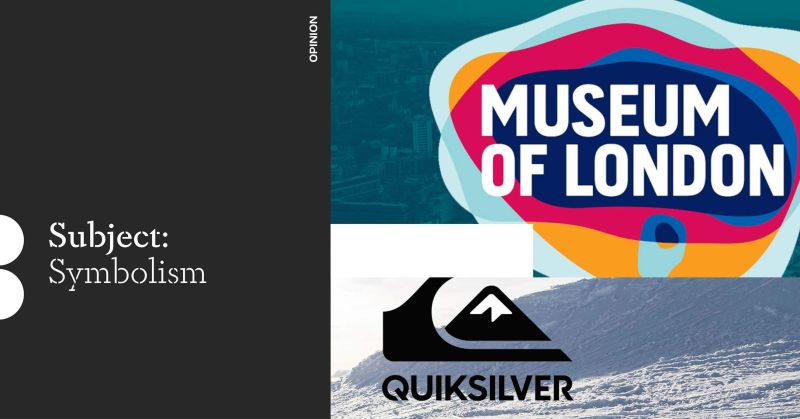
Forward 100 years and logos aren’t just a tool to spark familiarity, but are also now used to convey subliminal messages. Quicksilver’s logo is an interpretation of Hokusai’s ‘Great Wave off Kanagawa’, which is said to represent the irresistible force of nature — apt for a surf brand who are encouraging their customers to be outdoors. The coloured shapes on the Museum of London’s logo represent the changing borders of London throughout history. The logo for the London Symphony Orchestra is not just representative of its initials, it also forms the shape of a conductor.

Each of these logos tell a story — one that doesn’t need to be translated to be understood. But are we regressing? By communicating through symbols and imagery, are we doing a disservice to the development of language?

Have we developed our understanding of communication so greatly that we no longer need language to connect, or have we taken a step 2.5 million years back?

Get in touch with us

+44 7762 344 155

Buildbrands@buxtonthreetwo.com

Instagram Remix: Insta gives its Reels a new twist

24 Fingers

Just when you think you’ve got to grips with the latest video-sharing technology on the web, they go all Etch-a-Sketch on us and give everything a good shake, this month’s being the launch of Instagram Remix. The social media platforms have been falling over themselves to copy each others’ services, from Linkedin finally realising video is A Good Thing, to TikTok’s nifty Duet feature. It’s the latter that prompted Instagram to give its Reels tool, which is barely out of short trousers, an overhaul leading to – drum roll please – the Remix video editing feature. https://platform.twitter.com/embed/Tweet.html?creatorScreenName=24_fingers&dnt=false&embedId=twitter-widget-0&features=eyJ0ZndfZXhwZXJpbWVudHNfY29va2llX2V4cGlyYXRpb24iOnsiYnVja2V0IjoxMjA5NjAwLCJ2ZXJzaW9uIjpudWxsfSwidGZ3X2hvcml6b25fdHdlZXRfZW1iZWRfOTU1NSI6eyJidWNrZXQiOiJodGUiLCJ2ZXJzaW9uIjpudWxsfX0%3D&frame=false&hideCard=false&hideThread=false&id=1377304845204422661&lang=en&origin=https%3A%2F%2F24fingers.co.uk%2Finstagram-remix%2F&sessionId=6a11471eb25c16143a6113e57109a5414dc3689f&siteScreenName=24_fingers&theme=light&widgetsVersion=1ead0c7%3A1617660954974&width=550px

It gives Instagram users the chance to create and post their reaction to a Reel, and while it might have a lot of comedic value, it’s also got great potential for business. 

Picture the scene: a small or medium-sized company posts its reaction to content from a bigger company, which then goes viral, bringing customers to their door and putting their brand on everyone’s lips. Talk about lights, camera, action… 

You can Remix any Reel, as long as the original poster has enabled access. The great thing is, the feature can be turned on and off, either by using the Privacy Settings, which would affect all Reels, or after you share each individual video.

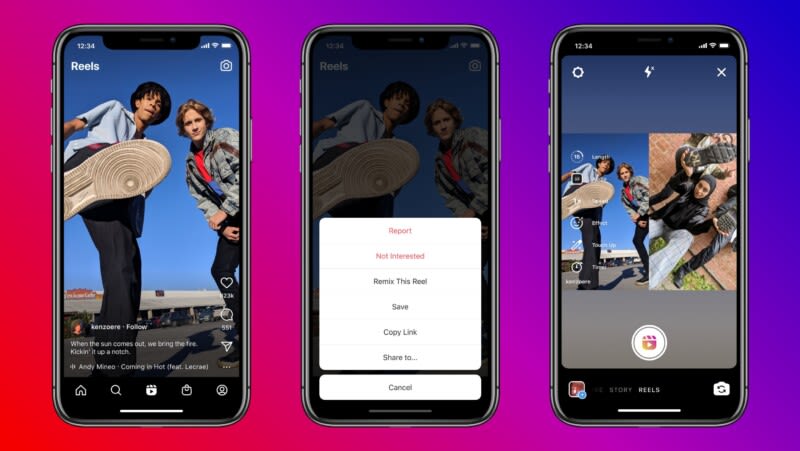
To Remix a Reel, choose the video you want to react to and tap the three dots. “Remix This Reel” should appear if the original Instagram poster has enabled the feature. 

Record or upload your new Reel, which should appear on the right side of the screen. Now’s the time to merrily edit and get creative, adding stickers, a voiceover or change the soundtrack. When you’re happy with your content, write a caption and choose your video settings, then share – easy peasy. 

We reckon Remix Reels could give TikTok’s Duets a run for its money, but we’ll keep you posted. In the meantime, it’s time for our close-up… 

We’re 24 fingers, a digital marketing agency and a proud member of the 42 Club, Brentwood Chamber of Commerce, Excel Business Networking Group, the Trusted Business Community, the Organisation for Responsible Businesses and the Rotary Club of Brentwood à Becket. We help companies who are all fingers and thumbs with their social media grow their business and brand. Book your free strategy call here.

You can view the original blog and other 24 Fingers blogs here

How often should you post on social media in 2021?

24 Fingers

If you’re a brand looking to make a connection with your followers, how often you post on social media in 2021 is key.

Let’s face it: over the past year, we’ve all had a lot more time on our hands to be scrolling, scrolling, scrolling. And while social media has been fantastic at keeping us all connected during these times when we can’t physically be together, if you’re a brand looking to make a connection with your followers, how often you post on social media in 2021 is key.

The thing is, you need to keep your brand visible on social media. That’s a given. But equally, you don’t want to be the brand equivalent of that annoying person that posts 5,897 photos of their adorable child in 4,783 different poses / outfits / locations* (*delete as applicable…and, erm, author of this post, take note for your own personal social media, please).

So exactly how often should you post on social media in 2021? Here’s how to tread that fine line of both quantity and quality in your social media posting this year:

Consistency is key

Ok, we bang on about this a lot here at 24 fingers. But as with everything that keeps your brand out there, consistency really is key. With this in mind, there is no definite right or wrong answer as to how often you should post on social media in 2021. We’d love to give you a magic formula – that you should be posting X amount of times per day – but the long and the short of it is, posting consistently and at a frequency realistic for you and your business, is what you should be aiming for.

What do we mean by this? Well, you need high-quality content, and you need to be posting as regularly as you can keep up with creating that high-quality content. It’s no good posting every day for a week, and then not posting for three weeks; the algorithm will simply not be your friend if you do that, particularly on Instagram and Facebook. Therefore, if you know that you can keep up with creating and posting three good quality posts a week, stick with that, and post them consistently, every week. Be like water, not fire…

Quality over quantity

Quality really does trump quantity when it comes to how often to post. You could post consistently, every day, for years, but if your posts are poor quality or not relevant to your audience, then you simply won’t build your follower base or engagement. This is especially true during a global pandemic when the world and her husband are shouting for your attention on the digital platforms.

When creating your content therefore, keep your audience in mind. This could be through the use of infographics, your social media tone of voice, and, of course, by using high-quality, relevant images. Perhaps help that engagement along a little bit with the use of polls and by asking questions, or by encouraging your followers to share your content. Even if you only post a few times a week, these actions will help to increase your followers and will keep your followers engaged with what you are posting.

And just to do a u-turn on what we’ve said: hello Stories

Just when we’ve told you that you’re better off posting consistently and well rather than frequently and poorly, we’re about to introduce you to Stories. Particularly popular on Instagram, but increasingly important on LinkedIn and Twitter too, Stories (or Fleets if we’re talking Twitter) really do break the rule book when it comes to how often to post.

The great thing about Stories is that because they only remain visible for 24 hours (unless you add them to your highlights) you can afford to be a little more free and easy with them. They’re perfect for those times when you want to share something in real-time; you could share what goes on behind the scenes in a typical day, for example, or, in the days when we could go to events, share updates from the happenings at said event.

Alternatively, you could use your Stories to share your best tips for your something within your industry, for example. And don’t forget that if your followers tag you, you may be allowed to reshare their posts, too, which is a great way of building engagement.

And when it comes to Stories, more really is more: the more frequently you post to your stories, the more likely you will be to appear at the top of your followers’ feeds, as new content is ‘pushed’ towards the front of feeds, thus increasing your chances that your followers will click on your story to see what you’re up to. So with this in mind, save your wow content for your main posts, but to a certain extent, feel free to share the lesser quality content on your stories. 

Don’t have enough hours in the day or fingers in the team to post consistently? Get in touch

Of course, it’s all very well us saying that you need to post consistently, but we appreciate that this is easier said than done. If you could do with an extra hour (or a hundred) in the day get in touch: our 24 fingers will happily go to work making sure your social media channels are posted to consistently to keep your brand at the forefront of your followers’ feeds. Boom.

We’re 24 fingers, a digital marketing agency and a proud member of the 42 Club, Brentwood Chamber of Commerce, Excel Business Networking Group, the Trusted Business Community, the Organisation for Responsible Businesses and the Rotary Club of Brentwood à Becket. We help companies who are all fingers and thumbs with their social media grow their business and brand. Book your free strategy call here

Why Startups Fail & How to Avoid it

Magic Sauce

The research tells us that pre-Covid, 90% of startups fail (that includes all startups). 

There’s a nice, confidence raising figure for you eh.

20% in Year 1, 30% in Year 2 and the rest in years 3-5 (if you can’t do the maths on the last bit then you should definitely get a CFO as your first co-founder).

What those stats don’t tell us is ‘why’?

WHY?

There’s a myriad of reasons, but the most common are:-

Poor management

Cash Flow

Lack of Funding

Poor market/product fit

Founding team implosion

Covid (and an inability to pivot to the ‘new normal’)

Some of that stuff is surmountable, some of it not. 

Fintech for instance has had a huge focus in the post-Covid world, so I could just tell you to go build a fintech platform because investors are desperate for deal flow in that area. You may get money but still fall foul of all of the other reasons above, so let’s tackle those in brief.

Poor Management

The stats tell us that a startup with more than one founder is more likely to gain funding and it’s more likely to succeed. Accept your limitations and try and find a team to fit around you that make up for the skills you don’t have or could improve upon your ‘gifted amateur’ skills. I know this because I’ve been a lone founder and it’s (as the name would suggest), lonely. It also means that you don’t have a ton of cash for experts to do the stuff you’re rubbish at (at least at the start). It’s taken me time but diarising stuff and to-do lists really help to motivate you do the stuff you hate doing. I still push stuff down the list, but I’m getting better at it. You also need to remember that as you build a team, you need those people to buy into your vision. If you’re talking to prospective co-founders or employees, really dig into what they want now and in 3 years (don’t necessarily give them your vision in any detail beforehand, you want to hear who they are).

Cash Flow

Getting a good cashflow template is a real boon. Sticking to it is another, but you have to own it, particularly with a high growth tech startup. Once you get that first £100k+ of funding, people are going to want to know what you’re spending money on and that you’re sticking to the plan for it. Test your assumptions by dropping your revenue by 1/3rd and 2/3rds to see what effect it has on your burn rate (your investors certainly will). Don’t use hiring costs for people way before you’ll need them, think lean.

Lack of Funding

Well, that’s most startups in honesty. To give yourself the best chance possible, you either need to research the hell out of how to raise money and spend time building relationships with the kind of investors you want involved in your business. Otherwise, try and get onto an acceleration programme, into an accelerator, or onto programmes that can deliver the help you need. Only around 3% of startups end up actually attending an accelerator and not many more get invested in (something Magic Sauce is trying to change by making acceleration and investor visibility accessible to a larger audience).

Poor Market/Product Fit

It’s something we try and address with our free canvas available on the Magic Sauce site. Some investors say they aren’t swayed by market size (and it’s right, that’s not important on its’ own). Your product has to be compelling and able to solve problems for its’ audience. History is littered with startups that built something without first checking the size of the potential audience, whether a problem actually needed solving (that had a price ticket attached), or whether their product was usable by the target audience. Identify your audience, talk to your audience and keep them involved. Test and iterate. I have a motto that goes, “you can kick seven shades of shit out of an idea, but it’s illegal to do it to a founder”. Founders that can adapt their vision and product to meet the need of an audience succeed (with a ladle of resilience and ability to listen).

Founding Team Implosion

Horrible to witness and some good startups have fallen by the wayside, usually because of dollar signs in someone’s eyes. Protect the company, look to have solid “bad leaver” clauses in your Shareholders Agreement and robust Articles. Make sure that you’re all clear on vision and who should get what from the outset. Foundrs.com has a great (and simple tool) to give you a ballpark of who should get what to get the conversation rolling.

Covid

Covid has shot many a tech startup down in the last year, while others have thrived (see health/med/pharma/fintech). It doesn’t mean your idea isn’t investible, but it means you may be a bit less “sexy” right now if it’s not ready for market or already building traction/sales. Look at how you can pivot into different markets or adapt your platform. Investors like more than one revenue stream and potential audience (as do lenders) as it can provide an additional revenue stream and may bring forward the potential to step into a market you planned to hit in a few years. An example is one startup I helped last year. Their proptech business was focused on residential house checks. We had a chat and they pivoted into commercial property checks (properties were empty, they needed checking over).

That lot sounds simple, and it’s deliberately broad and high level. Each startup is unique and has its own advantages and disadvantages. Experience and good advice for your own situation is the best remedy and proactive path.

Feel free to add opinions, evidence or questions of your own.

Kris Jones

CEO, Techvelocity/Magic Sauce, Advisor, Mentor and Speaker

If you want a chat in confidence then get in touch here

How to build a successful Direct to Consumer brand in 4 easy steps

Buxton Three Two – Insights

In March, we hosted the first episode of Buxton Insights: a series where we share our knowledge and expertise. This time, we talked about The New Norm, and the available opportunities for traditional Business to Business (B2B) businesses to move to a Direct to Consumer (D2C) model. Keep reading to find out how you can build a D2C channel in 4 easy steps.

CHANGE

Let’s start by looking at what’s changed over the past year. At the start of the pandemic, executives were asked how quickly they expected to see an increase in customer demand for online sales. They estimated that it would take 585 days. In reality, it took only 22 days.

This shift towards digital isn’t new, but it has been accelerated by Covid. The digitalisation of consumer behaviour has progressed 3-4 years in less than 1.

We know that we’re not going ‘back to normal’. Increased digitalisation is the new normal, and it’s making our lives easier and more affordable. With the ability to shop for anything at the click of a button, access healthcare on-demand, take part in events online through platforms like Clubhouse and Instagram, and work flexibly and remotely, digitalisation is saving us money and allowing us more time to spend with loved ones.

To change this now would be regressive.

The fall of Arcadia and Debenhams shows us that the high street has finally collapsed. Against this backdrop, John Lewis has spent £150m on a Milton Keynes warehouse that serves online operations, and M&S has announced that it will stock rival brands online to attract a greater customer base. The brands that fail to adapt risk being left behind – but those who have done successfully are dominating the market.

LOOKING FORWARD

For businesses who have been impacted by Covid, whose customer base has been impacted or those who are perhaps experiencing a ‘lumpier’ order book than before, it might be time to look at new strategies and opportunities to achieve growth.

A D2C SOLUTION

We believe in acting proactively, not reactively.

Acting reactively is building a website or an online channel for your B2B manufacturing business. It’s not thought through, it’s not targeted or strategic. It’s not the same as having a D2C brand.

When we talk about acting proactively, we’re talking about building a D2C model for your business. This is a carefully constructed brand with insight, analysis and the consumer at the forefront. 

Here’s how to build a D2C channel for your business. 

STEP 1: KNOW YOUR CUSTOMER

Get to know your customer. What makes them tick? Where do they shop? What music do they listen to? Understand how to connect with them on an emotional level. 

STEP 2: DEFINE YOUR BRAND

Using your understanding of your customer, define your brand. What do you promise to deliver? What can your brand offer them that others can’t?

STEP 3: GET CREATIVE 

Now that you know your customer inside out and what value your brand offers them, you can work out how to communicate with them visually. 

STEP 4: PERFECT YOUR EXPERIENCE 

Every interaction that your customer has with your brand comes into play now. Your social media channels, website, ordering system and product packaging influence your customer’s experience. If you’ve communicated with them well up to this stage, your new D2C brand will be a success. 

________

If you’d like to hear more about the 4 steps to building your own D2C channel, or how we built Dough and Glory – a D2C brand from a traditional B2B manufacturer – get in touch with us at buildbrands@buxtonthreetwo.com

Get involved with the Norfolk Knowledge Hub!

If you have content you want to share, get in touch!

The Norfolk Knowledge Hub is available to every business, the content is provided by every business that would like to share their knowledge, skills and expertise. It is curated by your Norfolk Chambers of Commerce.

If you would like to get involved, then we would love to hear from you!

Why not drop us a line and we’ll get straight back to you to arrange a chat.

You can find out more about membership with the Norfolk Chambers of Commerce here

Or if you would like to speak to a member of our team directly call us on 01603 625977

(we’d love to know more about you and your business!)

Boost Your Business: Top Tips from a Successful Business Mentor

Kathy Ennis, LittlePiggy

I can say – hand on heart and based on personal as well as client experience – to run a successful business as a solopreneur, freelancer or side hustler you need so much more than an idea, passion and vision.

There are a whole host of practical, applicable skills – as well as soft skills – that will give your business a boost and contribute to your ongoing success.

I’m going to share five skills that may not spring to mind when you think about running a successful business or being a successful entrepreneur – but I believe every business owner should develop these skills if they want to thrive, rather than just survive.

Skill 1: Critical Thinking

When you:

  • question assumptions, claims, and viewpoints
  • understand rhetoric, bias and sound bites
  • consider pros, cons and risks

That’s critical thinking.

So why do we need critical thinking in business?

We are being bombarded with information (at least 185% more than our grandparents), social media content and ‘fake’ news.

As business owners we have to develop our ability to question what’s real and what isn’t, to reason logically and to be aware of a world wider than the confines of our business and our immediate locality.

We also need to take as much time to think about what could go wrong, as what could go right, in our business.

Why?

Because of the pace of change, ready access to information and the massive amount of choice consumers have.

Critical thinking will allow us to be responsive to the impact external influences have on our business as well as the changing wants and needs of our customers.

Skill 2: Focus and Discipline

What do you do when your phone rings? Does your desktop, laptop, tablet or mobile make a sound when you receive an email, a message or a social media notification?

Do you look – read – respond?

And what happens to what you were doing before that interruption – however minor the interruption seems?

After a few texts, emails and Facebook notifications is half the day gone but all the work remains?

Focus and discipline have always been essential to success. These days, managing distraction has become harder for even the most disciplined among us. And it’s likely to get harder, not easier. So, now is the time to bite the bullet and come up with strategies that will shut out the ‘noise’, without shutting yourself off.

A few things I have found that work:

  • Identify specific times of the day to deal with emails, for example, the first half an hour of your working day, half an hour before or after lunch, a half an hour before you finish for the day.
  • Turn your phone to silent and turn off notification noised and symbols on any desktop or tablet devices.
  • Turn your phone screen-side down so you can’t see notification symbols

You may think these techniques are difficult, or that you will lose business as a result.

Hmmmm, maybe…

I’ve had my phone on silent for two years. I always leave my phone screen side down and I have my email management times.

In the past two years, I have had more business.

Go figure…?

Skill 3: Being Human

Just be you.

Ther’s the old saying “Be yourself, because everyone else is taken”, but if you look online you could be forgiven for believing that the world is made up of indistinguishable lemmings.

Everyone wants the same thing, everyone wants to do the same thing, everyone wants to achieve the same outcomes. Copyists and pale imitations abound.

The most unique thing in your business is you!

So make sure you share that uniqueness.

What does the ‘About’ section on your website say about you? Is it bland? Is it anonymous? Or does it tell people who you are, what you do, how you do it and why you do it?

Does it communicate your values and where you, as an individual, draw a line in the sand? Do you allow people to see your vulnerability?

When you network offline do you see it as an opportunity to sell your products and services or as a method for building relationships for mutual, beneficial personal and business support?

When you network online how ‘real’ is your online persona. Is it a numbers game or, again, an opportunity to meet and engage with a group of people that you want to support – and who should want to support you back?

I tried an experiment on LinkedIn last year. In January 2019, I decided to send a direct message to everyone who sent me a standardised ‘join my network’ request. I asked them what, about me and about my profile, prompted them to request to connect. This is what happened to the 50+ requests I received. 10 people responded with really lovely messages, about 35 never responded – and about 5 told me to “f**k off” (their words, not mine).

What did the 40 or so people who didn’t respond (or who told me to F-off) actually want? Engagement with a human being or another notch on their Contacts numbers? Well, it wasn’t the former.

Life’s too short not to be yourself. OK, maybe some people will not like what they see. Their loss.

Be Marmite : Be Human

Skill 4: Getting Things Done

If you:

  • don’t develop focus and discipline (see Skill 2 above)
  • procrastinate which, in my book, includes the myth of perfectionism (procrastination by another word)
  • set yourself unachievable targets and don’t create and implement accountable action plans

You won’t get things done.

And, when things don’t get done, there is little likelihood of success.

I want to distinguish here the difference between having a well-defined, action-based business plan that leaves you with lots and lots to do and the “I’m so creative and have so many ideas I just can’t seem to get everything done that needs to get done”.

The first scenario can be rectified with some well-placed outsourced activities such as virtual administration assistance or social media management.

The second scenario needs a combination of focus and discipline. Help to create plans and working methods that suit that individual’s personality and a Business Mentor to keep them on track and accountable.

I have heard people say that all it takes for an ultra small business to be successful is ideas and passion.

Sorry, I disagree with that 100%

Everyone has ideas. Everyone has something they are passionate about.

What you really need for a successful business are systems, processes and automations. You need a business owner who develops an action plan that will make things happen – and gets on with doing it.

Skill 5: Competitive Spirit

The explosion of the micro and side-hustle businesses has opened the floodgates to customer choice. This means, as business owners, we are in an unprecedented era of competition.

Whatever we do, there will be many other businesses doing it also. And, because of the increasingly easy access to goods and services online, our competitors can be hundreds, if not thousands of miles away.

Competition is not a bad thing.

We have to be competitive.

The first step is to know who our competitors are. The second is to understand what sets us apart from them.

It’s only by knowing who and what we are up against and the differentiation point we have over them, that we can truly offer the unique ‘thing’ that our customers are searching for.

Competition doesn’t have to be cut-throat. It doesn’t have to be ugly, and it can really easily morph into something greater than the sum of its parts. Collaboration.

If you would like to talk with me about your business – book yourself a complimentary, half-hour Breakthrough Session

How to get paid on time

NatWest Business Builder: Revenue Streams

The UK economy has rallied since the recession, but a culture of late payments is still costing SMEs billions of pounds. Savvy invoicing practices can pave the way for healthier cash flow and more robust finances.

  • A culture of late payments can have a negative impact on growth and job creation among SMEs
  • Using an outsourced credit company is one way to keep track of payments and get invoices settled sooner rather than later
  • For the construction sector, project bank accounts (PBAs) have revolutionised the way in which cash flow is handled

For SMEs, consumers may be king but cash flow wears the crown. Unfortunately, the Federation of Small Businesses (FSB) reports that 84% of small firms are still being paid late.

According to Bacs Payment Schemes (Bacs), the company behind Direct Debit and Bacs Direct Credit, the UK’s smaller businesses are facing an eye-watering total bill of £6.7bn in order to chase overdue payments.

Currently, over a third (34%) of business owners experiencing late payments are forced to rely on bank overdrafts.

This has knock-on consequences, with almost a quarter of SMEs being forced to pay their own suppliers late.

The good news is that despite the culture of late payments and its negative impact on growth and job creation, businesses that are prepared to confront the problem can and often do experience good results, such as improving their cash flow and prospects.

“Either by better controls or by using external support, a business has to master its processes over invoicing and credit control to survive and grow in an increasingly competitive marketplace,” says Christopher Briggs, associate director at Baldwins, one of the UK’s fastest growing accountancy firms.

Invoice discounting or factoring

“For many businesses, chasing clients for money can be a difficult process to manage,” says Briggs. “It can be time-consuming and unpleasant, which often results in ill-timed invoices and poor collection of cash. Even for SMEs that are very efficient at this process, increasing payment terms are now commonplace, which, if left unchecked, can fatally damage the business.

“Many businesses opt to raise finance using the debtor ledger, sometimes known as invoice discounting or factoring. Essentially, this means that a percentage of the invoice is paid straight to the company as soon as they raise the invoice. This allows companies to get on with what they do best while a professional organisation acts as their credit control. Importantly, it also allows the business to focus on growing; because cash flow is assured on any new orders won, the business can concentrate on winning and delivering the order rather than worrying about whether they can fund it.”

Outsource your credit control

Worcester-based creative agency F8 Creates has passed all its invoicing to an external company.

“We use an outsourced credit control company – we’ve found that they cost us less than the time it would take to chase invoices,” says F8 co-director Hamish Gill.

“It provides us with a different voice for chasing money, which we’ve found has had a positive impact on our relationships with our clients.They’re also able to provide us with a broad range of other services we wouldn’t normally have access to, such as credit checking,” he says.

Get a head start

When clients know exactly where they are and what they’re getting, the invoicing process should be quite clear cut.

Clive Murphy, MD at Trojan Electronics a Swansea-based multi-channel e-commerce company, says communication errors are often to blame for glitches in invoice payment.

“Delays in payment are normally only caused by a problem with the supply of product or an issue with the supply of services. If there’s an issue or concern raised, this needs to be dealt with promptly and effectively,” says Murphy.

“Check that invoices have been received by the company you’ve sent them through to, provide statements and have regular contact to check that haven’t been missed,” he says.

Similarly, Rachel Hynes, head of administration and finance at design agency Waters Creative, is also keen to stress the importance of robust communication and points out that prevention is always better than cure.

“Check invoices have been received by the company you’ve sent them to, provide statements and have regular contact to ensure invoices haven’t been missed”

Clive Murphy, MD, Trojan Electronics

“It’s worth getting to know the client’s finance system so that any ‘typical reasons’ for late payment have been eliminated before the invoice is sent,” she says. “Larger organisations are likely to have a strict process before processing invoices for payment so will be familiar with this.

“A reminder email sent the week before an invoice is due can help flush out any issues before an invoice becomes late.

“If that fails, it’s worth pursuing it immediately and systematically, keeping note of any promised payments so they can be followed up and resolved issues straight away. It can be time-consuming but ultimately worth it.

“Negotiating extended payment terms with suppliers will also go a long way to give breathing room if a client is late in paying. Staged payments with clients over a number of months has also proved very productive and really helps with cash flow.”

Cues from construction

The construction industry in particular has some challenging payment terms. David Kieft, spokesperson and president-elect for The Electrical Contractors’ Association (ECA) Wales, says project bank accounts (PBAs) have revolutionised the way in which the sector’s supply chain gets paid.

“PBAs help businesses maintain cash flow,” he says. “The vast majority of businesses within the construction industry are SMEs.

“It’s a recurring scenario for lower-tier contractors, including SMEs, to be waiting months for payment by firms up the supply chain. Throughout this time, the lower-tier contractor still has significant outgoings – such as wages – and is at risk of any insolvency higher up, which could ruin the business.

“Supply chain members that participate in PBAs no longer have to endure long payment periods; they receive the funds they’re due directly through a bank account, specific to the project they’re working on. PBAs therefore have the benefits of bringing payment certainty, and those payments are made promptly, allowing efficient cash flow.”

At a glance: six tips for smoother invoicing

1. Be proactive

Chasing invoices early via a polite call or email can often pre-empt a payment problem. Being proactive also helps you build relationships with your customer’s accounts department.

2. Be clear

Make sure clients know exactly where they stand and what they’re getting for their money.

3. Do your homework

Choose the right customers. If in doubt, obtain references or carry out a credit search.

4. Negotiate better terms

Payment terms can vary from 14 days to 30 days. A clear routine and structure in place can prevent confusion. Doing invoices in batches is a common tip – and sending invoices at the same time each month encourages consistency.

5. Set a date with suppliers

Creating Direct Debits will save your suppliers time and money, and could save you money in the long run, too. Direct Debits could help you negotiate better payment terms and avoid penalty charges on any overdue invoices or bills.

6. Play to your strengths

Financial experts advise setting up highly automated payments to take the strain, or outsourcing invoicing, leaving you free to focus on building your business.

Further Reading

We have a thriving and diverse community of thousands of entrepreneurs from multiple sectors, backgrounds and skill sets helping you to connect with the right people at the right time. No matter whether you’re looking to upskill, get feedback, engage with new people or simply observe, there’s something for everyone.

‘Want to learn more? Register for NatWest Business Builder to view all of their business development tools. Click HERE

Management strategies: upselling

NatWest Business Builder: Revenue Streams

Upselling is integral for many business models and is considered to be up to 10 times cheaper than acquiring a new customer.

Upselling (inviting customers to buy a more expensive or upgraded product or service) and cross-selling (inviting them to buy something that complements their purchase) are the lifeblood of many businesses because they require a fraction of the effort and cost of acquiring a new customer.

Handled badly, however, and both practices can be clumsy and off-putting; they can even inspire a previously happy customer to abandon you entirely. We asked SMEs and experts to share what they consider to be the golden rules.

1. Link the upsell to solving a problem

If you don’t want your customers to feel like you’re simply trying to squeeze more money out of them, sales expert Alex Moyle says it’s vital to explain how the upsell you’re proposing will help them solve a problem. “The doctors we like most are the ones who spend time understanding not only our illness but how our illness is affecting our lives,” he says. “It’s only once we’ve had this conversation that they start talking about treatments. The same goes when you have a new product to talk to a client about.”

While you may want to jump in and say: “Look at this shiny new widget,” Moyle says you first need to pinpoint the problem it solves that will justify its expense. “Doing this will mean your customers see your intent as being focused on helping them rather than just growing your revenues,” he adds.

Hanna de la Torre, manager of sales at the interactive presentation platform Mentimeter, agrees. “A golden rule in upselling discussions is to focus more on the added value for the customer, rather than pricing and discounts. How can you create more value for them? Which internal targets could be more easily met due to expanding the use of the tool/product within the organisation?”

While upselling is often an easy win for software-as-a-service (SaaS) businesses like Mentimeter (fear of missing out on the bells and whistles that come with an upgraded service can be a great psychological driver in getting customers to move up from their entry-level option), de la Torre says it’s far better to build trust and look at a user’s long-term relationship with your business. A customer for life at £100 a year is better than a disgruntled one paying £500 who leaves after 12 months.

2. Educate your clients about the different ways you can help

Whatever you sell, people often only come to you for one thing – when in fact you’re capable of delivering a number of products or services that they may not know about. It’s your responsibility, says Moyle, to make sure your customers are fully aware of the other things you can do.

“A golden rule in upselling discussions is to focus more on the added value for the customer, rather than pricing and discounts”

Hanna de la Torre, sales manager, Mentimeter

“Clients actually like using one supplier for multiple solutions,” he says, “but one of the main reasons they use other suppliers is they simply don’t know you can solve other problems as well. Because of this, what you talk to your clients about will determine what problems they think you can solve.”

Neville Louzado, head of sales at cloud-hosting specialist Hyve Managed Hosting, adds: “Once you understand your customer’s business, you can map out areas that you can sell into. You may have sold to the IT department, but what about HR, finance and operations as well?”

3. Make sure your upsell makes financial sense

Before you embark on any upsell, it’s important to crunch the numbers. For example, Nicola Lando, co-founder of Sous Chef, an online store for cookery professionals and keen amateurs, says nudging a customer towards a slightly more expensive order may not be in your favour if they suddenly qualify for free postage, for which you foot the bill.

“We always have to consider our £35 free shipping point when setting product prices,” she says. “As a result, we sell very few products that are around £35.”

4. Consider if a ‘downsell’ may seal the deal

The widely used ‘you may also like’ area at the bottom of a web product page can serve both to encourage trading up to a similar item of higher value and also to help potential customers discover items in your store they might not know are there.

But it has a third function, too – one often used when people are clearly interested in a particular type of product but seem reluctant to commit. “Customers often come to our site through a page with a very large and therefore expensive version of a product, perhaps more suited to professional kitchens,” says Lando, “so we’ll often also show a smaller-sized product to help convert home cooks. Better that they purchase a cheaper version than none at all.”

5. Have a well-defined strategy

Upselling and cross-selling techniques come in many guises. It makes sense to look at your website or service through your customer’s eyes. Options for adding value could include highlighting related products, telling people how much more they need to spend to get free delivery or putting together bundled products.

6. Understand that unwarranted upselling can kill a relationship

Will it genuinely benefit the customer? As with most good business practices, this really should be the first and last question.

Companies that treat upselling as a quick win, selling people something that’s not right for them, risk sacrificing their relationship with that customer. This ultimately affects a business’s long-term performance and even its survival.

Further Reading

We have a thriving and diverse community of thousands of entrepreneurs from multiple sectors, backgrounds and skill sets helping you to connect with the right people at the right time. No matter whether you’re looking to upskill, get feedback, engage with new people or simply observe, there’s something for everyone.

‘Want to learn more? Register for NatWest Business Builder to view all of their business development tools. Click HERE

How to raise your prices without losing customers

NatWest Business Builder: Revenue Streams

Most young businesses will want or need to raise their prices at some point, but what’s the best way to go about it?

If you’re selling the same thing to the same clients at the same price for two years in a row, you’re not growing your business. In fact, says business development strategist Charlie Whyman, you could actually be shrinking your business.

Among the most compelling reasons for hiking up your prices is rising costs – if you suddenly have to dig deeper to provide your product or service, it might seem logical that your customers should help bear the brunt of that.

But there’s more to raising prices than just making sure your bottom line doesn’t diminish – sometimes you may wish to push them up because you feel what you offer is worth it. Maybe perception of your brand has improved, or you’re offering a better service than you used to. In many industries, Whyman says, we’re moving towards value-driven pricing.

More of which in a moment, but for a straightforward retail business, what’s the best way to put up prices without making customers flee to your nearest competitor?

The answer, says Niamh Barker, founder and MD of the Travelwrap Company – whose luxurious cashmere wraps have been warming shoulders since 2007 – is to first ensure customers understand and appreciate why, exactly, your brand and its products are special.

Because it’s worth it

“Our classic collection has had a price increase of around 13% over the last three to four years,” says Barker, “and I was certainly apprehensive that increasing prices could impact sales. We don’t take increases lightly, but at the end of the day we need to ensure we can cover the cost of production and raw materials as well as staff and so on.”

“Be transparent about why you’re increasing costs. What has led to the increase? Always honour existing agreements and possibly offer a ‘staggered’ introduction to new prices to sweeten things”

Sean Mallon, CEO and founder, Bizdaq

Much is made on the company’s website and in promotional material of the fact that Travelwrap’s products are created in the UK, are high quality and can’t be bought elsewhere. This, in part, has resulted in customers accepting what has amounted to some fairly modest price rises. In fact, sales have increased by about 50% – proof, perhaps, that many customers understand small rises in price are inevitable, and that many will readily accept them if they like the product.

How to raise prices

Andrew Firth, CEO and founder of Leeds-based digital agency Ascensor, suggests waiting until after the January sales. “It means you get to ‘give’ a bit before making the change,” he explains.

Frances Day, marketing expert and founder of business coaching organisation In The Company of Leaders, suggests adding lots of extra value. “This is the secret to successfully raising your price. The price becomes almost irrelevant when the client is delighted with the outcome.”

Meanwhile, Sean Mallon, CEO and founder of business-selling platform Bizdaq, argues the case for clarity. “Be transparent about why you’re increasing costs,” he says. “What has led to the increase? Always honour existing agreements and possibly offer a ‘staggered’ introduction to new prices to sweeten things.”

Other tactics include adding little extras to soften the deal, and – a little left field – keeping the same price but reducing the size or scope of the product or service you offer.

Ultimately, says Whyman, there’s a market for what you’re selling whatever the price – so long as it’s packaged and targeted correctly. “Think of personal trainers,” she says. “They mostly offer the same sort of service, and if you’re offering your skills to the average gym-goer, then about £30 an hour is probably the most you can charge. But if you’re targeting high-profile footballers or busy CEOs, the sky’s the limit.”

Know your product, believe in your brand, and have confidence in your pricing. “You do need to increase what you’re charging your customers from time to time, and, yes, you will lose some of them,” says Whyman. “But I think that’s OK, especially if you’re able to tell the ones that stay with you exactly why you’re doing it and can explain the value they’re getting out of what you offer.”

The price is right

Erica Wolfe-Murray, business coach, author, and founder of creative agency Lola Media, shares her tips on how to get your pricing right.

1. Know the cost of opening your doors each morning

It’s vital to know how much your overheads cost you each day. This is the very minimum your business needs to recover every single day to ensure you stay afloat, and your pricing needs to reflect this.

2. Understand how to set your pricing

The price of every item or service you sell must cover the cost of its raw materials, your time producing it, a proportion of your overheads, plus a margin of profit for your business.

3. Offer a range of prices

If you sell a range of products or services, ensure you have a pricing range, from cheaper through to more expensive. When offered a choice, most customers will generally select the mid-priced item, perceiving better value than the highest or lowest.

Further Reading

We have a thriving and diverse community of thousands of entrepreneurs from multiple sectors, backgrounds and skill sets helping you to connect with the right people at the right time. No matter whether you’re looking to upskill, get feedback, engage with new people or simply observe, there’s something for everyone.

‘Want to learn more? Register for NatWest Business Builder to view all of their business development tools. Click HERE