People and Training

‘What Can I Do?’: Empowering Ourselves

The Engaging People Company
This year has brought many challenges. Including a new one I hadn’t envisaged.

The technology terrors.

Back in the very early spring, setting up meetings could bring with it previously unentertained anxieties. No sooner would I pop a virtual appointment in my calendar than my mind, like the DeLorean in the Back to the Future movies, would race forward to a few days hence. What if my Wi-Fi drops out? What if my laptop freezes? What if my microphone stops working? What if ditto my camera? What if I can’t get the grips with the settings? What if-

And when not thundering into some future parallel universe, my mind would cast back to times gone by, experiences when the technology had failed. And these unwelcome memories brought very literal reminders of the feelings of worry that they had provoked at the time.

Like a rocking horse, I oscillated unhappily between the ‘what ifs’ of an unknown and increasingly concerning future scenario and past reminisces of previous technological mishaps. And with each new thought, I could feel my anxiety increase until my worry had formed itself into a low, unhappy hum, prodding me annoyingly.

STOP.

What can I do?

I can set up my laptop closer to the Wi-Fi

I can go do a ‘test run.’

I can spend half an hour familiarising myself with the settings.

And that was it. Anything else that might crop up was out of my control. So if my laptop suddenly froze, or the internet dropped out, or if a power cut rudely and abruptly shut everything down, I would deal with it in the moment.

Such a simple, every day and minor challenge. But an example of how by realising we always have a choice, that there is always something we can do – as well as stuff about which we can do nothing – we can mitigate and manage worry and stress: and unnecessary worry and stress at that.

In any situation we have power. The key is realising where our power lies.

What can I control? What can I influence? That’s what we focus on. There is always, always something that we can do – even when we feel like something is happening to us rather than with us.

And what can I do nothing about? This is the stuff that we have to let go. Especially as these are the things on which we exert so much of our mental energy, ultimately bringing worries and stress and anxieties. It’s so often the ‘what if’ aspect of our lives, such as in my case. I had no way of knowing what would happen, I’m not a psychic, so getting lost on that turbulent train of thought was futile. And ultimately, unpleasant.

Because as well as realising where our power lies, focusing on what we can control and influence, is freeing. If I cannot do anything about it, then why I am giving it such head space?

The pandemic which we find ourselves in is a prime example where we can find and focus on the things within our control and influence. What can I control? Washing my hands. Wearing a mask. Keeping my distance. What can I influence? Others behaviours’ through my own.

But I am not an epidemiologist (there’s a word I couldn’t say never mind spell a year ago). I’m not a scientist. I’m not a politician. The pandemic offers many tempting opportunities for ‘what if…’ thinking but is this helpful? Or is it just creating further anxieties in an already challenging time?

Of course, that’s all very well said and done: it’s a pandemic after all. But it can be an invaluable tool. And, when we find ourselves on that slippery ‘what if’ path, we can remind ourselves that the only moment we need to focus on is this one. Right now.

*Oh, and those technology terrors are long since banished. I’m happy to report that I’m more than au fait with a good Zoom quiz these days.

This article was shared with permission from The Engaging People Company

Can we help? We’d love to hear from you. Please do get in touch:

Phone: 07834 578872

Email: michelle@engaging-people.co.uk

Twitter: @engagepeopleco

First Intuition – Claiming incentives for apprenticeships

If you need help and advice on how to claim your apprenticeship incentives, this article offers some useful information and resources to help you do so.

The ESFA introduced payments to support employers who hire new apprentices between 1 August 2020 and 31 March 2021. You can apply for these payments until 30 April 2021. Therefore, if you take on new apprentices from 1 February 2021, you can apply between 1 February 2021 – 30 April 2021.

In short, for eligible apprentices aged 16 to 24, employers will receive £2,000. Whereas for those aged 25 and over, employers will receive £1,500. These incentives are claimed on the Digital Apprenticeship Service, so you will need your organisation’s bank details so the ESFA can pay your organisation directly.

Eligibility

You can only apply for new apprentices who joined your organisation from 1 August 2020 to 31 March 2021. This also includes if you recruit apprentices who have been made redundant. You cannot apply for an existing employee who joined your organisation before 1 August 2020, even if they started an apprenticeship after this date.

How to apply

You can apply for an incentive payment after you have added new apprentices to your digital apprenticeship service account. You can apply until 30 April 2021. The ESFA has produced a video step by step guide detailing how to make an incentive claim via the Digital Apprenticeship Service.

Watch the step by step guide here

When you’ll get paid

This is a direct agreement between your organisation and the ESFA. Payment is made in two equal instalments for each apprentice. The first payment is after an apprentice completes 90 days of their apprenticeship and the second is after 365 days. To receive the full payment, the apprenticeship must last for at least one year. Bacs provides payments on the 14th working day of the month (usually taking three working days to process). After you apply, you can view the estimated payment dates for each apprentice in your digital apprenticeship service account.

You can find out more about our apprenticeships here and some employer resources here.

Norfolk officially the best place in UK to learn as an adult

We are delighted to have been named the UK’s leading adult education provider taking home the Adult and Community Learning Provider of the Year award at the Tes (Times Educational Supplement) Further Education awards, often referred to as the ‘Oscars of education’.

Denise Saadvandi, Head of Service said, “I have never felt so proud of this fantastic service, the total commitment and dedication of our staff and tutors to our service and learners has led us to achieve great things for our community in Norfolk.”

The award recognises providers ‘whose imagination and passion’ have shown ‘excellence in providing a high-quality curriculum with excellent student outcomes’.

On the evening, the judges said about the service that: “Norfolk County Council has an amazing ability to do what’s right for its community. In life before Covid, 98% of provision was delivered in 200 venues across the region, but by April 2020 everything had changed and all provision moved online. As a result, learners remained connected with education and, crucially, with each other.”

We want to say a massive thank you to all of our staff, tutors and learners for their amazing achievements over the year. We couldn’t have done it without you!

If you’d like to watch the awards, the stream of the event can be found on the Tes YouTube channel. The Adult and Community Learning Provider of the Year Award is announced 32 minutes into the stream.

www.norfolk.gov.uk/adultlearning . 

When the wrong move is right

NatWest Business Builder: Building a growth mindset

© Getty Images

Failure, according to billionaire inventor Sir James Dyson, is far more interesting than success.

It’s an important process in succeeding. If you get it right first time, every time, you learn nothing and gain nothing. Mistakes in business, although often a temporary setback, almost always create a memorable lesson that you can take with you as a valuable contribution to the future of your business.

When the Dyson dual-cyclone vacuum cleaner burst into shops throughout the UK in 1993, its creator was hailed a genius – an original-thinking leading light of Britain’s technological revolution.

But Sir James’ invention was built on a catalogue of mistakes. It had taken almost 16 years to bring his first vacuum cleaner to market. Each one of those years was peppered with errors, 5,126 of them to be exact. That one rethink – a reinvention of everything Hoover had swept before them – was version number 5,127.

Today, the Dyson company has annual earnings of £800m, while Sir James himself commands a personal fortune in excess of £4bn. Not bad for a 15-year cycle of continual failures.

It’s a legacy that resonates across many and varied business minds throughout the world.

Perseverance is key

Steve King, CEO and founder of Black Swan, one of the UK’s fastest-growing tech start-ups, set out at the age of 25 to open a music studio in Devon. “I borrowed £50,000 from my parents to get the business started but had no real business plan and, perhaps unsurprisingly, it went bust,” he says.

“Not only had I failed, but I’d also put a big dent in my parents’ retirement fund, which was not a great feeling. I had to sit down with my dad and have a very difficult conversation where I told him the bad news, but the only thing he said was, ‘never give up’.”

It was a lesson that has never left him and a mantra that echoes around his current business. “Don’t fear failure or making a mistake, as long as you can learn from it and move forward,” King says. “Also, and in case you’re wondering, I have since paid my parents back.”

Playing on their terms

Your biggest mistake being your first serious error of judgement in business is a learning curve that Phil Riley, former chief executive of Chrysalis Radio, is familiar with.

“I’d set up a company to make short, pre-recorded music features for radio stations – I had demos made, got them cleared for transmission, but outsourced the sponsorship sales to a third-party sales house,” he says.

“Don’t fear failure or making a mistake, as long as you can learn from it and move forward”

Steve King, CEO, Black Swan

“I was a tiny part of their business so they simply didn’t focus on getting any sales. I had to close the business down in the end and I’ve tried very hard never to let third-party sales houses have a dominant say in my businesses since then without putting in place really stringent service terms, normally including some form of revenue guarantee or performance clause with penalties for failure to deliver.

“If you’re going to pay people a substantial portion of your revenue for representing you, try to make sure it’s on your terms – not theirs, and the time to set that up is before you sign the deal.”

Slow to take action

Mistakes aren’t restricted to the early planning stages – sometimes inaction over a lack of judgement can have consequences throughout your enterprise.

Sarat Pediredla, CEO of App designer Hedgehog Lab, says: “I think one of the biggest mistakes I made was to put faith and backing into a team member, despite everyone else telling me how disruptive they were and the impact it was having on the company and wider team morale,” he says.

“It baffled a lot of my other team members that I couldn’t see the obvious but I felt like it was my responsibility and, if I tried hard enough, I could fix the problem. But the whole episode ended very badly with this team member leaving – with extreme animosity on both sides.

“The reason I’m glad it happened was it has really helped me realign my expectations around questioning everything I hear as a leader and ensure I follow my gut.”

Pediredla adds that the episode has caused him to be more decisive and take action swiftly when he recognises a problem. “In the past, I was too slow to respond to issues, either burying my head in the sand hoping they would go away or trying in futility to resolve them,” he says.

“Now, I take a much harder but fair approach to resolving problems quickly before they fester.”

Open to change

Dave Matthews, owner of the Magic Alley attraction in Stratford-upon-Avon, first set his business up as Creaky Cauldron in London in the late 1980s, which, upon reflection, began with a branding error.

“The premises that I took on was the basement of a building just off the Greenwich High Road,” he says. “You went through a big iron gate, into a small door in the side of the building and down a few stairs to where the basement suddenly opened up in front of you – appearing to stretch on forever.”

Visitors would constantly refer to Matthews’ fledgling business as “Magic Alley” because of the interesting location, completely ignoring its correct name. It was at that point Dave realised his first mistake was a big one – he’d given his business the wrong name.

“It was quite infuriating at the time because that’s not who we were,” he says. “But it became established and that’s who we became and we’ve never looked back.”

Feel the fear

For digital entrepreneur Michael Tobin OBE, the fear of making mistakes often became a mistake in itself. Tobin led the FTSE 250 company Telecity for a decade, but around that appointment his hopping from boardroom to boardroom as a serial non-executive director always triggered doubts about his own ability.

“Every time I quit a job and moved on to the next thing I was faced with the fear of the unknown, and sometimes it felt like I was making a serious mistake,” he says.

“But the mistake I was actually making was giving in to the fear of failure because, certainly on reflection, it was always the right move to move on as I didn’t always have the right people around me.

“The lesson I took from those experiences was to always surround yourself with the best people you can find and afford ¬– they will make you a success.”

Join the Business Builder Facebook Community here

  • ‘Want to learn more? Register for NatWest Business Builder to view all of their business development tools. Click HERE’ 

Company culture can be shocking!

Swarm

I have just re-visited an article by Saul McLeod on Stanley Milgram’s experiment studying authority on obedience. This sprung out of some other work I had been doing on leadership and management, and a particular passage in Simon Sineks latest book ‘leaders eat last’.

o-ELECTRICITY-SHOCK-facebook.jpg

65% of participants gave a possibly lethal electric shock to the recipient

Part of the findings of this incredibly controversial experiment was that 65% of participants, when instructed by an authority figure, gave a possibly lethal electric shock to the recipient, and all gave a substantial electric charge to the innocent person at the other end! But for me, the most horrifying part of the findings was that not one volunteer pressing the voltage button asked about the well-being of the shock recipient, even with the belief that they may just have killed another human being. In fact, their first thought was passing off the blame to the authority figure, to save themselves from any retribution.

Sinek linked this experiment to company culture, and how weak cultures allow the business figures to outway the importance of the people. As companies grow, they can become physically divorced from the human aspect of the business. Figures on sheets become the driving force, this then transfers to those who supply those figures, forcing them into decisions which may harm colleagues, customers, the business and themselves.

I have witnessed this myself, not so long ago in another company I was told to “stop worrying about the big picture, those who get paid more worry about that”. This was all because I questioned the wisdom of what we, as a company were doing. The figures ruled the roost, every day they were updated, you were judged not on the quality of what you delivered, and the human cost of that delivery, but by the numbers you produced, however you produced them! My context of the situation was this was turning employees inward, protecting themselves, forcing them to make decisions not based on the best interest of the client, or the company, but on behalf of protecting themselves.

The weak culture had allowed creativity to be stifled, departments to become siloed, blame to become more important than solutions, and ultimately decisions made blamed on those above them to protect themselves, sound familiar? Now I am not saying that figures should be ignored, far from it, however, it is only an overview of the situation. Doesn’t it make more sense for the figures to be led by the people rather than the other way around?

The business environment we live in is so fast moving, so uncertain that we cannot hope to cope with it alone. We often here the terms enterprising and entrepreneurial, and we will all have our own thoughts on what theses mean. For me enterprise is about making the most of the resources available to you, to create something different or new. Entrepreneurs are those with the vision to identify those resources, no matter where they may come from and then connect them together for those new or differentiated items.

This means collaboration, trust, the vision of a bigger picture, and in the case of enterprise within companies, or intrapreneurship, the freedom and safety to explore possibilities without the fear of being cut off at the knees for mistakes. As Sinek explores further, the story behind 3M’s post it note is a classic example of a strong culture allowing one persons ‘not quite right’ not to be hidden through fear of retribution, but to be picked up by somebody else and explored further as a collaboration between those who created something as simple, but spectacular as the post it note. And for those who are unaware, the post it note came from a failed glue product, and another employees search for a book mark which didn’t fall out of his church bible, that is the beauty of allowing something out into the world without fear, you never know where inspiration strikes.

So, as an organisation which would you prefer, a mercenary workforce prepared to throw their colleagues and clients to the wolves for profit Or human beings who are empowered to create the next post it note and drive the numbers?

Over to you!   

You can find this article and more from Harry Harris here

Swarm Business Manager,Trainer and Mentor

Norfolk Chambers Podcast | with Chloe Smith MP & Matt Smith, Evander

Kickstarting careers for young people

Welcome to the Norfolk Chambers podcast – in this episode our CEO Chris Sargisson is talking with Chloe Smith, Member of Parliament and leader of the Norwich for Jobs Programme and also Matt Smith, Human Resources Director at Evander. This podcast was recorded at the Evander Head Office on Broadland Business Park in Norwich.  

Follow Norwich for Jobs Twitter

Meet the Learning and Development Specialist

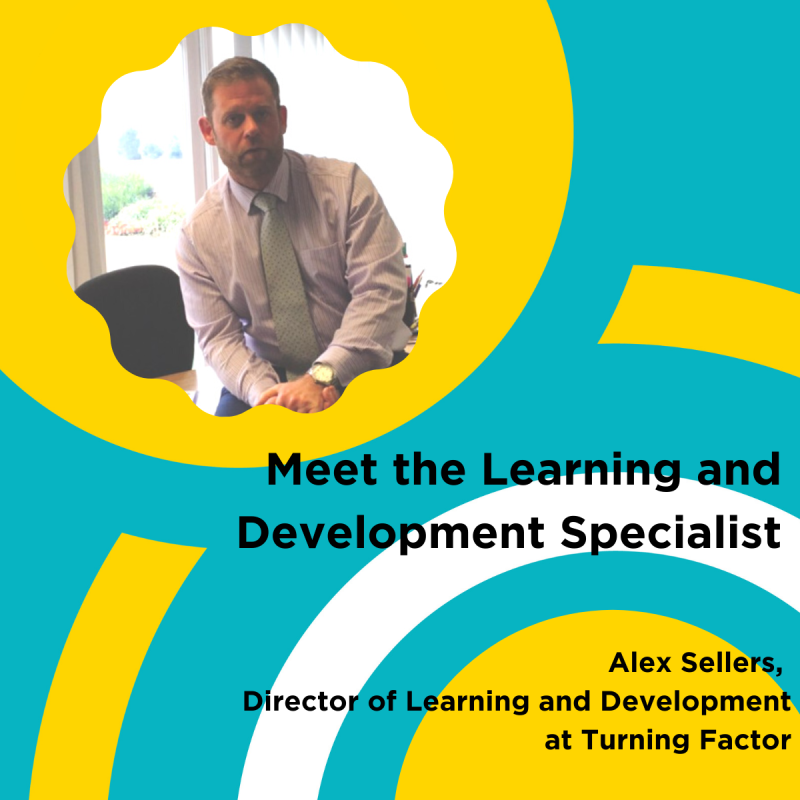
Alex Sellers, Turning Factor

With over 25 years’ experience in leadership and management, Alex Sellers is now a Director of Turning Factor and thrives on sharing insights and helping people and businesses develop to reach their full potential. He has line managed lots of teams and lots of people!

Our Vision is to be the first port of call for our clients to solve the everyday challenges that arise with people and business at the highest level, both locally and globally.

Effective leadership at all levels is the differential in the most successful organisations. Good leaders can inspire, drive, co-ordinate, engage, empower and enthuse their followers to great things. The followers become the leaders and the cycle continues. It stands to reason then that the impact of poor leadership on organisations is dramatic and costly.

So what is leadership? What does it mean to be a leader? How do we change? What skills do we need to nurture and develop our people? How can we encourage and grow leadership in our organisations?

Get in touch to discuss the answers to these questions and more and see how we can develop your people to develop your business

www.turningfactor.com  

We are proud to have Turning Factor as one of our Strategic Partners

Keeping ahead, investing across the business

Cyber Scale

Whether you’re new to running a business, new to your role, or you’ve been in business for a while and you’re starting to focus on cyber security for the first time, you may have already discovered your first challenge – where to start?

You’ve no doubt heard of common types of cyber threats such as Phishing or Ransomware. These types of threats and the sometimes devastating results feature regularly in the mainstream media when larger organisations we’ve often heard of suffer attacks. But what about your business, your customers, your data? Are you at risk?

Businesses today are facing more frequent, more sophisticated, and more targeted attacks than ever before.

The Government Department for Digital, Culture, Media & Sport released the latest Cyber Security Breaches Survey (link) in March 2021. According to the survey, around 40% of all UK businesses have identified an attack or breach in the past 12 months. This is based on the number of identified attacks or breaches, it becomes more alarming still when we think about the attacks or breaches that were not picked up or identified.

If you’re thinking these figures are inflated by the ‘big target’ enterprises, you may want to take a closer look. Yes, the proportion of larger businesses reporting attacks and breaches is higher- up to 65%. In reality, the types of threat faced and the frequency of attack Is likely to be roughly the same whether you are a large or small business.

‘Phishing’ is becoming the most common form of attack by far with 83% of attacks being identified as such and typically- specific targeted attacks aside- these are sent out by the attacker far and wide, in a ‘scattergun’ approach that does not discriminate based on the size of your business.

So the bad news is that if you use email, you are just at risk as a micro-business as you are an Enterprise. The good news is however, that to defend against the vast majority of phishing attacks you don’t need a huge budget, or dedicated security teams or expensive technology- the most effective form of defence against phishing is awareness and education. According to the survey nearly two-thirds of identified attacks were picked up after members of staff raising the alarm. Making your staff aware of threats, what to look for and what to do (or not to do, which is possibly more important!) if they receive anything suspicious, costs your business relatively little but could save a lot- potentially even the business itself.

Thankfully, UK Businesses are getting better at preparing for and recovering faster from attacks.

The majority of businesses affected by a breach or an attack are able to recover much quicker now than when the survey first measured this time in 2017. 90% say they were able to fully recover from a significant breach within 24 hours, but more impressive than this is that now 72% of businesses were able to recover almost instantly- up from just 57% in 2017.

Preparation is key- knowing your risks, backing up your data, implementing well-versed procedures can all aid fast recovery. Even for small businesses and start-ups where security may not be at the forefront of your thinking, or where you may not have the expertise required in-house to effectively analyse and mitigate your risks, don’t ignore it- there are organisations and government entities like NCSC that exist entirely to help businesses like yours plan for and defend against Cyber threats.

As most data nowadays is captured, processed, stored and exchanged electronically, the issues affecting UK businesses are most often the direct result of some kind of security incident and represent what is commonly referred to as a “data breach”. A data breach can be broadly described as a compromise of either the Confidentiality, Integrity or Availability of data. This can come about in a number of ways such as Ransomware.

Ransomware is still on the rise. Not only that, but concerningly success rates seem to be up. This is not only in terms of the abilities of the Ransomware groups to infiltrate the networks of large, successful and (you might think) well protected companies, but also in terms of increasing likelihood that the victim company will actually pay the ransom.

There are many things an organisation can do in terms of systems, IT infrastructure and software solutions to mitigate the chances of becoming infected by Ransomware, however we would always encourage the covering of basics such as maintaining regular backups of your most important files and data right across your business. Alongside this, one of the most prudent approaches is to defend your business and data in as much depth as possible, making it harder for what does infiltrate your systems to access what is being targeted.

It’s a fact that each business is unique in terms of the cyber risks they face, so preparation is ever more important. Ensuring that your investment is not only in new capabilities, but also in your people will give you some of the best chances of limiting the impact of these two prolific cyber threats.

Our training courses covering Staff Awareness and Training for Business Owners & Leaders could be a great starting point, and for those of you further on in your Cyber Security Maturity we have a range of more focused courses.

With a combination of public courses where attendees will be from a range of organisations, and bespoke solutions for your business, we are experienced in ensuring that what we deliver suits the needs of your business.

We are focused on providing cyber security training that also brings personal benefits to individual attendees in their broader lives and not just in the workplace. We do not deliver a standard CBT session or something general, which might feel like a tick box exercise for the business and attendee, we ensure that we are linking the training with your specific process and policies

CyberScale are a Cyber Security Consultancy based in Norwich. If you would like to talk to us about your security position and requirements then please do contact us at info@cyberscale.co.uk or call us on 01603 339550.

https://www.cyberscale.co.uk/

The Time is Now to Start your Cyber Security Journey

Cyber Scale

For many it can be a daunting step to take in starting your cyber security journey when the realisation comes that you need to do more to protect your business, teams and customers from the ever growing risks associated with cyber-attacks. And herein lies an ongoing challenge; many businesses know they need to do something so will often focus on ensuring they have some technical solutions in place such as firewalls, anti-virus software and multi-factor authentication, however this is far from the whole story when it comes to protecting any business.

Quoting directly from the Cyber Security Breaches Survey 2021 published by the Department for Digital, Culture Media & Sport “this…survey continues to show that cyber security breaches are a serious threat to all types of businesses and charities”, going on to say “a sizeable number of organisations that identify breaches report a specific negative outcome or impact. On average, for those that do, the costs are substantial”. 

Once a business becomes aware that it needs to take action to strengthen its cyber security there may be an initial panic regarding how to go about doing this, but with a pragmatic risk based approach you will feel less overwhelmed and more in control of what you need to do. Starting your cyber security journey doesn’t need to be something you do in isolation. When businesses work with CyberScale they will typically, within the first year, go through a journey that will encompass much if not all of the following work:

Cyber Security Assessment & Roadmap – looking at where you are today, and what the steps will look like for your business to get you where you both want and need to be, the assessment process will lead in to the development of the Roadmap which will take in to account the risk profile of your business and will enable you to prioritise and plan all required actions.

Cyber Security Strategy – following on from the initial assessment and putting in place a clear roadmap, ensuring that you have a Cyber Security Strategy developed and embedded in to your business is the next step. Within your strategy not only will there be a clear plan on delivering the Roadmap, we will also be looking at your security Policies, your approach to Incident Response Planning and how you are engaging your staff with Training and Awareness activities.

Implementing your plan is a process unique to your business and will often require some oversight and assistance from our team, which is when clients tend to engage with our vCISO service. Delivering the strategy and ensuring that all elements are embedded within the business cannot be where all your hard work so far falls down.

At this point in your journey it may feel like you have achieved all you need to, and you will have indeed achieved a lot, but the fight isn’t over. Cyber threats are constantly changing, with new challenges for even the most security-conscious organisations being realised daily.

By acknowledging that standing still is not an option and that Security is an iterative process, you will always be reviewing, changing and learning your approach to cybersecurity. At this point in your journey we can continue to work with you to ensure you have a process of continuous improvement in place and are always working towards embedding a culture of security throughout your business, working together to guide your Cyber Security Strategy in conjunction with Leadership teams to take the business forward, securely.

 What underpins our approach is our belief that effective cyber and information security requires a strategy built around your individual business going beyond technical solutions, you can hear more of our thoughts on this in some other articles on the need for a strategy and guidance for business owners.

CyberScale are a Cyber Security Consultancy based in Norwich. If you would like to talk to us about your security position and requirements then please do contact us at info@cyberscale.co.uk or call us on 01603 339550.

https://www.cyberscale.co.uk/

Does Investing in a Business Mentor Guarantee Business Growth?

Kathy Ennis, LittlePiggy

Sadly, there’s no such thing as a cast-iron guarantee for business growth.

(If there was, we’d all be millionaires!)

But there IS plenty of evidence to show that investing in an experienced Business Mentor will increase your chances of growth and success.

Research from the Federation of Small Businesses shows that 70% of the businesses that work with a Business Mentor survive for five years or more. This is double the rate for non-mentored entrepreneurs.

survey by SCORE also found that 30% of entrepreneurs reported increased business growth after only one session with a mentor. This figure rose to 43% after five or more sessions.

This is why, with my Monthly Mentoring package, I start with six!

Oh, and if you thought the world’s most successful high-flyers achieved greatness all on their own, think again. Bill Gates was mentored by the billionaire investor Warren Buffett, while Facebook founder Mark Zuckerberg was supported by several high-profile mentors, including Steve Jobs.

Why Is Working with a Business Mentor Important?

A Business Mentor provides knowledge, support, and experience-based guidance that helps business owners make big decisions.

Unlike the business owners they work with, Business Mentors offer an objective view of the business. Meaning? Potential opportunities for growth and success don’t get missed.

This can be particularly important for solopreneurs and side-hustlers, who are ultimately responsible for everything. It’s hard to step back and see the bigger picture, when you’re so focused on keeping all the plates spinning!

What Should a Business Mentor Do?

Your Business Mentor should act as a trusted sounding board for your ideas, as well as helping you create a clear, achievable plan that helps you reach your objectives.

A good mentor will also challenge your perceptions. They will hold you accountable for your goals. In other words, they won’t do the hard work for you!

But they will also offer plenty of support, championing your talents and boosting your confidence on the ‘down’ days every entrepreneur faces from time-to-time.

What Qualities Should You Look For In a Business Mentor?

Luckily, you don’t have to fly half-way around the world to convince Warren Buffett to drop everything and be your mentor!

The best mentors are simply experienced people you can learn from.

For this reason, you can have more than one ‘mentor’. Some mentoring relationships are more informal – so much so, that you may not realise you are being mentored at all.

Think of those coffee catch ups with your ex-boss. Maybe the lunch date with a networking connection, or the call with a colleague you admire. Chances are, you’ll be offering some form of advice and guidance to one another, based on your own knowledge and experience.

But if you are looking for a more formal Business Mentoring relationship, you should start by finding someone who has walked in your shoes.

For example, solopreneurs and side-hustlers should look for a mentor who has plenty of experience setting up and running a business on their own.

Not only will they understand how it feels to be responsible for everything, but they’ll also have been there, seen it, and done that…

This means they can help you avoid all the mistakes they once made!

Then, consider the skills you value or want to learn, and what you’d most like your business to be known for. Can your chosen mentor offer knowledge and guidance in those areas?

Why Paid Mentoring Gets the Best Results

There are no set costs for business mentoring in the UK, and as we all know, ‘expensive’ doesn’t always mean ‘better’.

RELATED POST: How Much Does a Business Mentor Cost? You Know You Want an Answer

If you really want free mentoring, it’s certainly easy to come by… just type ‘free business mentoring’ into your search engine of choice, and you’re away!

However, it’s worth thinking about the level of value you are likely to receive from this type of mentoring.

Free sessions are unlikely to be personalised to you or your business, and you probably won’t be able to choose the person who offers you what may only amount to cookie-cutter, one-off advice.

By contrast, paid-for Business Mentoring puts you in control. Not only do you get to choose exactly who you’ll work with, but you can also address specific issues that are important to you and your business, with valuable support in between sessions.

Ultimately, you’ll have the opportunity to build a lasting, trusted professional relationship with an experienced mentor who both cares about and is properly invested in your business.

Need any more convincing about the value of paid mentoring? Just think about the reasons why people pay for your products or services.

Giving them away for free, would they have the same value to the ‘customer’?

Next Steps?

Check out my Business Mentoring packages. Which one would suit you best?

Alternatively, if you would prefer to talk with me about how I can help grow your business, book a complimentary Breakthrough Session.

Solopreneurs and Side Hustlers Definitely Need a Business Mentor

Kathy Ennis, LittlePiggy

Does every business need a Business Mentor?

There’s a myth that there is lot of guesswork involved in starting your own business.

Is it true?

The breezy, slick stories we hear about famous entrepreneurs can make it seem as though success is something you achieve simply by working hard, then leaving the rest to fate.

But as someone who has started several businesses in the past – with varying degrees of success – I know there’s no substitute for planning and guidance.

I just wish I’d learned that lesson sooner!

One of the reasons I became a Business Mentor is because I know how it feels to start out with nothing but a big idea, a thirst for hard work, and a bucketload of passion.

More importantly, I also know from hard-won experience how to turn all that into a profitable business. It’s why I now spend my days working with fired-up solopreneurs and side-hustlers.

My mission is to provide them with the tools, methods, and support they need achieve the success they dreamed of when they made the brave, life-changing decision to go it alone.

I’ve made a bold statement with the title of this blog, saying that Solopreneurs and Side Hustlers need a Business Mentor. So let’s get down to some of the nitty-gritty

What Is a Business Mentor?

The origin of the word ‘Mentor’ comes from the ancient Greek poem, Odyssey. In the poem Homer uses the word Mentor to describe the person who guides the young Telemachus into adulthood.

Since then, the word Mentor has evolved to mean someone who uses their wisdom, experience, and knowledge to guide others.

But a Business Mentor should not be confused with a Mentor. A Mentor will use their knowledge and wisdom to guide you though the pitfalls of life.

The role of a Business Mentor is specific. They will use their knowledge, skills and experience in business to help you successfully implement business basics, business development and business growth.

They will enable you to avoid business pitfalls and mistakes because they have had their own business(es) previously (and are probably running a Solopreneur, business Mentoring business when they work with you!)

Let’s face it: if you had to choose a Mentor to help you start-up or scale-up your business, would you want someone who is supportive and knowledgeable or someone who is supportive, knowledgeable AND knows how to start, run and grow a business?

Business Mentor versus Business Coach: Similar, But Not the Same

While you may hear the terms ‘Coaching’ and ‘Mentoring’ used to mean one and the same thing, there is a key difference between the two:

  • A Business Coach uses goal-setting and questioning techniques to help you develop your passions and ideas
  • A Business Mentor uses their knowledge and experience to help you turn your passions and ideas into a profitable business

The difference is subtle, I know.

As a Business Mentor I use coaching techniques with my clients because questioning and goal setting are a key element in a successful business.

However, it isn’t always possible for a Business Coach to provide business mentoring, because they may never have started and run a successful business of their own.

So, a Business Mentor can Coach; but a Business Coach may not have the skills and experience to enable them to Mentor.

Why Do Solopreneurs and Side-Hustlers Need a Business Mentor?

I describe my mentoring approach as “a brain to pick, an ear to listen, and a push in the right direction.”

Those things take on more importance when your business starts and ends with you, and even more besides, if it’s the first time you’ve ever set up a business on your own. Talking your ideas and concerns through with a Business Mentor who’s ready and willing to help can take the weight off your shoulders, and free up more of your precious time.

Here are some more benefits of working with a Business Mentor:

They will provide you with an ‘outside’ perspective

I describe this as the ‘helicopter approach’.

As a Business Mentor I want my clients to be successful; but it’s their business, I’m not part of it. This means I can take a long, hard look at the business in a very objective way.

As a solopreneurs and side-hustler, you have so much to do. It will be almost imporssible for you to step back and look at the big picture. You will always look at your business subjectively.

As a Business Mentor I provide objective insights, inspiring ideas you might not have thought about before, and help you identify exciting, new opportunities.

They will hold you accountable

You know those stubborn tasks you keep pushing to the bottom of your ‘To-Do list?

Well, a Business Mentor will help you get them done, once and for all.

I spend lots of time with my clients helping them set realistic and achievable actions. I bet your To-Do list is full of unrealistic and unachievable activities – which is why they keep being overlooked.

A Business mentor should also help you develop time management, prioritisation and delegation skills – so the right things get done at the right time by the right people (and those ‘people’ may not be you!)

They will save you time and money

The two commodities all Solopreneurs and Side Hustlers have the least of – time and money!

It may seem counter-intuitive, but although you pay for the expert support and guidance of a Business Mentor, working with one will actually save you both time and money.

A Business mentor will save you, as a Solopreneur or Side Hustler, from making costly mistakes while implementing financial management, time management and profit making activities in your business.

I always say to my clients that my experience stops them making the same costly mistakes I made when I started out.

I help them set up practical systems and processes that mean they can see where their time and money is best spent… so none of either is wasted.

They will support you through difficult times

Having your own business is never a life of champagne and roses.

Whatever type of business you’ve chosen to start, there will be plenty of challenges ahead.

On bad days (we all have these), you’ll question whether to keep going.

That’s when your Business Mentor will step in, with knowledgeable support, gentle guidance, and a listening ear that keeps you moving forwards.

They will widen your network

Any Business Mentor worth the name will network extensively, which means they’ll have a bulging list of contacts for just about every industry you can think of.

Not only will your mentor put you in touch with tried and tested ‘people-who-can’ to help with specific business areas, they can also recommend the best groups and events for you to meet more potential customers!

Uma Satkunam | Kathy Ennis | LittlePiggy

I Was Only Making Feeble Attempts. It Was Not the Cohesive Plan that Kathy Helped Create

I needed help to understand my business. I have no previous experience in this field and was really only making feeble attempts at it. It was not the cohesive plan that Kathy helped create. We outlined my business and how to approach my marketing. I now have more interest and engagement from the group people I want to sell to. I thought that was not possible. Now I actually enjoy doing it!

Uma Satkunam – Miss Teasmith

Working With a Business Mentor Is Your Shortcut to Success!

If you are a solopreneur, side-hustler or other single-person business you will always be at a disadvantage. There is only one of you, but there are a hundred jobs to do and a thousand decisions to make every day.

You have to do everything that a business that has ‘departments’ has to do… All by yourself!

With a Business Mentor in your corner cheering you on when things go right; helping you up when things go wrong and sharing their skills, knowledge and experience, how can you be anything but successful?

If you’re ready to take the plunge, check out my Monthly Mentoring.

Five things we have learned about hybrid working

Mills & Reeve

Mills & Reeve has recently hosted a webinar series on COVID and the future of work, to explore how it will change the way we work, even after the pandemic has receded. My colleagues and our other contributors have given participants a lot to think about.

Its well worth viewing the recordings (available here) but here’s a taster of some of the key themes that emerged.

Flexibility

At the risk of stating the obvious, we all need to be flexible. Clearly employers and HR departments need to plan ahead, but they also need to be flexible enough to adjust at short notice to the inevitable changes in regulation and guidance as the virus and the steps taken to combat it both continue to evolve.

While most employers probably do not need any encouraging in this direction, it is worth following Government plans to amend the right to request flexible working. We don’t have any firm details at the moment, but one change may involve removing the current six month qualifying period before the right can be exercised.

Engagement with the workforce

The second lesson I took from the webinar series – in many different contexts – is that staff engagement is more important than ever before. Staff have had to adapt to a great deal of change while their resilience has been impacted like never before with factors such as: performing front line roles during a pandemic, the psychological isolation of remote working, or the additional pressures of supporting school age children at home.

As restrictions are relaxed, it is essential to engage with the needs of the workforce before attempting to balance these with any conflicting business objectives. Certainly there is an opportunity to build back better: while the relatively care-free pre-COVID days are bound to evoke feelings of nostalgia, many may not wish to return to exactly the same working environment. That means that staff input into what would work best for them is an essential starting point.

Understanding the limits of remote working

Despite the very rapid advances in technology – and our ability to use it – over the past year, there are still some things that can’t be done as well remotely. When re-imagining the workplace for the post-COVID era it is import to understand what these elements are.

One of our speakers referred to a study by McKinsey which analyses the effectiveness of different tasks when these are done remotely when compared with in person, across a number of different countries. So for example they found that updating knowledge and learning is typically about 80% effective remotely. This dropped to about 30% for establishing workplace relationships, and even lower for training and mentoring. There have also been useful studies of the different biases that emerge when conducting meetings online rather than in person, including this dictionary of behavioural biases from the LSE.

It is clear from these new studies, as well as past experience, that designing an effective hybrid working policy involves much more than working out the optimum percentage of home working for any given role. It is also necessary to consider how the component tasks are managed, to ensure they are done in the most effective manner.

Working from abroad

In our experience, one unforeseen impact of the pandemic is that it has led to an increase in the numbers of staff working remotely from abroad for UK employers, often on an ad-hoc basis.

These arrangements, if not properly regularised, can lead to a number of risks for both employer and employee – for example the obligation to pay tax and social security contributions in the host country and need to obtain a work permit or visa.

Reviewing working arrangements as the lockdown eases creates an opportunity to establish a clear policy on whether working remotely is permissible, and if so in what circumstances. Given that each country has different immigration and tax rules, professional advice will be required in the host country before authorising any such arrangements.

For more information about staff working remotely from Europe, please see here

Equalities considerations

There is a complex relationship between increased flexibility and equality and diversity issues. To take one example, it has been an advantage for many parents to be able to work flexible hours from home rather than fixed hours at their employer’s workplace. Leaving the choice of whether to continue to work from home entirely up to employees risks “baking in” existing gender based inequalities around responsibilities for childcare. 

Other risks arise from the differences in the dynamics as between remote and in person communication. Staff working remotely can struggle to make their views heard, and the absence of an on-site presence may translate into reduced access to informal learning and development opportunities, or being overlooked for promotion. If not properly addressed, one of the potential disadvantages of working remotely could be to amplify existing workplace inequalities, for example in relation to race or disability.

To connect with Sara on LinkedIn please visit her profile here. If you would be interested in receiving further updates from Mills & Reeve you can register for these on our sign up page