The Sounding Board is a group of entrepreneurs, professional advisors and generally nice people who love the challenge of running businesses and are happy to volunteer their time to try and help. We want to share that knowledge and experience we have of running organisations in order help others with theirs… and raise some money for charity along the way.
What do we do?
Each quarter we run an informal programme of 6 x 1-2 hours meetings, where 2 relevant Sounding Board members meet with you to provide; guidance, advice, insight, experience, support & generally act as a sounding board, to help you achieve your goals.
After being accepted we match you up with 2 x Sounding Board members with relevant experience and skills to meet with you over the 12-week period.
Why do we do it?
Our experience to date leads us to think that we can help almost every business that is willing to be open about their goals, challenges and invest some time in talking them through and listening.
We enjoy helping, want to give a little back to both business and good causes.
Who is it for?
All businesses great and small who aspire to improve.
Businesses that are struggling with:
Growth (too much as well as not enough)
Strategic direction and planning
Shareholder planning (planning for exit, succession planning, …)
Stress or a specific crisis
…… or any business issue/problem/thinking you want the share. These are driven by you.
Who is it not for?
People who are not willing to commit and invest the time.
Please do take this point seriously. We invest our time and energy free of charge into this process and there are a limited number of spaces.
Accepting a space and then not participating (without a good reason) will make you a bad person.
How do you get accepted?
Just email Angela with a brief outline of who you are, your business, approximate scale of the business and a brief outline of some of the challenges you are facing.
How much does it cost?
Not a lot!
It will cost you time – we aim for a minimum of 6 meetings of circa 2 hours over the 12-week period but often provide more.
We ask for people (their businesses) to commit to paying at least £1000 to our supported charity at the end of the 12 weeks if you feel we have added value.
We say commit because, if at the end of the 12-week period, you feel you have not received at least £1000 of value, then we will not hold you to it.
We also do not want the £1000 commitment to be a barrier or another thing adding to the financial worries of your company. If you are struggling, we are happy with an “IOU” to donate when you are enjoying happier times.
Business Connectors have links across Norfolk & Suffolk and will help you to develop an opportunity for young people and will help you to develop an opportunity for young people that fits in with have the time you have to give.
Your business and your Youth Pledge opportunity will be advertised on www.icanbea.org to local young people and their families.
Book a call for a meeting.
Email us at youthpledgeforemployers@norfolk.gov.uk with your name, business address and telephone number and your local Business Connector will get in touch.
Council is delighted to work alongside Andrea in setting up her own community micro-enterprise providing care and support for people in her local area.
Andrea is an experienced carer and was in the process of setting up her own business. The Community Catalysts programme was able to work with Andrea through the process of ensuring that she had everything required to run her small care and support enterprise. Claire had already obtained a DBS and registered with HMRC. With the Community Catalysts programme, she was able to work at her own pace and get advice and guidance about insurance, regulations around sole traders offering care, safeguarding, risk assessment and other essentials. Through the programme she has also been able to connect, informally to other self-employed people for mutual support and networking.
Andrea now has her own business up and running and she has taken on her very first customers. She is looking forward to delivering care and support her way and running her quality small business with pride.
If you would like to learn more about running your own small enterprise that offers a range of help and support to older and disabled people in their homes, please do contact me, Debra on
In the words of the Blues Brothers, “We’re getting the band back together again”. Well, maybe not the band but do you want to get your team back together again?
After more than a year of staff working from home, others being furloughed, and those who have remained in the workplace, we are all missing the social interaction between colleagues. Making time for non-work activities and making sure everyone takes a break during the day is vitally important for the health and wellbeing of your staff.
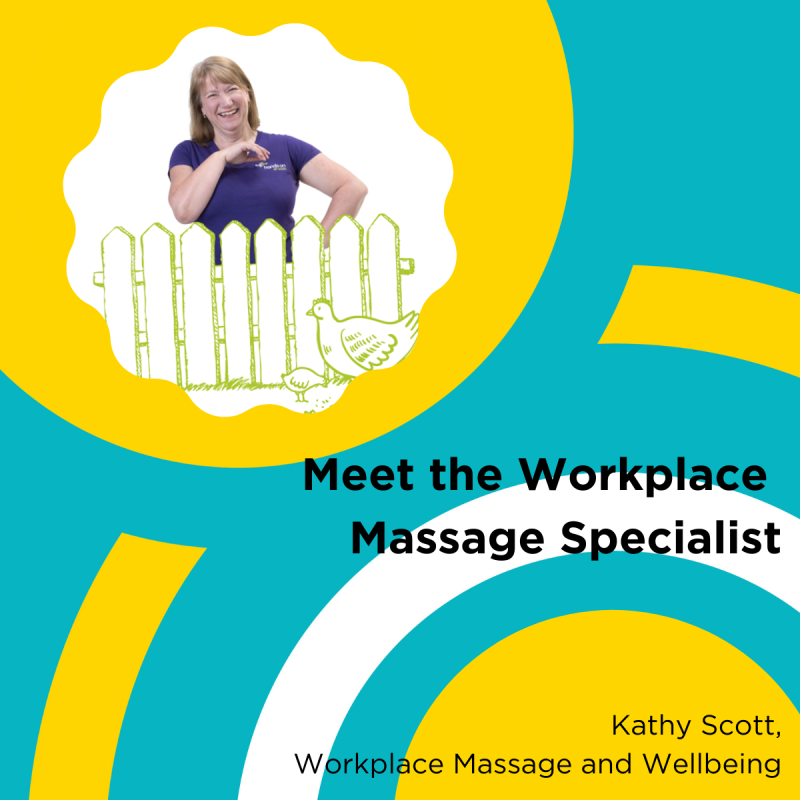
Hands On At Work specialises in workplace massage and wellbeing services. Just turning up at your door with our massage chair creates a buzz about the place and lifts the atmosphere as the anticipation rises of a good pummelling to free those tight back, neck and shoulders.
Or feel the energising force of laughter with one of our Laughter Yoga sessions, harnessing that feel-good factor.
Or calm everything down with our peaceful videos of nature and affirmations, the gentle moves of Qiki Gong, or the benefits of a good stretch with our Desk Yoga.
Companies who put health and wellbeing at the centre of their business create productive, engaged, and motivated teams which in turn provide excellent customer service and which ultimately reflect upon you as a great employer to work for.
Call us now to find out how Hands On At Work can help you create a wellbeing strategy with long term benefits.
Leadership Lunch and Learn with C-J Green from BraveGoose
Top tips for effectively managing remote teams
C-J Green from BraveGoose, the HR tech provider, shared her ten top tips for managing teams remotely. Here are some key points:
Levelling
As hybrid working looks to become the new normal with 91% of forum attendees working from home at least a couple of days a week. New challenges for businesses will arise as employees will no longer all be in the office at the same time. C-J describes the importance of avoiding a two-tier system where employees feel as though they are missing out on important conversations, and generally out of the loop. All-staff meetings should therefore be delivered in a way that the experience is the same for all. This may mean continuing to deliver certain communications virtually to prevent an ‘us versus them’ rift between coworkers in the office and at home. Zoom meetings are great for levelling and connecting staff as the experience is the same for everyone. Virtual meetings can also help remove the professional facade and allow staff to seem more approachable and equal.
Personal approach
It is essential for staff motivation that employees feel their company value and care about them. Employees should be managed on a personal level and their individual skill sets recognised. The pandemic has particularly emphasised the importance of personal connection and the difference in individuals’ experiences. The one size fits all is no longer effective management and staff should be encouraged to level up based on their personal skill set. This can be done by speaking to employees individually on a regular basis to pinpoint strengths and struggles. Coaching conversations can also help motivate, where managers set up calls to catch-up and praise rather than to assign work.
Stronger sense of team
Teams can feel more motivated and connected when all staff members are included in creating new protocols. The pandemic has created a unique opportunity to make major changes to the way we work. Including all team members, even junior staff, in these decision-making processes will help create a stronger sense of team. Employees will also feel as though their voices are being heard and their best interests are in mind.
Working asynchronously
Employers should appreciate that staff have different responsibilities and commitments they have to juggle. It is not always possible for every staff member to join a meeting or event. Recording meetings and allowing access for everyone to watch them makes people feel more included and as though they are not missing out. This can help staff better manage their time and removes unnecessary pressure to be available. Equally, providing agendas before meetings helps people assess whether it is relevant to them to attend. This all helps employees better manage their time and workload, to work in a way most effective for them.
The Elephants Backpack
C-J describes how team discussions at the end of the week to share reflections can be beneficial. This environment should be a safe space for teams to offload any issues and chat through key achievements or areas to improve. This can help team members feel heard and allow managers to know how their team is feeling.
Advice from the panel
The panel of guest speakers shared their experiences of managing teams remotely.
“Manage people instead of things”
Dennis Laudick from Arm has found he has had to focus his time on rebalancing his team to get the best out of the group. When working from home and communicating virtually he noted that some team members are naturally thriving whilst others are shying away. Dennis now encourages group members who haven’t talked much to contribute rather than contributing himself. Ensuring all his team are included and heard and set up to complete work themselves. Managers need to listen to their teams and put in as much effort to communicate as possible.
Managing teams remotely is an opportunity to throw away the traditional roles and ways of working together. Dennis believes managers should be promoting we are all in it together. This not only benefits team members but helps managers better understand their team. He believes things should not go back to the way they were before and hopes that the new human level in the workplace doesn’t go once we return to the offices. The professional facade that has come down with Zoom should stay.
“Some roles are not getting their natural highs”
Louise Hazard from Greene King believes some teams in her organisation have suffered more than others. This is mostly decided by different teams’ roles and how they are reinforced. Sales teams for example are not getting the natural highs of their job roles whilst working at home. Managers, therefore, need to focus on motivating some teams more than others. This can be done by having honest conversations about what will make things better and shows interest in individuals’ future. Setting up team chats where no one talks about work Louise says is another good way to motivate staff.
Louise also notes that staff on furlough are likely to find it hard going back to work. Particularly if they are going straight back to the physical office. A ‘we are all in this together’ approach will be especially important here. Employers should start organising their going back to work policies now, taking into consideration different staff member’s wants and needs. The benefits of working from home that add to working life that office life might take away should be considered and kept in place where possible to keep staff members happy.
“People do not all need to be regimented”
Carolyn Connery from CMI agrees with C-J’s comments of working asynchronously. The pandemic has helped employers look at employee’s soft skills and acknowledge that people do not all need to be regimented to the same thing. Flexibility will be key moving into the post-pandemic workplace. Carolyn states that a lot of change is set to continue and with that, a lot of new skills are needed. Employers should think about levelling up their employees to ensure they keep up with ongoing changes to the workplace.
The pandemic has also highlighted the importance of managing peoples’ mental health and wellbeing. Junior managers may have had to make hard decisions over the past 12 months in terms of redundancies and furloughing staff. Equally, those who have been on furlough may feel disconnected. Managers should be re-educating themselves to be more aware of their team’s mental health. This can be done by paying more attention to changes in staff and setting up chats to ask how people are feeling. A lot of employers are training or hiring mental health first aiders to meet this challenge. Listening to staff and creating resources they can go to is going to be essential as the long-lasting effects of the pandemic continue.
“I have had the time to do things that were not possible before”
Simon Mader from AstraZeneca reports how the digitalisation of meetings has made certain aspects of work more accessible. Meetings which were once only possible by taking two days off for international travel are now easy to attend. More junior staff members who would have not joined trips can also now attend those meetings. Furthermore, tasks which once meant days of travel can now be completed easily in a day.
Not only has remote working allowed employees to connect with staff members they previously would not have been able to, but it has also helped to get in touch with people. People are now more available and easier to get hold of with the majority working from home. This has made some aspects of work easier and quicker. Simon agrees that catch-up chats that are only a click away are invaluable for building and managing work relationships.
Comments from the audience
Productivity
The audience agreed that productivity has varied between team members due to their personal situations, such as homeschooling kids. Productivity has differed depending on the role/seniority of the staff, with less productivity at lower levels due to support not being as readily available. Overall, 49% of the audience felt they had the same level of productivity working from home than in the office. 22% felt they were less productive and 29% more. Where there are more distractions appear to largely determine productivity levels. One audience member said they have found using Zoom has actually enhanced training and productivity by having the ability to share screens and take control.
Communication
The audience felt that it was important going forward to ensure all employees feel equal and included. Techniques to do this include meeting consistency, where all meetings are either online or in the office. Effective communication is essential for staff to feel in the loop and included. Giving communications to everyone at the same time can help this, as can frequent Zoom meetings that engage all staff. Including daily/ weekly catch-up calls and face-to-face meetings once a month. But ultimately, staff should be able to choose what method of communication is best for them.
Mental health
Everyone agreed that the past 12 months have highlighted the importance of recognising and responding to mental health. The audience recommended managers make sure they call their team to ask them what they need or if they want to talk. Furthermore, one-to-one catch-ups should not just be about giving more jobs to do but instead voicing praise and creating a safe environment to voice concerns. One-to-ones can also help managers understand their team’s needs and plan new working patterns as their working and personal lives change. Being available and willing to support staff is key.
One size does not fit all
The audience also felt that one size does not fit all staff members. Management and work, whether in the office or working remotely, should be tailored in line with individuals’ needs. Each team member is different and so is their circumstance. This is the same for new starters, do not use a one size fits all induction and instead design their introduction around what they need to feel part of the team. This can be helped by scheduling social ‘get to know you’ sessions for new starters to meet people they’ll be working closely with.
Claire contacted Debra from Community Catalysts in March 2021 as she had heard about the project through a friend and neighbour.
Claire already ran an established cleaning enterprise, but her experience with a family member had made her think about the possibility of offering services for older people providing a little extra care and support and cleaning, laundry, and ironing services.
As a small enterprise owner, Claire was already registered with HMRC. With this stage already complete, Debra was able to advise Claire on how to obtain an Enhanced DBS check and with NCC funding was able to reimburse the cost.
Community Catalysts provided information about suitable insurers for this type of business as well as templates and guidelines for paperwork Claire might need. Also, information and guidance on regulations around sole traders offering care and support.
They found a local training organisation that is offering fully funded training to undertake an online Social Care Certificate, covering all required standards.
Claire committed to undertaking the study time required, working around her own caring responsibilities.
Debra says:
Claire was so motivated from the start, such a pleasure to support her to offer further services and support for her older customers.
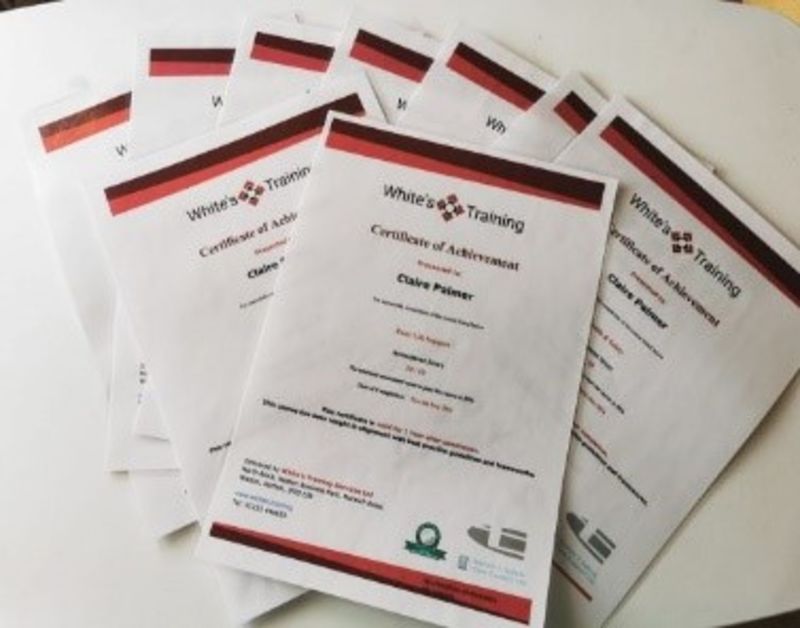
Within only two months, Claire had completed all the necessary study and passed all of the modules required.
NCC have provided a starter pack of PPE to help her get safely underway.
In addition to her regular cleaning, Claire is launching Lasting Sparkle/Helping Hand. Offering older customers help with shopping, appointments, tea and chat as well as a little support with personal care if needed. Find her on Facebook or
She is good to go and looking forward to welcoming her first customer!
Claire says:
I would like to thank Debra at Community Catalysts for all the support and guidance throughout my setting up process
If you would be interested in hearing more about how Norfolk County Council’s Community Catalysts programme can help your small business offer a wider range of support to older and disabled people in their homes, please do call me for an informal chat
Community Catalysts; Unlocking potential effecting change
Do you have an idea that could help older people and people with disabilities at home?
Do you need help to get your idea started?
Are you already helping people in some way and would like to do more?
If the answer to any of these questions is yes, running a community micro-enterprise might be for you. Community Catalysts can:
· offer you a friendly and supportive point of contact to explore ideas
· connect you with other like-minded people
· give you practical information on regulation, training and opportunities in the health and social care sector
· direct you to other organisations who can help
What is a community micro-enterprise?
· A community micro-enterprise is a small local business (sole trader, limited company, social enterprise) offering flexible and genuinely caring services or support to older and disabled people
· It is frequently one person working on their own who really enjoys supporting people in their own community and having the freedom to go the extra mile
Community micro-enterprises can offer a range of different services and support to people in their area. This can include:
· help at home such as cleaning, meal preparation, shopping, dressing, bathing
· day, evening or weekend social activities
· help to stay connected to friends and leisure activities
· help to undertake training and employment opportunities
· gardening, light DIY, decluttering, therapies
“As I work more and more with older people, I love it. I definitely want to do more of this as part of my business…I’m glad I have Debra’s support to do this” Sue
What’s in it for the community micro enterprise?
· You are self-employed so you can decide on your hours of work, rate of hourly pay and location
· You will receive guidance on any regulations
· You will receive information about free business start-up support
· You will get help to market your business
· You will receive help to obtain a DBS check
· You can receive a free starter -pack of PPE (subject to availability)
· You will receive information about available training
· You can be part of an informal network of support from other self-employed people
· You can receive guidance and information from Community Catalysts and be signposted to other relevant organisations
Norfolk County Council have commissioned Community Catalysts CIC to work in Norfolk. The project runs until September 2021 and is being co-ordinated by local catalyst Debra Morris.
Work is happening in the Norwich and North Norfolk areas to increase the range and availability of help at home & community options. As well as helping people to set up new enterprises, we will also advise small groups and organisations already established in North Norfolk and Norwich and looking to diversify or extend what they offer.
How we operate
We work hard to recognise local strengths and actively build on things that work well and would like to connect with community, third and public-sector organisations, key stakeholders and supporting professionals who would like to know more about the project.
You can read an article on Claire, a case study, and how Community Catalyst helped her here
Get in touch, we would like to hear from you!
Contact Debra Morris, the local Community Catalyst, for more information about the project:
Does the idea of losing your best people give you sleepless nights? Would you struggle to replace people if they leave? Do you find it difficult to attract and keep great employees? Do you sometimes feel like your employees don’t live up to your expectations?
You probably love your business. You’re likely to be passionate about it and, if you’re like most small business owners, put your heart and soul into its success. Yet finding employees who share that passion, who are willing to put in the extra effort, is hard. And when you do get them, keeping them is even harder. In this article, I’ll explain what YOU can do to build a business that great people LOVE working for and never want to leave.
Performance = Potential – Interference
In Leadership that Gets Results (published in the Harvard Business Review), Daniel Goleman explains that there are 6 key factors that minimise interference and increase employees’ performance. Get these right and you’ll have high-performing, happy teams who love their work. Get it wrong and you’ll never get to see just how good they could have been.
The 6 steps to Maximise Motivation are:
Clarity:
This is the biggest and most important. In order to perform at their best, people need to know where they’re heading, what’s expected, and how everything fits together. It requires clarity of purpose from the top, and then continuous and consistent communication. If you get it right, your people will know the mission and direction of the business, what is required of them, and the role they play in achieving overall success.
It’s easy to say, but can be tricky to get right. A 2020 study by Gallup showed that 35% of U.K. employees strongly agree that their employer has communicated a clear plan of action in response to the coronavirus, compared with 50% of U.S. employees. If your team does not do what you expect, consider how well you have communicated with them. It might be that a little more clarity would make them more effective, more efficient, and make leadership a lot less frustrating.
Standards:
If you’re looking for high performing employees (and who isn’t!?), it’s essential to set standards. To get the most from staff, they need to understand the expected levels of performance and ‘what good looks like’.
How well do you set and communicate standards? Do people know what they need to achieve? Are there goals which are both stretching and achievable? Does underperformance get addressed, or is it allowed to continue?
Companies with high standards have clear goals, aligned with the overall vision, and leaders monitor progress against them. High achievers thrive on hitting goals, so make sure you set some so they’re motivated to keep hitting them.
Responsibility:
Do you find that you’re forever getting interrupted by staff asking you to review work or make decisions? It can be frustrating for leaders to do this, but it’s just as limiting for employees. High performers like to be given responsibility and run with things, so check whether you’ve given clear delegated authority.
Let your staff know what decisions they are authorised to take, what they need to refer to others for, and help them take full ownership of their own work. Good people will actively seek extra responsibility and will want the chance to take ownership for the success of their work. If they need to run everything past the boss, they are unlikely to feel full ownership. And if the boss makes all the decisions, guess who takes the blame when things don’t go right!?
Look for people who like responsibility, but challenge yourself too. Are you really delegating what you could be or does your inner control-freak get the better of you?
Rewards and Recognition:
When you mention rewards, thoughts often turn to money, and yes, people need to feel they’re getting fair pay for the work they do. But actually money is only one form of reward. In fact, the most admired companies pay 5% less than their competitors. Why? Because people want to work for them for more than pay. They want the training, the exciting work, the exposure to brilliant colleagues and the culture as well as the money and the right name on their CV.
Committed and driven employees like to know how they’re doing. They want timely and meaningful feedback from a credible source. They want to know whether they’re meeting expectations and where they need to improve. And they want to work in a meritocracy, where the best performers get more praise, reward and recognition than those who don’t perform at the same level.
To get this right, make sure you’re praising and recognising more than you’re criticising. Find people doing something right and make a point of praising them. Make celebrating achievements a habit and give more of the credit to those who deserve it most, then watch as people strive to achieve ever more!
Flexibility:
Richard Branson is credited with saying “Red tape will often get in your way. It’s one of the reasons I often carry scissors.” One of the big causes of underperformance in the workplace is employees feeling like they spend too much time and effort battling against bureaucracy. Whether that’s systems that need automating, ineffective processes that inhibit performance or unnecessary rules and regulations that slow things down, bureaucracy kills productivity.
That’s not to say rules, systems and processes are not important. They are. But they should be focused on increasing productivity, not decreasing it. Hold regular discussions to find ways of working more efficiently. Ask the team what they need to work at their best and you’ll quickly foster a culture where people feel involved, and focus on finding solutions rather than complaining about problems.
Group commitment:
Get the 5 factors above right, and it’s likely you’ll have a committed team, pulling in the same direction and united around a common goal. They’ll achieve great results and be understandably proud of their work and the company they work for. And they’ll go t
he extra mile for you, their colleagues and their customers.
Not only will talented people want to work in that environment, they’ll be way less likely to leave. In fact, your company will become a magnet for ambitious, talented people who want to do great things.
Why the hell would anyone want to work for you?
It’s easy to bemoan the lack of talent and loyalty in the marketplace. If you take the “You just can’t get the staff these days” attitude, frankly you are unlikely to find them. Start a little closer to home. Start with this question: “Why the hell would anyone want to work for you?”. If you can’t clearly articulate this, I’ve got good news and bad news:
The bad news: great people will probably go and work somewhere else. And your best people might too.
The good news: you’ve now got a framework to build a culture where you get great performance from your people and they love working for you.
It’s not easy, but it is doable. You just need to be deliberate, determined and disciplined.
To find out more about how I may be able to help your Norfolk business thrive then please don’t hesitate to get in touch on 01603 559590 or email markwilliams@actioncoach.com – you can also get in touch through my contact form here. If you’d like to know a little more about my experience, expertise and accolades then click here.
The benefits that an engaged workforce brings to the business are noticeable in a very tangible way. Engaged employees feel a sense of attachment towards their employer investing themselves not only in their role, but in the company as a whole and are fully supportive of its goals and values.
Conversely, the disengaged employee displays a lack of commitment to their role because of feeling disconnected or disengaged from the company itself.
There is a no ‘one size fits all’ approach to enabling engagement, because levels of engagement and its drivers vary according to the company, employee group, the individual and the job itself.
“Invaluable Support ”
“MAD-HR have provided invaluable support throughout the recent lockdown, providing much need HR resources for employers, just when needed” Read the full review
Here are 7 top tips for improving engagement.
Company culture
Engagement can’t be imposed from above; it’s about creating a cultural shift in the way a company or organisation behaves. Clear channels of communication with regards to where the company is heading, including current goals and objectives should be in place. Further communication should be a continuous process, which means employers should constantly be sharing new information with their employees, to encourage an open and honest working culture. Sharing company values helps cultivate a sense of direction so that employees understand what is expected of them and how their values align. Values that are lived and not just spoken, lead to a greater sense of trust and integrity.
Employee Voice
Allow employees to voice their views and concerns – and address them. Two-way communication is vital in business. Nothing is more damaging than unsubstantiated rumours or ill-feeling.
Value your People
Show you value the contribution your people make by giving them the power, the responsibility, and the trust to do so. Encourage their ideas for innovations and improvements. And importantly, give them proper consideration. After all, they’re the ones in the front line and know better than anyone what can make a difference.
Leadership
Good Leadership means having a clear vision of the future and effectively communicating this to employees. Integrity is key, which leads to our next three points.
Fulfil your promises
We have all heard of the ‘talk is cheap’ cliché, but this is no less true when it comes to team engagement. Employees will soon spot lip service and harbour a distrust of what you’re telling them if you don’t keep to your promises.
Healthy people are engaged people
Promote employee wellbeing, this shows you genuinely care about your employees’ well being and not just their productivity or output.
Think long-term engagement
Engagement is something that requires constant attention and should never be viewed as a “one-off” project or piece of work in which a box is ticked. An individual’s level of engagement can vary depending on what is happening around them and changes in the workplace may often affect an employee’s attitude towards their role and the business.
True engagement works both ways. To engage employees, employers must also be engaged and stay connected with both their business and their employees.
Communication is the key to employee engagement. Simply broadcasting your intentions to your team is not enough. The business world is full of good intentions with poor follow-through. If you would like some more practical advice on engaging with your team please let us know by calling us on 01473 360160 or visiting our contact page.
If you would like to discuss how we can Make ADifference to your business through our provision of HR services, please get in touch on 01473 360160 or visit our contact page here.
You can view this original article and other content at Mad-hr.co.uk
Over the last 12 months the employer and employee relationship has moved into a different sphere. Openness, sharing of vulnerabilities and care for wellbeing has become the norm in many companies. With many staff furloughed for the majority of the financial year, along with the actual or perceived threat of redundancies and home working, it would seem reasonable to assume that it is unlikely that employees and managers will be engaged in the annual appraisal. Nevertheless, expectations of employees meeting readjusted targets regardless of the working environment is still necessary; therefore, what should the approach be?
As always, employers have several options open to them, for example:
Place the appraisal process on hold until the world returns to normal.
Move the annual review to a bi-annual process in the hope that the next 12 months will provide the chance to adjust the appraisal process, developing a fit-for-purpose process to match how companies measure their staff performance post-COVID.
Adjust the appraisal process to reflect the challenges of the last ten months, as well as current and future uncertainty. Include individual wellbeing plans (WAP), changing the focus from input and outcomes to reflecting on how to set staff up for success in the next 12 months.
As one might imagine, each option has pros and cons:
OptionProCon1.Releases time for both parties.Sends a message of uncertainty to employees.2.Releases time for both partiesDemonstrates an appreciation of the current climate, provides certainty by sharing how the process will continue.
May leave employees feeling undervalued, especially those who have worked through the whole of lockdown. They may feel their contribution has not been recognized or appreciated.3.Demonstrates an appreciation of the current climate, focuses on the number one reason for absence from work, supports employees and creates direction for all parties.The change of approach requires time to plan, communication and train managers and employees.
Should a company choose to continue with the appraisal process, they may wish to consider what staff should be measured against. For example, in the current climate it would be reasonable to measure staff against the following skills: resilience, flexibility, innovation, and positivity. However, such a move away from the traditional appraisal approach (namely, reviewing objectives and setting new objectives) would mean that the identification of training and career aspirations needs to be communicated with a clear rationale along with the impact of such change. Consideration should be given to any previous direct or indirect link to salary and appraisal; should this be the case, evaluate any subsequent HR risk to the business.
“Great communications throughout”
“Great communications throughout – quick and efficient service. Took time to understand our requirements and delivered a first class piece of work encompassing what we discussed.” Read the full review
Should companies take this opportunity to envisage a new approach?
The current situation calls for employees to tap into the hidden benefits of the professional discussion. Moving to a professional discussion framework will provide a place for reflection by both parties, focused on the conversation rather than on paper work, allowing employers to concentrate on making the employee feel valued. Incorporate wellbeing into the conversation and motivating managers by removing the shackles of paper work could be liberating. A professional discussion chart and WAP could be all it takes.
It would be foolhardy for companies not to engage in some form of review, especially as companies become leaner and those employees that remain in employment will need to feel motivated, engaged, safe and informed. Providing high quality feedback to support a review based on resilience, flexibility, innovation, and positivity will provide the best chance to increase productivity and consequently competitive advantage.
If you would like to discuss how we can Make ADifference to your business through our provision of HR services, please get in touch on 01473 360160 or visit our contact page here.
You can view this original article and other content at Mad-hr.co.uk
We all recognise the importance of having a diverse workforce and how embracing a culture of diversity and inclusion makes good business sense in today’s climate.
The subject has in fact been a high-profile issue for decades, resulting in several policies, laws and initiatives being introduced to ensure minority groups have equal opportunities when applying for jobs or promotions.
Whilst we know that the UK workforce is much more diverse than it was in the past, there is still a push for companies to continuously offer opportunities to all of their employees.
However, companies need to tread with caution to avoid accusations of positive discrimination, particularly when recruiting new talent. It can in fact be very easy to fall into the realm of positive discrimination.
What is positive discrimination?
Positive discrimination is the process of increasing the number of employees from minority groups in a company or business, which are known to have been discriminated against in the past.
Positive discrimination also includes setting quotas or benchmarks in the recruitment process or promoting a specific number of people within a minority group.
Put succinctly, positive discrimination is when employers give preferential treatment to people with a protected characteristic rather than due to their suitability.
Is positive discrimination legal?
No – In the UK, positive discrimination is illegal under the Equality Act 2010 as it does not give equal treatment to all.
This is because positive discrimination is still discrimination and applies to both recruitment and promotion. For example, it would be unlawful for an employer to recruit a candidate because they have a relevant protected characteristic, rather than because they are the best candidate for the job. Although more likely to be seen during the recruitment phase, we also see cases of positive discrimination throughout the entire employee life cycle., e.g., when making promotion decisions.
There are some occupational exceptions; for example, a women’s refuge can apply a requirement for its staff to be women.
Very often, employers will confuse positive discrimination with positive action, but they are not the same thing and are very different in key areas.
What is positive action?
Positive action is about creating a level playing field to enable people to compete on equal terms. It describes a range of measures which aim to eliminate unlawful discrimination and promote equality of opportunity.
The major difference with positive discrimination is that positive action does not negatively affect other groups.
Positive action is allowed where a company reasonably thinks that a protected group is underrepresented or faces disadvantage.
Under the Equality Act 2010, employers can take positive action to support those from under-represented groups, to help them overcome any disadvantage when competing with other applicants or applying for development and training.
An employer can take positive action if the employer reasonably thinks that people with a particular protected characteristic suffer a disadvantage connected to the characteristic, have different needs, or are disproportionately underrepresented.
What action can be taken?
An employer can take any action provided that it is a proportionate means of achieving the aim of:
enabling or encouraging people who share the protected characteristic to overcome or minimise that disadvantage;
meeting those needs, or;
enabling or encouraging people who share the protected characteristic to participate in that activity.
Proportionate action
The action must always be a proportionate means of achieving the aim.
If employers reasonably believe that there is a need to increase diversity in their organisation, they should firstly obtain credible evidence to confirm that there is an underrepresentation issue and evaluate the extent of the problem.
This may involve comparing the proportion of the workforce that is of a particular minority group with national or local statistics. However, it should always be considered that underrepresentation will look different for organisations in more rural areas than those in large cities like London that will have a more diverse local population.
By first assessing the situation, employers will be able to demonstrate that there is a genuine occupational requirement for positive action.
In summary
It is vital that employers comply with current UK laws and understand the difference between positive discrimination and positive action.
Where there is a clear imbalance of opportunity, employers can take proportionate measures to address the disadvantage and encourage participation without leaving themselves exposed to discrimination claims from individuals who don’t share the relevant protected characteristic.
Finally, it is important to note that while employers are permitted to take positive action in certain circumstances, they are not obliged to do so. Additionally, provided an employer bases its recruitment decisions on merit alone, then positive discrimination will not have occurred – but obviously this is a fine line to tread.
If you would like to discuss how we can Make ADifference to your business through our provision of HR services, please get in touch on 01473 360160 or visit our contact page here.
You can view this original article and other content at Mad-hr.co.uk
While progress has been made on dealing with discrimination in the workplace, it unfortunately lives on, albeit in less obvious forms.
At a time of unparalleled focus on the goals of equality, diversity, and the prevention of unfair discrimination, it seems odd that so many employers still struggle to properly prevent and successfully deal with discrimination in the workplace.
There is no questioning that discrimination is always wrong. We are all aware (or we should be) that everyone deserves to be treated fairly when at work. The impact of being discriminated against in the workplace can have far reaching and long-lasting consequences for both the individual and the employer.
Responsibility of employers and employees in discrimination cases
Let us pause for a moment here and talk about responsibility.
The Law states that the employer is liable for acts and behaviours (on a vicarious basis), as indeed is the individual. Simply put, both the employer and their employees can be held responsible for acts of discrimination.
There is, however, a defence available to an employer if it can show that it took ‘all reasonable steps’ to prevent the employee from instigating or engaging in the discriminatory act or from doing anything of that description under s109(4) of the Equality Act 2010.
What to do when faced with a discrimination complaint
Most employers are anxious when faced with discrimination complaints. And with good reason; not only are they damaging to good employee relations, with no statutory cap on compensation (unlike in unfair dismissals claims), any successful claims brought can prove extremely costly to the business.
Yes, our discrimination laws may appear complicated, but the key principles, as outlined in the Equality Act 2010, which show that an employer should not discriminate on the basis of the protected characteristics, are not particularly difficult to understand or indeed to implement and enforce.
When it comes to issues of discrimination, fair treatment is both a moral and legal duty for employers. They have a responsibility to investigate and respond to any issue they become aware of and to take all reasonable measures to protect employees from harassment.
Education and training, to all, on policies and expected behaviours is key in preventing discrimination in the workplace.
It is essential therefore that employers understand their key obligations, what discrimination is, how it may be identified, and what training can be put in place to help staff understand its severity.
“Above and beyond!”
“MAD-HR goes above and beyond your typical customer service experience. They’re always so patient, proactive and available!” Read the full review
Prevention of discrimination in the workplace
Of course, if acts of discrimination can be prevented in the first place, so much the better.
The key steps to prevention mirror closely the key actions required of an employer in demonstrating it has taken reasonable steps to avoid discrimination occurring.
The courts have made it clear that those reasonable steps will normally include:
Having and implementing an equal opportunities policy and an anti-harassment and bullying policy and reviewing those policies as appropriate.
Properly communicating these policies and their implications to all employees (and workers).
Training managers and supervisors in equal opportunities and harassment issues.
Taking steps to deal with complaints effectively, including taking appropriate disciplinary action.
Communicating the message regularly.
Training to prevent workplace discrimination
Proper training is key not only to the implementation and enforcement of policy in reducing the likelihood of discriminatory acts in the first place, but also, if discrimination has taken place, evidence of proper and regular training enables an employer to demonstrate that it took those ‘reasonable steps’ to prevent the discrimination and to deter and prevent unfair and unlawful practices which give rise to claims of discrimination.
Practical steps
Below are some practical and helpful tips for employers on what to do should they receive a complaint or allegation of discrimination:
Keep an open mind. Many employers choose to bury their heads in the sand and simply do not believe that discrimination or harassment could be happening within their company. It is important therefore, that employers approach each and every claim of discrimination from a neutral stance and should never make assumptions or jump to conclusions, based on a personal view point.
Investigate fully. Investigate every complaint received. Failing to investigate a complaint of discrimination is one of the biggest reasons for discrimination cases ending up in Court. Again, as above, employers should not come to any conclusions until the investigation is complete.
Take the complaint seriously. An employee who sees that their employer is taking the problem seriously is less likely to escalate the issue and be open to an amicable and mutual resolution.
Treat the complainer with respect and empathy. Generally, most employees find it extremely difficult to make a complaint of discrimination. They often feel vulnerable and afraid of possible repercussions or fear being accused of having made the allegation up. This can have a major impact on their performance and productivity at work. It can also potentially lead them to seek outside assistance, e.g., Solicitors. Employers should always be prepared to listen to the concerns raised and treat the individual with understanding and empathy.
Do not retaliate.It is against the law to punish someone for raising a discrimination complaint. This is classed as victimisation and could land the employer in even more hot water, should the claim end up in Court. Whilst there are the more obvious forms of retaliation such as termination, discipline, demotion, pay cuts, or even just threatening these, employers should be mindful that more subtle forms such as changing their shift hours or work area or even isolating the individual by leaving them out of meetings and other work-related functions, will still be considered victimisation.
Follow established procedures. Employers should always ensure that they follow their own prescribed policies on dealing with discrimination, Failure to do otherwise leaves themselves open to claims of unfair treatment by bending the rules.
Maintain confidentiality.A discrimination complaint can polarize a workplace. Workers will likely side with either the complaining employee or the accused employee, and the rumour mill will start working overtime. Employers can avoid these problems by ensuring that a confidentiality clause is both explicit in their policy and through their actions.
However, if employers take all complaints of discrimination seriously, and follow a careful strategy for dealing with it, they can reduce the likelihood of a legal challenge and may even improve employee relations in the process.
If you would like to know more about how to avoid or handle discrimination within the workplace, vicarious liability or any other related topic, please contact us to speak to a member of our experienced, professional yet friendly team of HR Consultants today.
If you would like to discuss how we can Make ADifference to your business through our provision of HR services, please get in touch on 01473 360160 or visit our contact page here.
You can view this original article and other content at Mad-hr.co.uk