People and Training

Why Startups Fail & How to Avoid it

Magic Sauce

The research tells us that pre-Covid, 90% of startups fail (that includes all startups). 

There’s a nice, confidence raising figure for you eh.

20% in Year 1, 30% in Year 2 and the rest in years 3-5 (if you can’t do the maths on the last bit then you should definitely get a CFO as your first co-founder).

What those stats don’t tell us is ‘why’?

WHY?

There’s a myriad of reasons, but the most common are:-

Poor management

Cash Flow

Lack of Funding

Poor market/product fit

Founding team implosion

Covid (and an inability to pivot to the ‘new normal’)

Some of that stuff is surmountable, some of it not. 

Fintech for instance has had a huge focus in the post-Covid world, so I could just tell you to go build a fintech platform because investors are desperate for deal flow in that area. You may get money but still fall foul of all of the other reasons above, so let’s tackle those in brief.

Poor Management

The stats tell us that a startup with more than one founder is more likely to gain funding and it’s more likely to succeed. Accept your limitations and try and find a team to fit around you that make up for the skills you don’t have or could improve upon your ‘gifted amateur’ skills. I know this because I’ve been a lone founder and it’s (as the name would suggest), lonely. It also means that you don’t have a ton of cash for experts to do the stuff you’re rubbish at (at least at the start). It’s taken me time but diarising stuff and to-do lists really help to motivate you do the stuff you hate doing. I still push stuff down the list, but I’m getting better at it. You also need to remember that as you build a team, you need those people to buy into your vision. If you’re talking to prospective co-founders or employees, really dig into what they want now and in 3 years (don’t necessarily give them your vision in any detail beforehand, you want to hear who they are).

Cash Flow

Getting a good cashflow template is a real boon. Sticking to it is another, but you have to own it, particularly with a high growth tech startup. Once you get that first £100k+ of funding, people are going to want to know what you’re spending money on and that you’re sticking to the plan for it. Test your assumptions by dropping your revenue by 1/3rd and 2/3rds to see what effect it has on your burn rate (your investors certainly will). Don’t use hiring costs for people way before you’ll need them, think lean.

Lack of Funding

Well, that’s most startups in honesty. To give yourself the best chance possible, you either need to research the hell out of how to raise money and spend time building relationships with the kind of investors you want involved in your business. Otherwise, try and get onto an acceleration programme, into an accelerator, or onto programmes that can deliver the help you need. Only around 3% of startups end up actually attending an accelerator and not many more get invested in (something Magic Sauce is trying to change by making acceleration and investor visibility accessible to a larger audience).

Poor Market/Product Fit

It’s something we try and address with our free canvas available on the Magic Sauce site. Some investors say they aren’t swayed by market size (and it’s right, that’s not important on its’ own). Your product has to be compelling and able to solve problems for its’ audience. History is littered with startups that built something without first checking the size of the potential audience, whether a problem actually needed solving (that had a price ticket attached), or whether their product was usable by the target audience. Identify your audience, talk to your audience and keep them involved. Test and iterate. I have a motto that goes, “you can kick seven shades of shit out of an idea, but it’s illegal to do it to a founder”. Founders that can adapt their vision and product to meet the need of an audience succeed (with a ladle of resilience and ability to listen).

Founding Team Implosion

Horrible to witness and some good startups have fallen by the wayside, usually because of dollar signs in someone’s eyes. Protect the company, look to have solid “bad leaver” clauses in your Shareholders Agreement and robust Articles. Make sure that you’re all clear on vision and who should get what from the outset. Foundrs.com has a great (and simple tool) to give you a ballpark of who should get what to get the conversation rolling.

Covid

Covid has shot many a tech startup down in the last year, while others have thrived (see health/med/pharma/fintech). It doesn’t mean your idea isn’t investible, but it means you may be a bit less “sexy” right now if it’s not ready for market or already building traction/sales. Look at how you can pivot into different markets or adapt your platform. Investors like more than one revenue stream and potential audience (as do lenders) as it can provide an additional revenue stream and may bring forward the potential to step into a market you planned to hit in a few years. An example is one startup I helped last year. Their proptech business was focused on residential house checks. We had a chat and they pivoted into commercial property checks (properties were empty, they needed checking over).

That lot sounds simple, and it’s deliberately broad and high level. Each startup is unique and has its own advantages and disadvantages. Experience and good advice for your own situation is the best remedy and proactive path.

Feel free to add opinions, evidence or questions of your own.

Kris Jones

CEO, Techvelocity/Magic Sauce, Advisor, Mentor and Speaker

If you want a chat in confidence then get in touch here

The Engaging People Company

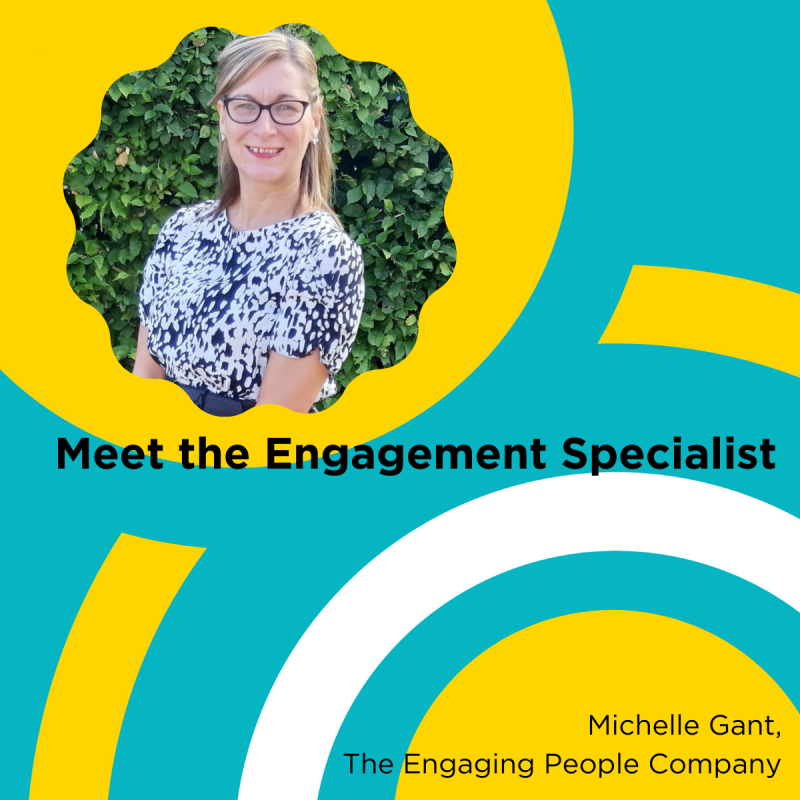
Michelle Gant, Director

Michelle Gant, Founder & Director

“I set up The Engaging People Company in 2017 because I know that engaging people is key to success.

I have seen first-hand how powerful it is when we engage people. My background is in communications and engagement and I have over 20 years’ experience working in this area. Prior to setting up The Engaging People Company up I was the director of engagement for a not-for-profit housing provider, responsible for both staff and customer engagement. During my time there, I was so proud to lead the organisation’s successful entry onto the Times Top 100 list three years in a row.

Over the last two decades, I’ve worked in-house and within consultancies in Norfolk and Newcastle-upon-Tyne for a range of organisations operating in social housing and the public sector as well as the private sector too. I have always taken a focused and targeted approach to engaging people, depending on the needs and priorities of the different people we are engaging. In this way, we can reach more people.

I’m also a qualified coach and mentor and over the last decade, I’m had the opportunity to support many different coaches to achieve their goals. I’m an experienced facilitator too and I like to lead sessions in an inclusive and empowering way so that everyone gets a say.

I’m passionate about supporting and empowering wellbeing and I’ve worked with a number of clients to develop and embed wellbeing plans. I also get to work with some amazing colleagues to deliver wellbeing themed training.

I have founded the company on my own personal values and these underpin how I live and work.

Aside from The Engaging People Company, I write – fiction, poetry, prose, shopping lists….anything and whenever I can. Most recently, I have been curating ‘When The World Paused’, a diary of lockdown featuring 76 voices. (The book is coming soon).

And, I spend time with my amazing family. In everything that I do, I’m driven to be an empowering role model for my daughter Thea. I want to inspire her to fulfil her own ambitions, whatever they may be. As a motto that I live by goes:

Can we help? We’d love to hear from you. Please do get in touch:

Phone: 07834 578872

Email: michelle@engaging-people.co.uk

Twitter: @engagepeopleco

Freeing Choice Through Non-Judgement

The Engaging People Company

A linguistic misunderstanding created much amusement over the weekend – and a memory to treasure too. My daughter had asked my husband: ‘What do you want for your birthday?’ ‘A lie-in,’ he’d replied, with the weariness of one who hasn’t slept properly in five years. Later, I asked her: ‘What do you want to get Dad for his birthday?’ ‘A LION,’ she replied, confidently.

When I’d finally stopped laughing, having watched him open his cuddly new lion with an air of bemusement, one thought struck me and stayed with me. Her complete lack of judgement. My daughter didn’t question or challenge her dad in his request, she didn’t ask him if he was sure, she didn’t wonder if she’d misheard. She simply accepted that this was his choice and it was not for her to project her own prejudices or beliefs onto his decision-making.

I don’t know when we become more judgemental, when we become weighed down by expectations that can limit our openness. But what I do know is that non-judgement enriches the experiences we have, frees us up to find new solutions, and empowers us to follow our goals and ambitions.

Non-judgement is an important factor in engaging people. After all, the very act of asking people what they think and feel shows that we are not relying on our own perceptions and understanding – we are opening the question up to gain that insight, trusting in the experiences and knowledge of others. When we are engaging people, how we ask questions is important too: the more open we can be, the less we shape the direction of travel of the feedback we get. And, then to paraphrase George Michael, listening to others – our staff, customers, partners, stakeholders – without prejudice. This can be trickier, but when we free ourselves of expectations, and disassociate personally from what we are being told, we can learn so much.

And this can lead to real innovation and creativity. When we ask, listen, and learn without judgement, we can do great things. We can shape new ways of doing and working – things that we might not previously have envisaged.

But perhaps where we use judgement most is with ourselves. How often do we think ‘I’d like to….’ but before we get any further throw a great big ‘I can’t’ in our way? How frequently do we stop ourselves taking a step forward towards our goals, our ambitions – our dreams – because of our own thinking errors, hurdles at which we stumble? How many times have we been offered an opportunity but said ‘no’ because we judge ourselves with limiting perceptions?

And it’s not just the judgement we use with ourselves. It’s the perception of how we might be judged: ‘what will people think?’ The fact is people aren’t probably thinking what we imagine them to be, and besides, what does it matter anyway? And yet, we let their perceived judgement stop us from taking a step forward.

Through non-judgement, we can hear more, see more, learn more, and enjoy richer, different experiences – and perhaps we can achieve the dreams we aspire to too.

And maybe, because of non-judgement, we can end up with a birthday present that we never knew we wanted, but which could not have been any more perfect.

This article was shared with permission from The Engaging People Company

Can we help? We’d love to hear from you. Please do get in touch:

Phone: 07834 578872

Email: michelle@engaging-people.co.uk

Twitter: @engagepeopleco

Empowering the Individual is Key on the Road to Success

By Martin Worthington, SHEQ Director, Morgan Sindall Construction and Infrastructure

This piece originally featured on the Safer Highways website.

I believe the key to successfully delivering a safe highways project is by fostering a sense of community and trust amongst the whole team, and ensuring everyone on site – from operational lead to the smallest subcontractor – feels empowered to make a difference.

On any sized project, it is possible for an individual or team to underestimate their own importance to its ultimate success, and for other members of staff not to appreciate how pivotal each of their colleagues is to its efficient day to day running when creating a safe environment.

If a member of the team is relatively new, or doesn’t work in a ‘senior’ role, they may not feel confident enough to speak out if they see activity taking place which they perceive as being an unsafe action or condition. When working on a project, it can perhaps be intimidating to be the one person to put their hand up and say that something doesn’t look or feel right.

In order to counter this, we use a number of techniques, including the recent introduction of ‘Safety Empowerment Cards’ on a pilot site. This provides every worker on site – whatever their job title or length of service – with the ability to halt an operation that they think is unsafe or has the potential to put colleagues at risk. This is a simple but effective way of instilling responsibility and power into the individual. While the cards have only been used on one site to date, their success means we are currently looking into rolling them out at projects across the country. We have found that the Safety Empowerment Cards are also a great way of showing new recruits that they are trusted members of a team.

When people start a new job, it is vital for both employer and employee to make a good impression, as this will set the scene for the future working relationship. One innovation we’ve implemented is the translation of our induction boards and signage into languages such as Punjabi, Romanian and Polish. On some projects information can also be accessed through a QR code on the boards, and we are considering rolling this out on a wider basis. While this may seem an obvious use of existing technology, it has not previously been implemented in this way and it has proved invaluable both in providing a warm welcome to new members of the team, and to impart essential details about health and safety. Other documents and videos are also translated where appropriate, and we have similarly created stickers for workers to wear identifying themselves as able to translate certain languages if required. We have also made good progress in increasing the use of graphics rather than the written word in on site literature – another simple but effective way of enhancing awareness of safety risks.

We also use QR codes for easy access to our Positive Intervention app which allows any individual to feedback on good practices or areas for improvement. This means we are able to receive input by our own employees, supply chain and other individuals who contribute to the sites day to day running.

Empowering the individual is key to staying safe, and activities like those previously described are instrumental to letting staff know that their voices will be heard and ideas or concerns acted upon. Another way we instil this in our operations is through our Views of Operatives in the Construction Environment initiative – also known as VOICE.

This is a feedback tool we’ve developed over many years that is aimed at ensuring everyone on site feels they have a real input into the day to day operations. VOICE sessions take the form of relaxed get-togethers on site rather than in a boardroom, which we feel provides a more relaxed environment to make people more confident to voice their opinions. During the VOICE sessions, the agendas and resulting outputs are set by the nominated reps, meaning the items discussed and acted upon are driven by the staff. The agreed outputs are then published on “You said – We did” boards across the site in question to ensure everyone is aware of what action has been taken.

Historically, some organisations have paid lip service to employee involvement and engagement but for us it is an essential tool to improve safety and the ultimate quality of the projects we deliver. As a result of VOICE feedback, we have made various adjustments to our operations, including things as specific as improved head torches, to increasing the number of mental health first aiders; as well as introducing wellbeing additions such as providing vending machines, installing more cycle bays and helping community projects.

A big part of our ongoing improvement over the last few years has been the further refinement of our senior management engagement and the introduction of engagement discussions that use themed ‘grab cards’, which are delivered in the field and provoke healthy debate. The idea of the engagement discussions was informed by guidance from our operatives and supply chain teams, who advised people felt a lot more comfortable and at ease having discussions on their own patch. A wide range of issued have been discussed during these sessions, including risk perception, mental health and the people plant interface.

Our teams have risen to the responsibility we’ve given them to help improve safety on site, and it is important to recognise their continued contributions. Individuals whose commitment to health and safety goes above and beyond are rewarded with a monthly cash prize and donation to a charity of their choice, while there are on the spot canteen vouchers handed out as immediate recognition for exemplary behaviour. While our approach to safety incorporates new technology and advanced thinking, it would be remiss to overlook the continued power of a genuine thank you.

A number of years ago I was also extremely proud of being involved with the development of the HSE Leadership and Worker Involvement Toolkit (LWIT). Its creation was informed by a lot of research and learning from key industry figures – its use at Morgan Sindall Construction & Infrastructure has had a very positive impact on our work and I would encourage my colleagues across the industry to include it in their own health and safety provisions and promote it within their supply chains, especially given the amount of advice and free resources in there.

Everything that I’ve described has been an important change that improved both safety on site as well as the service we are delivering to our customer, and we continue to encourage our teams to keep us updated on any further interventions that may be required .Highways projects are often vast undertakings that rely on hundreds of workers across different shift patterns, and it is ultimately the collective team effort that will result in a safe and successful project – but what drives the team forward is the knowledge that each individual’s opinion is valued and listened to.

Engineering Success Talent Sharing Platform

By James Williamson

Supporting businesses and people to maximise their shared potential

The Engineering Success Talent Sharing Platform (TSP) is part of a 2-year project led by the New Anglia Advanced Manufacturing and Engineering group (NAAME) and the Cambridge Norwich Tech Corridor. The project is funded by the New Anglia LEP and set up to support engineering and manufacturing businesses across Norfolk and Suffolk, and beyond.

The TSP was created in response to a request from regional businesses to be able to effectively ‘share’ their staff during quiet periods or to co-employ niche expertise that may not be required on a permanent basis by an individual company.

The platform was also created to help retain skilled workforce within the region and the sector if there is a downturn in work by one specific employer by enabling permanent redeployment of staff.

The platform is B2B only and is designed to make the supply and demand for workforce visible to users of the platform, to connect businesses with matching needs and enable discussions about the potential for permanent redeployment, long and short-term temporary sharing of staff.

The Covid pandemic has meant that many businesses across the region are experiencing a downturn in workload whilst several businesses have seen increased demand. The TSP can be used to address an immediate need to reduce or increase staff or as a tool to prepare for changes in workload over the coming months.

Talent Sharing Platform (TSP)

The TSP was created in response to a request from regional businesses to be able to effectively ‘share’ their staff during quiet periods or to co-employ niche expertise that may not be required on a permanent basis by an individual company.

The platform was also created to help retain skilled workforce within the region and the sector if there is a downturn in work by one specific employer by enabling permanent redeployment of staff.

The platform is B2B only and is designed to make the supply and demand for workforce visible to users of the platform, to connect businesses with matching needs and enable discussions about the potential for permanent redeployment, long and short-term temporary sharing of staff.

The Covid pandemic has meant that many businesses across the region are experiencing a downturn in workload whilst several businesses have seen increased demand. The TSP can be used to address an immediate need to reduce or increase staff or as a tool to prepare for changes in workload over the coming months.

How could the TSP help my business?

  • If you are considering making redundancies, you can utilise the TSP to identify new employment opportunities for your staff. By redeploying staff at risk of redundancy to a different business we avoid the risk of losing skilled people from the region or the sector.
  • If you have a potentially temporary surplus of workforce, the TSP can help you identify other regional businesses with a similar skills requirement who are interested in taking on your staff through a temporary secondment arrangement. By redeploying staff through secondment (rather than making redundancies) you can avoid redundancy costs and the costs of recruiting new staff when work picks up.
  • If your business is experiencing a temporary skills requirement, taking on workforce from a neighbouring business in the region on a secondment could be a cost-effective, low-risk option to recruiting new staff or taking on a contractor.
  • Even during ‘normal operations’, the TSP offers an opportunity to save on staff costs if your businesses is experiencing a degree of seasonality or fluctuating workforce requirements. The platform can match you with a business with a similar skills requirement who can utilise and pay for your staff during a quiet period.
  • In the long term, an ongoing sharing arrangement with another regional business may enable you to use fewer costly contractors/agency workers by instead sharing a few members of permanent staff.
  • If your business could benefit from a skillset but do not have enough work to justify a full-time, permanent position the TSP can help you identify regional businesses with a similar requirement to help you agree a sharing arrangement up front as you start recruitment. This way, businesses can share the risk and cost of taking on new staff and potentially access skills and expertise which would otherwise be outside your ‘price range’.

How does the TSP work?

The Engineering Success TSP online portal is currently under development and due to launch late October. The portal is free and will be open for NAAME businesses to register their workforce requirements and/or any surplus workforce they would like to second or redeploy.

In the meantime, the Engineering Success team is working with businesses across Norfolk and Suffolk to identify opportunities for sharing and helping to ‘manually’ match businesses with workforce requirements with those looking to scale back staff permanently or temporarily.

If you have an immediate need to reduce or increase staff or you think you might need to make changes as e.g. the furlough scheme comes to an end, please get in touch and we can have a conversation about how the platform could support your businesses.

If you are interested in just finding out more about how the platform works, please get in touch. 

Interested in the Talent Sharing Platform?

Are you interested in the Talent Sharing Platform? Want to find out more about the project and how it could benefit your business? please register your interest below.

Register Your Interest Here!

Zero-hour contracts and employee rights: Q&A

Steeles Law Solicitors

James Conley, Solicitor - Employment
James Conley, Solicitor – Employment

During the pandemic, many employees have had questions about their Employment rights in relation to zero-hour contacts.

Employment Solicitor, James Conley, reviews frequently asked questions surrounding financial support employees with zero-hour contracts are entitled to, including sick pay and annual leave.

Q1. What would be considered a zero-hour contract?

A zero-hour contract is usually considered to be a contract of casual employment which guarantees zero hours of work to the employee. In return, there is no obligation on the employee to accept work when it is offered to them.

Zero-hours workers are entitled to statutory annual leave and the National Minimum Wage in the same way as regular workers.

Q2. Are employees on zero-hour contracts entitled to sick pay?

Casual workers will be entitled to SSP so long as they: 1) have a period of 4 or more days off; 2) they earn more than £118 per week (before tax as of March 2020) from one employer and; 3) as long as their earnings are liable for Class 1 National Insurance contributions.

Q3. What annual leave are employees on zero-hour contracts entitled to?

Casual workers are covered by the Working Time Regulations, meaning they are entitled to 5.6 weeks paid leave per year. Due to the fact that casual workers tend to have irregular patterns of work, their holiday entitlement is calculated at 12.07% of the hours worked. The amount of holiday pay they receive, will also be taken from the average weekly pay over the previous 12 weeks.

Q4. Are employees on zero-hour contracts allowed to work for another employer?

Yes, employees on zero-hour contracts can work for as many different employers as they choose.

Q5. What financial support is available for employees on zero-hour contracts during the pandemic?

Casual workers are entitled to be furloughed in the same way that other employees are. This means they can receive 80% of their wages (up to a maximum of £2,500 per month).

If you have further questions regarding any of the points raised by our employees zero-hours contracts Q&A, or you would like to discuss your HR requirements with a member of the Employment Business Team please do not hesitate to call 01603 598000 or email employment@steeleslaw.co.uk.

The Steeles Law Employment team has been sharing practical tips, legal updates and industry insights related to the Employment sector. See the news page links below for more information:

Employee settlement agreements: Where to start?

Job Retention Scheme to be extended until March

Employment: Coronavirus Law update. What employers need to know

*The information provided in this article is designed to provide useful information on the subject, not to provide specific legal advice.

Lockdown 3: What if an Employee Cannot Work from Home?

Steeles Law Solicitors

Denise Traube, Chartered Legal Executive - Dispute Resolution & Employment Law
Denise Traube, Chartered Legal Executive – Dispute Resolution & Employment Law

As the Government announced plans for a third National Lockdown throughout England, businesses will be reassessing their work from home procedures as several businesses will need to remain open. 

However, there will be employees that cannot attend their place of work or work from home who are classed as vulnerable and will now be receiving notification from the NHS to shield.

Employment Lawyer, Denise Traube has already had several questions raised from concerned employees and HR managers requesting guidance on the extra steps they should take for anyone in their workforce who is vulnerable to coronavirus, are being advised to shield or have childcare responsibilities but cannot work from home.

Employees who must Shield

If an employer is unable to find an alternative role that is suitable for the employee to undertake from home, then the employee should not return to work until it is safe to do so. In these circumstances the employer has two options, to put the employee on furlough leave or for the employee to go on sick leave and claim either company sick pay (if entitled to company sick pay) or statutory sick pay. Other finance options may be available to the employee: Test and Trace Support Payment, New Style Employment and Support Allowance, Universal Credit or Pension Credit.

If the employee is not entitled to furlough leave and must go on sick leave, a shielding note or letter from their doctor or health authority advising them to shield is sufficient for them to claim statutory sick pay.

An employer must take a vulnerable employee extremely seriously. Amongst other claims, an employer could be at risk of discrimination claims if an employee is deemed to have a disability under the Equality Act and they are put at a disadvantage because of their disability.

Childcare responsibilities

In the government’s latest announcement, the schools are closed until at least Monday 15 February 2020 (which the exception of those children’s parents who are essential workers). This does cause problems with parents who cannot work from home but have no childcare.

Therefore, an employer has the following options:

  • Furlough Leave – this is available in several situations including people who must stay home because they have childcare or other caring responsibilities resulting from coronavirus.
  • Flexible working – an employer may be able to agree with an employee that they can work more flexibly at times to suit the employee or agree to a temporary reduction in hours.
  • Unpaid leave – if an employee is unable to be furloughed or work flexibly, they could seek unpaid leave.

In both cases of shielding and childcare issues, an employer may prefer to agree to furlough leave with the employee. There is no disadvantage to the employer and is more advantageous to the employee and their wellbeing.

As social media platforms lit up after the announcement last night, Monday 5th January, Martin Lewis tweeted ‘If you cannot go to work due to childcare responsibilities, then we have it confirmed this is a reason you can be furloughed. It is desirable, though not compulsory for your employer to do it’. Denise commented on the statement saying ‘I agree that employers and employees should work together to find a mutually beneficial way forward in these unprecedented times to protect staff who need to shield. Using the furlough option rather than enforcing sick pay will not affect the payments from the company but will support vulnerable employees creating goodwill in the workplace’.

In December, Rishi Sunak, the Chancellor of the exchequer announced that the government’s furlough scheme would be extended until 30 April 2021 and an eligible person’s employer can claim 80% of an employee’s usual salary up to a maximum of £2,500 per month. For further information, you can visit the government’s website here: https://www.gov.uk/government/news/chancellor-extends-furlough-and-loan-schemes

If you would have further questions regarding any of the points raised in our article, or you wish to speak to a member of the Employment team, please do not hesitate to call 01603 598000 or email employment@steeleslaw.co.uk. Appointments are available at our Norwich, Diss and London offices or your offices by appointment.

*The information provided in this article is designed to provide useful information on the subject, not to provide specific legal advice.

Manufacturing your own Efficiency

Brian Bush – Business Growth Specialist

In the world of software we love a problem. To be honest the more complex it is the more we like it. Not because we are nasty people who relish in the misfortune of others, it is simply the fact that a problem has a solution. Find that and the problem becomes an efficiency. We operate in the very real world of saving money and making money. 

Software is what is used to solve the problem once the problem has been fully investigated and understood. Take for example a recent project which is by no means unusual

Client X had some problems and the problems were costing them a lot of money. Now the client had become used to this so, to a certain extent, this was the expensive status quo that they lived with. They had spoken with some large enterprise software companies in the past and the quotes were frightening and involved business wide system replacement. 

We met them and discussed the options that were available with their exisiting systems and the opportunity to develop software that connected their best of breed individual platforms and made their process seamless and not clunky as it was. The cost was fractional compared to previous market reviews and solved more problems than they were considering with system wide changes. 

Not only do we really enjoy this work at Purple Tuesday we are also very good at it. We experience a lot of organisations that need efficiency through software that either cannot find or cannot afford the solution that is holding them back. We can also fund projects too so even spending hard earned capital needn’t be a barrier to progression. 

There are countless examples of bespoke solutions that can be developed to drive efficiency in manufacturing organisations. A likely pinch point is where a system has a break in it where human intervention is required which may feature between a factory line, a CRM, an accounting system point of sale and so on. 

Your problem may not be such a big issue after all and it may only take you a chat and a tea to discuss that. 

You can find this article from Brian Bush here

Creating Connections Remotely; Out of sight most definitely isn’t out of mind and with more and more staff working remotely, authentic, sensitive, and effective engagement by managers is vital.

The Engaging People Company

 For many employees, working from home will be an extension of normal working patterns – whilst for others, it will turn everything they know about work completely upside down. And likewise whilst many will find the assimilation between home and work life easy, for others it will be a much trickier transition.

And so, we need to be attuned to our people’s needs and the external and internal factors which will be impacting upon them. This will be logistical things – such as balancing looking after children whilst juggling workload as well as emotional challenges: fear, worry, dread, sadness, all these feelings which this period in our lives keep throwing up. Here are some principles that can help us to stay connected and engage our people when we are working apart in this difficult time:

1. The first thing is person before task. However herculean our efforts might have been to maintain a level of service during this time, we cannot pretend that this is ‘business as usual.’ And so checking in with how people are feeling, how they’re doing, before conversations about the job in hand is vital.

2. Offer support. And with checking in it is important to know what support you can offer to someone who might be struggling either logistically or emotionally, whether that’s access to a helpline, or helping out on a task.

3. Give choice. We know that in all of our engagement activities, people respond to different methods and approaches. Although the conduits for communications open to us might have reduced somewhat, we can and should still give choices. Skype? Telephone? Zoom?

4. Manage expectations. We can do this through setting time aside for catch-ups, diarising these and sticking to them wherever possible. This will help to give some structure and focus for the employee, and maintain a level of normality in an ever changing sea of change.

5. Look for opportunities to connect. Wherever possible, keep the connection open between teams and with the organisation. Many people may find it isolating to be working remotely and so look for ways to remind people that they are part of something bigger – that they are not alone, even if physically they are. And, this could have a social element to it too – Zoom quiz anyone?

6. Show appreciation. And more of it. Let people know that they are doing a good job even if it’s what they would describe as ‘just my job.’ With distance and in a climate that can feel overtly negative, people need to hear messages of positive reinforcement more than ever. And, make this recognition authentic and frequent.

7. And finally, and perhaps most importantly, show trust. This should be a fundamental strand to our engagement with remote workers. Show people that you trust them to do their role through setting clear objectives, being available to offer support, then letting them get on with it. Indeed, a concern around being mistrusted may be even driven by the employees themselves, keen to demonstrate that they are still working hard in the unusual confines of their home. We absolutely need to let people know that we trust them as they settle into this new way of working.

The seeds we sow now with our people, in these terribly difficult circumstances we all find ourselves in, will blossom when life has reverted to some normality – whatever that might look like. And whilst distance might keep us remote from our staff, how we engage can in fact create closer connections.

Spread the love

This article was shared with permission from The Engaging People Company

Can we help? We’d love to hear from you. Please do get in touch:

Phone: 07834 578872

Email: michelle@engaging-people.co.uk

Twitter: @engagepeopleco

We think you may also find this interesting How to motivate your staff beyond the curve

(Self)-Believing in Innovation

These last few months have seen innovation and adaptation on a grand scale. Who would have thought, in those hazy days B.C. (before Covid), back at the very start of the year, what changes we might see?

These last few months have seen innovation and adaptation on a grand scale. Who would have thought, in those hazy days B.C. (before Covid), back at the very start of the year, what changes we might see?

In just six months, companies have evolved in ways perhaps not previously conceived: who would have thought that getting whole or even partial workforces operating remotely might have been possible? Or moving a whole business online to allow it to continue to trade? Or hosting entire conferences on Zoom? Or diversifying a product to meet the needs of people and society: I’m thinking, for example, of those manufactures who switched up their production to deliver much needed ventilators.

Wherever we go, we can see evidence of this ability to adapt. The screens, the sanitiser, the signage, the posters, those brilliant domes that allow people to dine outside in pods.

And then there’s us as individuals. The mask-wearing, the distance-keeping, the virtual-socialising, the reaching-out with care and support. People have been doing incredible things during these last few months to support each other, delivering efforts that have made a difference for family, for neighbours, for communities.

What these last few months have reminded us is that people are amazing. Not just in our ability to respond and adapt to the slings and arrows that life has hurled at us, but in our capacity to withstand such like. We are innovative, we are resilient.

And yet, if we had been asked if we could do all the things we’ve done a year ago, even less, our answer, I suspect, might have been very different. ‘It’s not possible.’ ‘We can’t do that.’

But we can do that. Circumstance has forced us to be creative, to find solutions, to make changes – wholesale in some cases. And look at what we have achieved.

And so, when I think about what we take forward from this time, I fervently hope that it is self-belief. I hope that we have come to realise the true extent of our capacity and our abilities and that when we focus on our goal, we really can achieve it. I hope too that we come to see the barriers that might have held us back from pursuing new ways of working, of progressing, of developing are there to be removed.

Because one day this will be over and I hope that what is left behind is that belief in ourselves which will provide the catalyst for so much more creativity and innovation. As the saying goes: believe in yourself and you’ll be unstoppable.

This article was shared with permission from The Engaging People Company

Can we help? We’d love to hear from you. Please do get in touch:

Phone: 07834 578872

Email: michelle@engaging-people.co.uk

Twitter: @engagepeopleco

Employer Training Incentive Programme (ETIP)

Norfolk County Council

Employer Training Incentive Programme (ETIP) is a delegated training grant programme, aiming to assist Norfolk SMEs (less than 250 employees) in sectors that have been most effected or highlighted by COVID-19.

Businesses, including self-employed business owners, will be able to use the grant to increase their employees’ skills level whilst supporting the diversification, growth or survival of the organisation.

·        The scheme can fund up to 75% of their training costs, maximum of £1500 total grant value per business (£2000 total training cost)

·        There is no maximum of employees that can take courses from each business, or how many different courses an individual can take, as long as it meets the training objectives to enhance productivity, efficiency or effectiveness of the business, and be proven to assist with employee retention

·        It can fund both accredited and non-accredited training up to Level 3, or modules thereof. It can fund mandatory training and online-only training

·        It must be delivered from a UK organisation, using a local trainer (where possible)

It is targeted towards businesses in the following sectors:

  • Visitor Economy – Tourism/Leisure/Hospitality businesses
  • Visitor Economy – Culture/Entertainment
  • Independent retailers
  • Food & Drink businesses
  • Agricultural Business / Agritech
  • Digital Technology businesses
  • Businesses that can demonstrate that their work supports those highlighted above, such as distribution networks and warehousing.

The options are wide-ranging and employers will need to identify the training need for their businesses and identify their training provider. Businesses will be provided with a portfolio of suggested options and guidance, and will be supported by an ETIP Business Engagement Officer should they require any assistance, or in some cases their training provider could apply on their behalf.

The ETIP Grant is aiming to:

  • support SMEs looking to diversify or tap into the local supply chain
  • allow businesses to retain & upskill employees that may otherwise face redundancy, protecting jobs 
  • incentivise rural businesses to adopt digital technology in any area of their business, or embrace digital marketing
  • allow businesses to train new managers and new employees, or those coming from other parts of the business
  • offer support around workstream, HR and systems management
  • training of those new to the digital environment
  • training in agricultural and food technologies

Some ideas of the training it could fund:

  • Sales and marketing courses
  • Digital marketing and social media training
  • Business coaching
  • Modules of ILM Level 3 Leadership and management
  • Food hygiene certificates and Covid specific hygiene courses
  • Developer & Coder roles, High tech level, modules thereof (digital management)
  • Welcome Host/World Host – Customer Service Training
  • Training in HR or people management
  • Mental Health First Aid – Levels 2 and 3
  • Advanced Food Hygiene, Allergen Management

supply chain management

  • Team Leaders courses for those picking or packing food, particularly for those who have moved into the agricultural sector during lockdown/border closure
  • Training in Accountancy Packages, EPOS systems and specific programmes
  • CPD for chefs and cooks
  • 50% of the total training cost is paid in advance of training, with 25% paid on completion and evaluation. A contribution of 25% is required from the employer.
  • Training must be used to enhance productivity, efficiency or effectiveness, and be proven to assist with employee retention
  • There will be a simple application, with a quick decision

Contact ETIP@norfolk.gov.uk for more information

Management strategies: the six questions you need to ask your staff

NatWest Business Builder: Self Awareness

If you really want to know what your team think of you and your business, these questions will help create a clear image.

1. What frustrates you about your role at the moment?

This question is a great one for SME owners to ask, says Peter English, a management development consultant and author of Tackling Difficult Conversations, because about 40% of people focus primarily on resolving problems in their lives. “These are people who are more aware of problems and get more annoyed by them,” he says. For the other 60%, it’s still a good question because it can unearth all kinds of issues.

English says many owners have a natural aversion to this line of questioning because they’ve been tutored in the ‘think positive’ school of thought. “They also fear that they won’t be able to address the issue that’s frustrating employees, or that the answer might be about their management style,” he says.

Why it’s worth asking: It should give owners a true snapshot of what their staff are thinking about their daily grind. “Owners won’t always be able to solve the problem, but they can often do something about it – maybe meeting staff halfway,” says English, who adds that bosses should try not to act defensively to employees’ suggestions.

2. What can I do better as the owner of the business?

This question – unthinkable to some bosses – turns the spotlight 180 degrees. Nelson Phillips, professor at Imperial College Business School in London says that feedback could be transformational if the owner is brave enough to listen.

“Owners often think that employees will feel free to speak up and tell them their ideas, observations, and suggestions, but this is very often not true,” he says. “Hierarchy always looks much more distant looking up than looking down.”

Why it’s worth asking: The team may well be holding back – especially true, says Phillips, if the founder is charismatic and full of self-belief. “Asking this question is, ironically, most useful for owners who are least likely to ask it,” says Phillips. “This is a version of the feedback paradox: the people who desperately need to receive feedback will do everything they can to avoid it.”

3. What do you think of the service we currently provide to our customers?

If the customer is king and your team’s on the frontline when it comes to dealing with them, getting staff to open up about their thoughts on the customer experience can be a valuable exercise. Caroline Dunk, owner of business consultancy the CDA Organisation, says this question often helps identify opportunities to improve customer service by making changes to key processes.

“I’m the only person in this business who can make blanket changes quite easily, so I tell the team that if something can be better, they should let me know”

Adam Greenwood, CEO, Greenwood Campbell

“We carried out some work for a mobile phone retailer to improve the service in their high-street stores; many of the changes that we made were based on ideas that came from their store staff when we asked them this question,” she says.

Why it’s worth asking: As well as unearthing new suggestions to improve the customer experience, Dunk says this question will help you to identify which members of the team really care. “Even if you don’t agree with every detail, a considered, passionate response will tell you that the individual is engaged with the goals of your organisation and wants to deliver an outstanding customer experience,” she says.

4. What can we as a company do better?

It seems such a blindingly obvious thing to ask the team, but Laura Jackman, assistant professor in entrepreneurship at Edinburgh Business School, says many owners simply never get round to it.

“The ‘we’ aspect of this is important because staff need to feel that it’s safe to be honest and not just say what they feel the boss wants to hear,” says Jackman, who cautions against asking this purely as a box-ticking exercise with nothing happening as a result. “When that happens it’s hugely de-motivating and staff quickly realise that their opinion isn’t valued,” she says.

Why it’s worth asking: “It’s open-ended, and in my experience frequently brings out both problems and opportunities,” says Jackman, who reiterates the importance of acting on at least some of the feedback. “I think you can ask staff as many questions as you like but if they really don’t feel ‘safe’ to answer honestly, it’s utterly pointless,” she says.

5. How can we improve working here?

Happy staff and a work culture in which they thrive are much-sought prizes for many owners, and Adam Greenwood, CEO and co-founder of digital agency Greenwood Campbell, says the best way to get there is to ask the team what they want.

“I’m the only person in this business who can make blanket changes quite easily,” he says, “so I tell the team that if something can be better, they should let me know.”

Why it’s worth asking: Staff are the lifeblood of any enterprise, and the happier they are, the more likely they are to propel a business forward. Don’t ask, and resentment and grievances may simmer. “Last year we took two members of the team away to a big digital conference in the US,” says Greenwood, “and some of those who didn’t get to go questioned why I only took those two. So this year I said: ‘OK, we’re going to take everyone.’”

6. Are you clear on the wider business objectives and your role in achieving them?

“A lot of business leaders make the assumption that employees know the business goals and the part they play – and that everyone is pulling in the same direction,” says business coach Rebecca Morley. Unfortunately, this isn’t always the case – as Morley discovered when she recently put this question to a senior leadership team. “In a number of cases there was some ambiguity around the goals and their role, and it can lead to inefficiency,” she says.

Why it is worth asking: “Sometimes the simplest questions can make the biggest difference,” says Morley. “Business is a machine, and everyone needs to be playing their individual role in making it move forward effectively. If someone is misaligned, it creates an issue not just for them but for the business and the people around them.”

We have a thriving and diverse community of thousands of entrepreneurs from multiple sectors, backgrounds and skill sets helping you to connect with the right people at the right time. No matter whether you’re looking to upskill, get feedback, engage with new people or simply observe, there’s something for everyone.

‘Want to learn more? Register for NatWest Business Builder to view all of their business development tools. Click HERE