Are you ready for Hydrogen? With the global drive for clean energy for homes, transport and industry the balance of power is more important than ever before.
With sources and access to energy being separated in to smaller and more diverse fractions; Solar, Wind, Nuclear, Bio-Mass, Geo thermal at-al, as well as traditional; Oil, GAS, and Coal, what are the common denominators for an energy dense, distributed system? Can we keep our insatiable appetite for energy consumption and its production, joined up?
Join Proeon System’s Dr Dorian Hindmarsh and Randall Williams, as we explore Hydrogen as an Energy facilitator, from the basics through to generation, transport and consumption. Covering safety, the rainbow of colours, and why some think it is the wonder transition fuel of the future.
This event will be punchy, factual, and focused, and delegates will leave informed and enlightened in the potential future world of H2. Proeon Systems are a specialist control systems provider providing comprehensive robust systems for the energy sector and beyond. With key expertise in Gas safety, Hazardous area, and Process control Proeon’s sector knowledge is seen as market leading and they advise and provide services to a number of National Infrastructure Energy Facilities. Dr Dorian Hindmarsh, has been involved in the Cleantech and Clean Energy sectors for 20 years, and has operated businesses developing Hydrogen production technology both here in the UK and Scandinavia before supporting Proeon. Randall Williams (BSc, GIFireE) has been working in the fire safety industry since 1988 as a Fire Alarm Engineer and Fire Risk Assessor. Randall was a member of the BSI Committee which drafted BS 60080 and he leads the Fire & Gas Team at Proeon Systems Limited in Norwich, (UK). Randall Williams has been working in the fire safety industry since 1988 as a Senior Fire Alarm Engineer and Fire Risk Assessor.
He is an experienced Fire Risk Assessor specialising in Industrial Fire and Gas Risk Management. Randall leads the Fire & Gas Team at Proeon Systems in Norwich, UK. He is a Graduate Member of the Institute of Fire Engineers (GIFireE) in 2013 and graduated with BSc Fire Protection Management & Technology from California State University, Los Angeles, California in 1986.
Legionnaire’s Disease; The Top 10 Things You Need to Know The outbreak of Legionnaire’s Disease in Edinburgh has caught media headlines; one fatality, 88 in hospital (14 in Intensive Care), three Improvement Notices from HSE. It’s been 10 years since something similar has happened (Barrow-in-Furness; 180 cases, 7 fatalities, one manslaughter conviction). As it can be a work-related health and safety hazard, we thought it about time to dust off the key facts for you.
1. What is it? The illness is caused by a bacterium, Legionella pneumophila, which is very common in the environment.
2. How Do I Catch It? The germ likes water systems. Once inside these systems, in the right conditions, it will multiply. The contaminated water then needs to be sprayed into a mist, vapour or aerosol. The victim breathes in the contaminated aerosol, introducing the germ to the nice, warm, moist lungs. It then causes illness.
3. How Bad Is It? As it’s in the lungs, it causes a form of pneumonia. At one end of the scale, it can be a mild respiratory illness (normally called Pontiac Fever), up to fatal. Fatality rate varies, maximum 30% in extreme cases
4. How Bad Is It (2)? As always there are more vulnerable groups; infants, the elderly, people already ill, and (interestingly but not surprisingly) smokers.
5. Which organisations need to take heed? “At risk” water systems are (no surprise) those that produce water vapour or mist. Examples we’ve looked at include;
Showers are the most common we come across; hotels, sports clubs, etc but don’t forget emergency showers.
Spa baths. Those in swimming pools tend to be well managed, but in hotels things like “Jacuzzi” baths a can be overlooked (think of all that dirty water sitting in the bottom of the pump systems….)
Fire sprinkler and wet riser systems
Lathe and machine tools, where a cooling liquid is jetted onto work-pieces or cutting blades
Horticultural misting systems
Car washes
Indoor fountains/water features
Large air conditioning or industrial cooling systems (such as the three in Edinburgh that have so far been served with Improvement Notices). These are larger systems that include an “evaporative condenser” like power station cooling towers. These are actually notifiable to the HSE or Local Council, as they give off large clouds of water vapour from systems that can readily be colonised by the bacterium.
6. What Do I Need To Do If I Have An “At Risk” System Under My Control? A risk assessment (no surprise there), and, if controls need to be put into place, then these need to be part of a management system. These both need to be recorded if you have 5 or more employees (management arrangements usually in your Safety Policy).
7. What goes into a risk assessment? a. How likely is the contamination of the system? Have a guess from the picture below…) b. How likely is it that the bacteria will multiply to dangerous levels? This in turn includes looking at water temperatures (highly important; the bacteria prefer water at 20-45OC), flow rates (stagnant water or little used outlets), shelter for the bacteria (scale, rust, poor materials used in plumbing, etc) and food for the bacteria (things like slime inside water tanks) c. Likelihood of a mist/vapour being formed (a certainty with all of the systems mentioned above) d. Likelihood on someone breathing the vapour, and if any of those people are more vulnerable. How many people, how often, distance from the source of vapour, etc. What do you mean by “management arrangements”? There are some specifics in HSE Codes of Practice, including; nominating someone to take responsibility for putting control measures into place having a schematic (diagram) of the water system the water system’s operating settings, etc (a “Normal Operating Procedure”). This might include thermostat settings, for example. Staff awareness training, especially for anyone managing the water systems, but could also include cleaners. Precautions might include things like how to make sure little used water outlets are managed (e.g. hotel showers that haven’t been used over winter). These arrangements will also include monitoring, as one of the most important control measures is temperature control. Who is going to measure water temperatures, where, how often and how? Where and how should this be recorded? What should they do if water is found to be between 20 and 45OC?
8. Are there any local examples of Legionnaire’s Disease? In my former life as a H&S inspector I investigated one fatal outbreak in King’s Lynn. As a consultant, one tourism client was implicated in a fatality (as the victim had stayed with them), but having a decent risk assessment (plus clearly implemented improvements) and management plan eliminated this business from the investigation. The business could show that the water system had been properly assessed, and that controls/monitoring were in place (through documented procedures) and robust.
9. What Should I Do Now? Decide if you have an “at risk” water system. Make sure you have a decent risk assessment that looks at the factors in 7 above. If you have an assessment, has it been reviewed regularly (e.g. have water systems been changed)? Does your safety policy include the necessary management arrangements?
‘Tis the season to be jolly, and maybe this year more than most we need some Christmas cheer. So we’re opening our doors and inviting you along for a bit of festive fun, event marketing insights and a tour of our Norwich studios and production facilities.
We hope you’ll join us as we reflect on the year behind us and reconnect
with our clients, collaborative partners and meet some new faces ready for the year ahead!
When?
14th December 2022 Further details on session times below
What can you expect?
Whilst Christmas, Events and a Triathlon might not seem the most obvious combination, we’ve actually carved out a pretty eventful history bringing unique and sometimes odd creative ideas together within events. We’ll look forward to sharing a little of this experience with you, along with some insights into the world of event marketing, and a tour of our facilities.
Welcome with festive nibbles, warm drinks & networking
Guided tour of our studios & production facilities
Opportunity for Q&A to support your 2023 events
Our Themed Triathlon Challenges
Your Challenges Await?
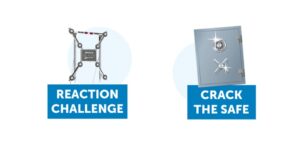
Adding to the festive fun, we’ve themed three unique interactions around what we do best, event marketing! Our Triathlon will give you a live experience of the type of engagements and entertainment we help clients weave into their events. Taken as a trio of challenges, you’ll collect your score and be in for a chance to win a prize!
Our event marketing triathlon challenges include:
How to join us
So whether it’s the festive fun that tempts you, a bit of (healthy) competition or some interesting event insights and warm conversations, we hope you’ll join us on the 14th December.
Drop in anytime for as long as you’d like – We’ll be running AM and PM open sessions between 09:00 – 13:00 & 14:00 – 17:00. Please let us know which suits you best and we’ll send you confirmation of your place…along with sending something you’ll need to keep ‘safe’ for a certain challenge.
Health and Safety often gets blamed by people for stopping things happening; people can receive bad advice from their Employer, their Insurance Company or indeed from a Health and Safety Consultant. They can also use Health and Safety as an excuse for not doing something or for people who can’t be bothered or have a ‘killjoy’ attitude.
The Health and Safety Executive have responded to concerns by setting up a Myth Buster panel; this is chaired by Judith Hackett- a formidable character – she has 11 co panellists who are drawn from all walks of life.
So far this year they have commented on 47 cases; the first about a swing on an allotment that a Parish Council wanted removing; the swing was provided for use by the hirer’s children to keep them occupied. The latest that a landlord of a block of flats was asked to replace metal framed windows; that fitted & opened safely.
There is a form on the HSE’s website for anyone to report any ‘Health and Safety gone mad’ occurrences.
Health and Safety as I have said is all about Common Sense; but Common Sense is not always that common- it is about awareness, knowledge, attitude & perception.
Health and Safety is about protecting people with sensible controls; not about blanketly saying people cannot do things
I have chosen some ‘favourite’ myths to highlight that Health and Safety has not gone mad – but some peoples interpretation of it has:
Bonkers Conkers- in reality the risk of playing conkers is low; a head teacher did ask for children to wear goggles; but there is no blanket need; in schools it is often discipline that’s the issue not H&S.
Bunting (well we have had the Jubilee & now the Olympics)- The myth is that Bunting is not allowed due to H&S – this is just plan nonsense; H&S is about protecting people not about stopping celebrations! People need to plan – where to hang bunting and how to get it up their safely- again not a blanket ban.
Restaurant based myths; yes you can issue tooth picks, yes you can heat up baby foods & no dogs in restaurants is not a Health and Safety Issue.
Topical one of Mortar Boards- like conkers there is a v v small risk of injury from a flying Mortar Board- the issue can be that the hats are hired and need to be returned in pristine condition?
Trapeze artists need to wear Hard Hats! Hard hats are only required when there is a risk of falling debris.
PAT testing of electrical items is an yearly requirement; this is simply not true; the Electricity at Work Regulations require businesses to maintain their electrical appliances- this needs to be risk based; some items can be visual checked (low risk static office equipment) others such as portable hand tools that are used in dusty/wet environments will need more frequent thorough checks.
Lastly there is nothing you can do about Slips & trips- there’s lots of cheap effective solutions – there were 4 fatalities last year, and about 100, 000 injuries – the estimated cost to UK PLC is £800 million per year; Good Housekeeping, cable management, correct well maintained clean flooring, foot wear and staff attitude will all reduce the risk
Health and Safety is siimply about protecting people; unfortunately 173 people were killed at work last year- this fiqure does not include those who are killed whilst driving on our roads; or ask the 300 000 plus people who are injured at work
It is about sensible Risk Management – about putting in place some proportionate controls.
We all need to accept personal responsibility- whether we are an Employer, an Employee or a member of the public
We’re really looking forward to the ‘All About Apprenticeships’ event where we’ll be meeting employers to talk about business challenges and solutions, job seekers to talk about apprenticeships and schools to discuss collaborations and activities to engage young people in the world of work.
The event will take place at The Forum, Norwich, NR2 1TF and it will be a great networking opportunity in Norfolk for support with skills training, development and staffing.There is so much information available but in an easy to consume format where you can really take it in away from your daily activities.Take some downtime and come and chat, learn and find out what is helpful to you. Everyone is keen to share their enthusiasm and give their support, not to sell to you, such is the wonderful professional community that we belong to in Norfolk.
There is a pay & display car park located underneath the venue and the venue has ample accessibility access.Officially we will start at 3:30pm but just get there when you can as we don’t end until 7:00pm.
The event has been laid on by Apprenticeships Norfolk, who have invited a great selection of helpful enterprises who can offer different types of expertise and experience.We are certainly one of those and are confident we can answer any questions you have on team and skills development, even if that is not via the apprenticeship route as we also have a huge amount of experience in recruitment, tailored training, consultancy and bespoke support, as well as Professional Certificates.
Next Wednesday, 18th June, 3.30pm – 7pm, see you there!
For more information on the event, take a look on our website here
Provisional Met Office figures show that 2012 has seen the UK’s wettest April and June, since records began in 1910. Over a months worth of rain fell in the North West and North East within 24 hours, after flood warnings were issued to more than 7,000 homes and businesses.
Although some of the UK remained unaffected, flash flooding and unpredictable weather conditions are becoming more and more common, leading the more proactive businesses to ask the question:
Would my business be prepared in the event of a disaster?
A disaster or crisis can strike a business at any time and failing to plan for such an event can undo years of good work and hard trading in an instant. This can be the difference between your business recovering or failing; a return to full normal trading can often take a business more than a year. According to a report undertaken by AXA in 2007, 80% of businesses affected by a major incident either never re-open or close within 18 months. Imagine for example you had a fire which resulted in your premises closing for a re-build. Such a disaster could result in obtaining planning permission/building warrants, allocating building contractors, allowing for delays on the build caused by holidays, poor weather conditions and availability of materials required.
Assess the threats
Think of the threats in terms of the operations which are key to your business, such as:
Fire, flood or storm damage to your premises or stock
Explosion
Loss of power or other services
Threat of vital equipment or stock
Unavailability or loss of key personnel
Staff sickness levels (Swine Flu Pandemic)
Loss of customer or other records
Theft of delivery vehicles
Make a plan
Once you have assessed the threats, consider any potential actions you can take to reduce the risk of these occurring, or even prevent them altogether. Are there steps you could take to reduce the scale of loss, or speed up your return to normality?
We recommend all businesses are supported by some form of Continuity Plan, regardless of their size
Think about things such as:
Organise suitable alternative premises
Keep an updated list of staff contact details off site
Arrange for an off-site storage solution for backed up files
Making sure fire extinguishers are regularly inspected, maintained and appropriately located
Train staff in emergency procedures including the use of fire extinguishers
Invest in a fire resistant safe for important paper records
Carry out back up procedures for important computer records
Fit fire alarms, burglar alarms, CCTV and any other relevant security systems
Ensure germ killing hand foam is available for staff and visitors
Peter Fosterof Hugh JBoswell states; “we recommend all businesses are supported by some form of Continuity Plan, regardless of their size. Many businesses underestimate the sheer quantity of time and effort required to get their business back up and running following a substantial loss. By being prepared, you can reduce the time required to return your business to pre-loss trading levels, and help minimise the impact on your business.”
To encourage businesses to make the investment in monitoring technology and energy saving, Enhanced Capital Allowances (ECAs) are available meaning that 100% of the qualifying capital expenditure may be claimed back against taxable profits in the first year.
There are three schemes for ECA’s which are energy saving plant and machinery, water conservation plant and machinery, and low carbon dioxide emission cars and natural gas and hydrogen refuelling infrastructure. Focussing on water conservation, did you know if you fit efficient showers, taps, toilets, washing machines, detection and monitoring equipment and the product is suitable you can use the ECA Scheme.
Taking it further, installing rainwater harvesting equipment, smaller scale sludge dewatering equipment, water efficient industrial cleaning equipment amongst many others, you can again use the scheme.
The general rate of capital allowances is 18% a year on a reducing balance basis up to a limit of £25k. Some technologies supported by the ECA Scheme (e.g. boilers, lighting) are included in a special capital allowances pool where the general rate of capital allowances is 8%. Additional benefits of purchasing ECA qualifying energy efficient technologies could include: improved cash flow, lower energy bills, reduction in Climate Change Levy or CRC payment.
We will look into all of these options as part of any project we work on and to the Clients needs and specifications.
This is the second in our 3-part Autumn Masterclass series. We started with investment fundamentals. In this session, we now move on to look at how to arrange your money to give you the life you want. We’ll show you how to work out how much money you’ll need and how, by creating a financial plan, you can plot your route to financial security.
Do you live for today or for tomorrow? A plan will help you do both. We’ll discuss in straightforward terms the impact of tax on returns and the advantages of using the tax breaks the Government gives us. We’ll look at how pensions work, at recent changes and why they are a great starting place; why ISAs are worth considering and why, while tax is an important factor, choosing the right investment should be your starting point. By considering the three pillars that sit at the heart of an investment plan we’ll start to make sense of the different types of investment. By the end of the session you’ll have a clearer understanding of what’s needed to set you on the road to the life you want.
Agenda:
Investment fundamentals – short recap of main takeaways from the previous session.
Financial Planning – creating and managing a robust financial strategy.
Comfort break
The Three Pillars – building a portfolio to support your plan, based on pensions, ISAs and ‘naked investments’.
A deeper dive into Pensions – how they work and why they are such a good idea.
Questions and close
This is an in-person session, so places are limited. We are keen to keep our Masterclasses free of charge. To help achieve this please could you try to honour your commitment to attend or let us know as soon as possible if you are unable to make it so your place can be allocated to someone else. This year, we are proud to support The Priscilla Bacon Hospice Charity. If you find the masterclass useful, we encourage you to donate to support their work.
What is the ‘Origin’ of these goods? It can appear like an easy question, but it can be a bit more complicated to answer. Under the EU Trade and Co-operation Agreement the rules extend to 37 pages, in the Economic Partnership Agreement with Japan they run to 27. Each set of rules is broadly similar but its the product specific details that provide advantage for each party.
This webinar will aim to help identify where trade agreements can deliver competitive advantage for businesses in the UK. We will be joined both by experts on maximising the benefit of tariff free deals and by colleagues from the Department of International Trade who are negotiating to increase free trade and expand our exports into new markets.
Speakers include:
Liam Smyth – Director of Trade Facilitation at the British Chambers of Commerce & Managing Director at ChamberCustoms
Neil Feinson – Deputy Director, Competition and Goods Policy, Department for International Trade (DIT)
When an emergency strikes, the first few minutes are critical — and having a trained first aider on-site can mean the difference between life and death.
At Shield Health & Safety, we’re committed to equipping individuals and workplaces with the skills and confidence to respond effectively in emergencies.
That’s why we’re inviting you to join our open Emergency First Aid at Work (EFAW) course this summer. ✅ Upcoming Course Dates: 📍 Location: Wymondham 📅 Dates: 25th June & 17th September 2025 🕐 Duration: 1-day practical course 🎓 Certification: Valid for 3 years (accredited)
Why Is Emergency First Aid Training So Important? Emergencies in the workplace can happen at any time — choking, bleeding, heart attacks, or someone becoming unconscious.
Employers have a legal and moral responsibility to ensure someone is trained and confident enough to step in until help arrives. Benefits of being trained: Recognise and respond quickly to life-threatening situations Support injured or ill colleagues before emergency services arrive Increase workplace safety and morale Meet HSE (Health and Safety Executive) legal requirements Gain confidence to act when it matters most Why Face-to-Face First Aid Training Is Still Best While online learning has its place, first aid is a hands-on skill — one best learned through real-life scenarios, demonstrations, and physical practice.
In-person training offers:
Immediate instructor feedback
Realistic CPR and bandaging practice
Confidence-building peer interaction
Custom scenarios tailored to your industry
Opportunities to ask questions and clarify procedures
At Shield Health & Safety, our courses are led by experienced instructors who bring with real-world examples and practical application.
Train Your Whole Team — We Come to You!
In addition to our open courses, we offer on-site Emergency First Aid at Work training at your location, ideal for businesses who want to train groups of 6 or more. You’ll receive the same high-quality certification and expert tuition, without needing to send staff off-site.
Book Your Spot or Request On-Site Training
Whether you’re an individual looking to upskill, or a business safeguarding your staff, our Emergency First Aid at Work training is a vital investment.
👉 Contact us to book or request an on-site quote: sales@shieldhealthandsafety.co.uk 📞 Or call us directly at 01603 6552029
Course Title; Level 3 Award in Effective Auditing and Inspection Skills
Aim; The qualification provides skills in the auditing and inspection of food manufacturing processes, in order to effectively verify HACCP and general food safety and management systems. Especially valuable for BRC, SALSA, etc certificated manufacturers and multi-site catering operations where consistency is valuable.
Objectives
*Understanding auditing and inspection- what it is and appreciate the benefits and limitations
*Collecting & verifying of information
*Identify and plan the stages in Audit and Inspection
*Improve the ability to analyse & interpret data
*People Skills- improve your ability to get the right information
*Identify the competencies & characteristics of Auditors
*Understanding the implementation of on-site audits & inspections
*How to prepare written reports
Organisation
Duration; The course is delivered over one day- it is a classroom session- based on a number of syndicate exercises, activities & case studies- no chalk & talk here!
Exam/Assessment; 30 question multiple choice test: Pass mark 20, Merit mark 25
Cost; £135 plus VAT includes notes, refreshments & lunch and the assessment & certification fees (HABC)
Awarding Body; Highfield Awarding Body for Compliance (HABC)
Tutor; Richard Mills
Differentiation; Reasonable (Level 2 or equivalent) literacy, good communication skills, a broad understanding of food safety and its management systems, and experience of food manufacturing or large scale catering processes.
Audience; This qualification is for supervisors, team leaders & QA staff who are involved in the verification of Food Safety through Auditing & Inspection
Feedback; “thank you for your help, guidance and interest in putting on our courses…at such short notice. We all thought you were an exceptional presenterandmade it a mostenjoyable and productive experience. (Wow ! That’s got to be worth a “Brucie Bonus”)” Ernie Woodhouse, QA Team, Youngs Seafoods