Does Investing in a Business Mentor Guarantee Business Growth?
Kathy Ennis, LittlePiggy
Sadly, there’s no such thing as a cast-iron guarantee for business growth.
(If there was, we’d all be millionaires!)
But there IS plenty of evidence to show that investing in an experienced Business Mentor will increase your chances of growth and success.
Research from the Federation of Small Businesses shows that 70% of the businesses that work with a Business Mentor survive for five years or more. This is double the rate for non-mentored entrepreneurs.
A survey by SCORE also found that 30% of entrepreneurs reported increased business growth after only one session with a mentor. This figure rose to 43% after five or more sessions.
Oh, and if you thought the world’s most successful high-flyers achieved greatness all on their own, think again. Bill Gates was mentored by the billionaire investor Warren Buffett, while Facebook founder Mark Zuckerberg was supported by several high-profile mentors, including Steve Jobs.
Why Is Working with a Business Mentor Important?
A Business Mentor provides knowledge, support, and experience-based guidance that helps business owners make big decisions.
Unlike the business owners they work with, Business Mentors offer an objective view of the business. Meaning? Potential opportunities for growth and success don’t get missed.
This can be particularly important for solopreneurs and side-hustlers, who are ultimately responsible for everything. It’s hard to step back and see the bigger picture, when you’re so focused on keeping all the plates spinning!
What Should a Business Mentor Do?
Your Business Mentor should act as a trusted sounding board for your ideas, as well as helping you create a clear, achievable plan that helps you reach your objectives.
A good mentor will also challenge your perceptions. They will hold you accountable for your goals. In other words, they won’t do the hard work for you!
But they will also offer plenty of support, championing your talents and boosting your confidence on the ‘down’ days every entrepreneur faces from time-to-time.
What Qualities Should You Look For In a Business Mentor?
Luckily, you don’t have to fly half-way around the world to convince Warren Buffett to drop everything and be your mentor!
The best mentors are simply experienced people you can learn from.
For this reason, you can have more than one ‘mentor’. Some mentoring relationships are more informal – so much so, that you may not realise you are being mentored at all.
Think of those coffee catch ups with your ex-boss. Maybe the lunch date with a networking connection, or the call with a colleague you admire. Chances are, you’ll be offering some form of advice and guidance to one another, based on your own knowledge and experience.
But if you are looking for a more formal Business Mentoring relationship, you should start by finding someone who has walked in your shoes.
For example, solopreneurs and side-hustlers should look for a mentor who has plenty of experience setting up and running a business on their own.
Not only will they understand how it feels to be responsible for everything, but they’ll also have been there, seen it, and done that…
This means they can help you avoid all the mistakes they once made!
Then, consider the skills you value or want to learn, and what you’d most like your business to be known for. Can your chosen mentor offer knowledge and guidance in those areas?
Why Paid Mentoring Gets the Best Results
There are no set costs for business mentoring in the UK, and as we all know, ‘expensive’ doesn’t always mean ‘better’.
If you really want free mentoring, it’s certainly easy to come by… just type ‘free business mentoring’ into your search engine of choice, and you’re away!
However, it’s worth thinking about the level of value you are likely to receive from this type of mentoring.
Free sessions are unlikely to be personalised to you or your business, and you probably won’t be able to choose the person who offers you what may only amount to cookie-cutter, one-off advice.
By contrast, paid-for Business Mentoring puts you in control. Not only do you get to choose exactly who you’ll work with, but you can also address specific issues that are important to you and your business, with valuable support in between sessions.
Ultimately, you’ll have the opportunity to build a lasting, trusted professional relationship with an experienced mentor who both cares about and is properly invested in your business.
Need any more convincing about the value of paid mentoring? Just think about the reasons why people pay for your products or services.
Giving them away for free, would they have the same value to the ‘customer’?
Next Steps?
Check out my Business Mentoring packages. Which one would suit you best?
There’s a myth that there is lot of guesswork involved in starting your own business.
Is it true?
The breezy, slick stories we hear about famous entrepreneurs can make it seem as though success is something you achieve simply by working hard, then leaving the rest to fate.
But as someone who has started several businesses in the past – with varying degrees of success – I know there’s no substitute for planning and guidance.
I just wish I’d learned that lesson sooner!
One of the reasons I became a Business Mentor is because I know how it feels to start out with nothing but a big idea, a thirst for hard work, and a bucketload of passion.
More importantly, I also know from hard-won experience how to turn all that into a profitable business. It’s why I now spend my days working with fired-up solopreneurs and side-hustlers.
My mission is to provide them with the tools, methods, and support they need achieve the success they dreamed of when they made the brave, life-changing decision to go it alone.
I’ve made a bold statement with the title of this blog, saying that Solopreneurs and Side Hustlers need a Business Mentor. So let’s get down to some of the nitty-gritty
What Is a Business Mentor?
The origin of the word ‘Mentor’ comes from the ancient Greek poem, Odyssey. In the poem Homer uses the word Mentor to describe the person who guides the young Telemachus into adulthood.
Since then, the word Mentor has evolved to mean someone who uses their wisdom, experience, and knowledge to guide others.
But a Business Mentor should not be confused with a Mentor. A Mentor will use their knowledge and wisdom to guide you though the pitfalls of life.
The role of a Business Mentor is specific. They will use their knowledge, skills and experience in business to help you successfully implement business basics, business development and business growth.
They will enable you to avoid business pitfalls and mistakes because they have had their own business(es) previously (and are probably running a Solopreneur, business Mentoring business when they work with you!)
Let’s face it: if you had to choose a Mentor to help you start-up or scale-up your business, would you want someone who is supportive and knowledgeable or someone who is supportive, knowledgeable AND knows how to start, run and grow a business?
Business Mentor versus Business Coach: Similar, But Not the Same
While you may hear the terms ‘Coaching’ and ‘Mentoring’ used to mean one and the same thing, there is a key difference between the two:
A Business Coach uses goal-setting and questioning techniques to help you develop your passions and ideas
A Business Mentor uses their knowledge and experience to help you turn your passions and ideas into a profitable business
The difference is subtle, I know.
As a Business Mentor I use coaching techniques with my clients because questioning and goal setting are a key element in a successful business.
However, it isn’t always possible for a Business Coach to provide business mentoring, because they may never have started and run a successful business of their own.
So, a Business Mentor can Coach; but a Business Coach may not have the skills and experience to enable them to Mentor.
Why Do Solopreneurs and Side-Hustlers Need a Business Mentor?
I describe my mentoring approach as “a brain to pick, an ear to listen, and a push in the right direction.”
Those things take on more importance when your business starts and ends with you, and even more besides, if it’s the first time you’ve ever set up a business on your own. Talking your ideas and concerns through with a Business Mentor who’s ready and willing to help can take the weight off your shoulders, and free up more of your precious time.
Here are some more benefits of working with a Business Mentor:
They will provide you with an ‘outside’ perspective
I describe this as the ‘helicopter approach’.
As a Business Mentor I want my clients to be successful; but it’s their business, I’m not part of it. This means I can take a long, hard look at the business in a very objective way.
As a solopreneurs and side-hustler, you have so much to do. It will be almost imporssible for you to step back and look at the big picture. You will always look at your business subjectively.
As a Business Mentor I provide objective insights, inspiring ideas you might not have thought about before, and help you identify exciting, new opportunities.
They will hold you accountable
You know those stubborn tasks you keep pushing to the bottom of your ‘To-Do list?
Well, a Business Mentor will help you get them done, once and for all.
I spend lots of time with my clients helping them set realistic and achievable actions. I bet your To-Do list is full of unrealistic and unachievable activities – which is why they keep being overlooked.
A Business mentor should also help you develop time management, prioritisation and delegation skills – so the right things get done at the right time by the right people (and those ‘people’ may not be you!)
They will save you time and money
The two commodities all Solopreneurs and Side Hustlers have the least of – time and money!
It may seem counter-intuitive, but although you pay for the expert support and guidance of a Business Mentor, working with one will actually save you both time and money.
A Business mentor will save you, as a Solopreneur or Side Hustler, from making costly mistakes while implementing financial management, time management and profit making activities in your business.
I always say to my clients that my experience stops them making the same costly mistakes I made when I started out.
I help them set up practical systems and processes that mean they can see where their time and money is best spent… so none of either is wasted.
They will support you through difficult times
Having your own business is never a life of champagne and roses.
Whatever type of business you’ve chosen to start, there will be plenty of challenges ahead.
On bad days (we all have these), you’ll question whether to keep going.
That’s when your Business Mentor will step in, with knowledgeable support, gentle guidance, and a listening ear that keeps you moving forwards.
They will widen your network
Any Business Mentor worth the name will network extensively, which means they’ll have a bulging list of contacts for just about every industry you can think of.
Not only will your mentor put you in touch with tried and tested ‘people-who-can’ to help with specific business areas, they can also recommend the best groups and events for you to meet more potential customers!
I Was Only Making Feeble Attempts. It Was Not the Cohesive Plan that Kathy Helped Create
I needed help to understand my business. I have no previous experience in this field and was really only making feeble attempts at it. It was not the cohesive plan that Kathy helped create. We outlined my business and how to approach my marketing. I now have more interest and engagement from the group people I want to sell to. I thought that was not possible. Now I actually enjoy doing it!
Working With a Business Mentor Is Your Shortcut to Success!
If you are a solopreneur, side-hustler or other single-person business you will always be at a disadvantage. There is only one of you, but there are a hundred jobs to do and a thousand decisions to make every day.
You have to do everything that a business that has ‘departments’ has to do… All by yourself!
With a Business Mentor in your corner cheering you on when things go right; helping you up when things go wrong and sharing their skills, knowledge and experience, how can you be anything but successful?
NatWest Business Builder: Building a growth mindset
Being in business means taking risks, but how do you assess them and what’s the payoff? Four entrepreneurs reveal their biggest gambles.
“I turned down half of our business revenue”
Pete Campbell was just 25 when he started his PR and SEO business Kaizen in London. Within 18 months the business was turning over £250,000 and employing five people, with half of that revenue coming through the agency’s white label SEO services. And then everything changed: Pete decided to stop offering the SEO service that had been so valuable to the company.
“I was basically helping other people grow their marketing agencies rather than building my own empire, and I’d started the business to become a leader in the Digital PR SEO space in my own right,” says Campbell. “Also, our profit margin on direct clients at the time was circa 30% versus 10% on outsourcing. I decided we could double our day rate to make up for the potential revenue loss we’d face in the short term.”
What followed next were some “awkward” conversations between Campbell and his clients and a company strategy day where he outlined the business’s long-term vision to the team. The risk paid off: “We actually recouped our potential loss in three months and exceeded our initial revenue targets.”
Today, Kaizen employs 21 staff members, and projects a £1.2m turnover for 2018. “I can trace this increase back directly to the risk I took three years ago,” says Campbell.
“I sold my house and set up a factory”
Within three years of launching Nim’s Fruit Crisps from her London home, Nimisha Raja’s fruit snacks were being manufactured in Hungary and stocked in Harrods, Selfridges and Planet Organic. Yet despite the success, Raja was ready to give up the business and cease trading entirely.
“I started to get the odd complaint about the crisps being soft so I monitored it and decided that the products were not consistent and the quality not always as good as I wanted,” says Raja. “Plus, the cost of third-party production, packing and distribution were just not viable given I wanted Nim’s to be an affordable healthy snack.”
After some deliberation Raja decided to keep going by selling her house and setting up her own factory in Kent. “I met someone at a trade show who told me that Kent Council were great at offering grants to manufacturers, I then spoke with a friend of mine who said he’d also invest in the business.”
It was the right move. Raja has since secured deals with Tesco, Co-op Food and Ocado and now exports to 11 countries. She remains cautious, however. “By setting up the factory, everything I’d ever worked for all my life was at stake – and to some degree it still is!”
“I can trace this £1.2m turnover back directly to the risk I took three years ago”
Pete Campbell, founder and CEO, Kaizen
“I joined a UK start-up from Canada”
Serial entrepreneur Sarah Botham was living as a temporary resident in Canada when a former colleague offered her the role of chief operating officer at Reconfigure.io, a recently launched cloud computing company based in the UK.
“It was a risky position to be in at the best of times,” she says. “I had no safety net if Reconfigure.io were to fold, only some depleted savings. On the other hand, if I were to keep my job with a Canadian company I’d have had access to healthcare and all the other good stuff most people take for granted.”
Having worked with the firm’s CEO at a previous start-up, Botham decided the risk was worth it and joined the firm remotely in 2017 as one of five co-founders.
“I knew right from the off that I wouldn’t take home a lot of money in the first year. I worked full time, on a very part-time salary, and made up the rest of my budget with my savings. In the first year I took home less than £10,000.”
Currently in beta, the tech company is growing steadily and the team hope to raise £1.5m by the end of 2018.
“Your job should never just be a job, it should support the kind of lifestyle you want,” says Botham. “If I was too worried about what I could lose, I wouldn’t have had a very interesting life by this point.”
“I risked everything to go on The Apprentice”
Joseph Valente was just 22 when he founded his plumbing business, ImpraGas in 2012. Three years later he joined the 11th series of Lord Sugar’s TV show The Apprentice, and was told he’d have to leave his firm completely for up to nine weeks.
“Everything was at stake,” says Valente, whose business employed seven people and served 2,500 clients at the time. “My business, my relationship with my team, my pride. But part of being an entrepreneur and business owner is knowing when you need to jump, when the right time to take a risk is and when to measure out if it’s worth it.”
Valente’s self-belief paid off and he went on to win the show and the £250,000 investment from Lord Sugar, helping propel ImpraGas to a turnover of above £2m.
“First and foremost, risk is essential to building and growing a business,” says Valente. “Create a name for yourself as an entrepreneur who takes risks by staring fear in the face, and doing the things your competitors aren’t willing to do – that will grab the attention of the people who can support you.”
There’s a myth that there is alot of guesswork involved in starting your own business.
Is it true?
The breezy, slick stories we hear about famous entrepreneurs can make it seem as though success is something you achieve simply by working hard, then leaving the rest to fate.
But as someone who has started several businesses in the past – with varying degrees of success – I know there’s no substitute for planning and guidance.
I just wish I’d learned that lesson sooner!
One of the reasons I became a Business Mentor is because I know how it feels to start out with nothing but a big idea, a thirst for hard work, and a bucketload of passion.
More importantly, I also know from hard-won experience how to turn all that into a profitable business. It’s why I now spend my days working with fired-up solopreneurs and side-hustlers.
My mission is to provide them with the tools, methods, and support they need achieve the success they dreamed of when they made the brave, life-changing decision to go it alone.
I’ve made a bold statement with the title of this blog, saying that Solopreneurs and Side Hustlers need a Business Mentor. So let’s get down to some of the nitty-gritty
What Is a Business Mentor?
The origin of the word ‘Mentor’ comes from the ancient Greek poem, Odyssey. In the poem Homer uses the word Mentor to describe the person who guides the young Telemachus into adulthood.
Since then, the word Mentor has evolved to mean someone who uses their wisdom, experience, and knowledge to guide others.
But a Business Mentor should not be confused with a Mentor. A Mentor will use their knowledge and wisdom to guide you though the pitfalls of life.
The role of a Business Mentor is specific. They will use their knowledge, skills and experience in business to help you successfully implement business basics, business development and business growth.
They will enable you to avoid business pitfalls and mistakes because they have had their own business(es) previously (and are probably running a Solopreneur, business Mentoring business when they work with you!)
Let’s face it: if you had to choose a Mentor to help you start-up or scale-up your business, would you want someone who is supportive and knowledgeable or someone who is supportive, knowledgeable AND knows how to start, run and grow a business?
Business Mentor versus Business Coach: Similar, But Not the Same
While you may hear the terms ‘Coaching’ and ‘Mentoring’ used to mean one and the same thing, there is a key difference between the two:
A Business Coach uses goal-setting and questioning techniques to help you develop your passions and ideas
A Business Mentor uses their knowledge and experience to help you turn your passions and ideas into a profitable business
The difference is subtle, I know.
As a Business Mentor I use coaching techniques with my clients because questioning and goal setting are a key element in a successful business.
However, it isn’t always possible for a Business Coach to provide business mentoring, because they may never have started and run a successful business of their own.
So, a Business Mentor can Coach; but a Business Coach may not have the skills and experience to enable them to Mentor.
Why Do Solopreneurs and Side-Hustlers Need a Business Mentor?
I describe my mentoring approach as “a brain to pick, an ear to listen, and a push in the right direction.”
Those things take on more importance when your business starts and ends with you, and even more besides, if it’s the first time you’ve ever set up a business on your own. Talking your ideas and concerns through with a Business Mentor who’s ready and willing to help can take the weight off your shoulders, and free up more of your precious time.
Here are some more benefits of working with a Business Mentor:
They will provide you with an ‘outside’ perspective
I describe this as the ‘helicopter approach’.
As a Business Mentor I want my clients to be successful; but it’s their business, I’m not part of it. This means I can take a long, hard look at the business in a very objective way.
As a solopreneurs and side-hustler, you have so much to do. It will be almost imporssible for you to step back and look at the big picture. You will always look at your business subjectively.
As a Business Mentor I provide objective insights, inspiring ideas you might not have thought about before, and help you identify exciting, new opportunities.
They will hold you accountable
You know those stubborn tasks you keep pushing to the bottom of your ‘To-Do list?
Well, a Business Mentor will help you get them done, once and for all.
I spend lots of time with my clients helping them set realistic and achievable actions. I bet your To-Do list is full of unrealistic and unachievable activities – which is why they keep being overlooked.
A Business mentor should also help you develop time management, prioritisation and delegation skills – so the right things get done at the right time by the right people (and those ‘people’ may not be you!)
They will save you time and money
The two commodities all Solopreneurs and Side Hustlers have the least of – time and money!
It may seem counter-intuitive, but although you pay for the expert support and guidance of a Business Mentor, working with one will actually save you both time and money.
A Business mentor will save you, as a Solopreneur or Side Hustler, from making costly mistakes while implementing financial management, time management and profit making activities in your business.
I always say to my clients that my experience stops them making the same costly mistakes I made when I started out.
I help them set up practical systems and processes that mean they can see where their time and money is best spent… so none of either is wasted.
They will support you through difficult times
Having your own business is never a life of champagne and roses.
Whatever type of business you’ve chosen to start, there will be plenty of challenges ahead.
On bad days (we all have these), you’ll question whether to keep going.
That’s when your Business Mentor will step in, with knowledgeable support, gentle guidance, and a listening ear that keeps you moving forwards.
They will widen your network
Any Business Mentor worth the name will network extensively, which means they’ll have a bulging list of contacts for just about every industry you can think of.
Not only will your mentor put you in touch with tried and tested ‘people-who-can’ to help with specific business areas, they can also recommend the best groups and events for you to meet more potential customers!
I Was Only Making Feeble Attempts. It Was Not the Cohesive Plan that Kathy Helped Create
I needed help to understand my business. I have no previous experience in this field and was really only making feeble attempts at it. It was not the cohesive plan that Kathy helped create. We outlined my business and how to approach my marketing. I now have more interest and engagement from the group people I want to sell to. I thought that was not possible. Now I actually enjoy doing it!
Working With a Business Mentor Is Your Shortcut to Success!
If you are a solopreneur, side-hustler or other single-person business you will always be at a disadvantage. There is only one of you, but there are a hundred jobs to do and a thousand decisions to make every day.
You have to do everything that a business that has ‘departments’ has to do… All by yourself!
With a Business Mentor in your corner cheering you on when things go right; helping you up when things go wrong and sharing their skills, knowledge and experience, how can you be anything but successful?
“I’m 29, so have I left it too late to be an entrepreneur?”
I saw this question recently when I was searching for something on Google. It made me take a deep breath and laugh because I am someone who started their first business at 40+. So, I felt the need to say out loud: “No, sweetheart, you definitely have not left it too late to be an entrepreneur!”
I’m a ‘Maturepreneur’ Business Mentor who works with freelancers, solopreneurs, and side-hustlers of all ages, helping them transform their big ideas into brilliant, profitable businesses.
But, because I choose to work with one-person businesses, people often make the mistake of assuming all my clients are thrusting young things… bright-eyed, vibrant millennials and Gen Z-ers who have the passion and energy to strike out on their own.
Heaven forbid you might want to start a business in your 40s. Meanwhile, if you’ve committed the heinous crime of being over 50, then isn’t it about time you donned a cardi and put those weary feet up with a nice cup of tea?
You Don’t Have to Be Young to Start a Business!
Despite the global media’s obsession with Silicon Valley whizz kids, it’s a myth that all new businesses are started by dynamic youngsters.
It’s a myth that most new businesses are started by dynamic youngsters.
In fact, the majority of UK entrepreneurs are in their 40s. The average age of new business owners is rising steadily year on year. According to the latest Global Entrepreneurship Monitor, “entrepreneurial activity among the over 50s has risen by more than 50% since 2008.”
We maturepreneurs aren’t just starting businesses, either. We’re busy turning them into success stories. For example, 70% of businesses started by the over-50s are likely to survive for at least five years. This compares to 28% of businesses started by the under-50s.
I’m not knocking youth in any way.
Young people have lots of offer entrepreneurship – they’re often enthusiastic, willing to learn, and tech-savvy.
I just think it’s high time society started to appreciate the immense value that older people can bring to the business table too. From life experience and self-knowledge to specialist skills that have taken decades to perfect.
Why Start a Business When Your are Over 40 (or 50!)?
There are all kinds of reasons why you might not be ready to start a business when you’re young.
It takes serious guts to turn your back on the 9-5, and if you’re not doing that armed with years of hard-won experience under your belt, going it alone can feel much more terrifying.
I was an overnight success all right, but 30 years is a long, long night.
Ray Kroc, Founder of McDonald’s
Ray Kroc spent over 17 years working as a salesman when in 1954, and aged 52, he sold 8 milkshake mixers to Dick and Mac McDonald. The brothers were running a small burger restaurant together. Ray saw an opportunity to turn their simple, high-quality menu into a nationwide success.
With the brothers’ agreement, Ray founded the McDonald’s corporation in 1955. By 1958 McDonald’s had sold its 100 millionth hamburger.
Ray came equipped with plenty of imagination. All those years he spent at the sharp end of selling to lots of different businesses turned out to be a gift. Not only did they help him spot the vast potential in McDonald’s, but they also taught him how best to realise it.
Successful businesses are started by founders who spent years honing specialist skills and knowledge… like the brilliantly named Yes Yes Yes Company, which makes plant-based intimate lubrication products.
The company’s co-founder, Suzi Lennox, was in her late fifties when she decided to go it alone. She had been working at Pfizer when Viagra was launched, then spent the following years in Drug Safety divisions for pharmaceutical companies.
All that direct experience meant Suzi not only understood the need for her new company’s products and how to create them, but how to bring them successfully to market!
How to Start a Maturepreneur Business Yourself
It could be that your own route to maturepreneurship begins by accident (like mine). My clients start working with me because they’ve been made redundant, or been ‘persuaded’ to leave their jobs. Many say “It’s now, or never!”
With extra time on their hands, they’ve suddenly spotted a business opportunity using their experience, or from a hobby.
If that describes you, but you’ve got no idea how to turn your brilliant idea into a business, the good news is there’s plenty of help available.
Sites like Enterprise Nation offer a wealth of support to new business founders of all ages. While The Start-Up Loans Company has been busily helping founders in their 50s and over with low-interest loans.
So, to summarise, it’s more than possible to be a success in business, regardless of your age.
NO, you haven’t left it too late to become an entrepreneur!
If you’d like to discuss turning your own ideas into a profitable business, I can help you formulate a plan of action that draws upon over 20 years of personal ‘been there, done that’ experience.
Working for yourself is a life-changing decision, so having a clear picture of the steps you need to take to start a business and become self-employed is essential.
I know that because I’ve been there myself (many times!)
I became a Business Mentor because I understand EXACTLY how exhilarating it feels to say goodbye to the 9-5, armed with a brilliant idea and a headful of dreams.
But I also understand the fear, uncertainty and lack of practical knowledge that is often involved in going it alone.
I’ve Never Had a Business Before and I Don’t Want to Do It Wrong!
If you’ve never started a business before, how can you be sure your idea is good enough to pay the bills? What happens if it turns out self-employment isn’t for you, after all?
You know it’s possible to make a go of it and succeed. Nearly 4.5 million people in the UK are currently self-employed, and you probably know some of them!
But right here and right now – at the start – it can like you’re standing on the edge of a cliff.
Leap and the net will appear
This is a popular saying in business, and most of the time it’s bang on for seasoned business people.
But, when you start a business and become self employed for the first time, you want to see that net before you take that leap.
That’s where preparation, planning and some basic business start up know-how comes in!
How Do You Become Self-Employed?
From a practical point of view, self-employment in the UK is as easy as telling HMRC that you’re working for yourself.
Part of the process involves registering for Self-Assessment, which is how you (or your accountant) will calculate and pay your annual tax bill.
Sole Trader Or Self-Employed – Is There A Difference?
Self-employment means you decide what work you’ll do, and how and when you’ll do it. You are also completely responsible for the results.
You are not entitled to sick or holiday pay. However, you can choose your own working hours, and you will work for more than one client (so if you need to take a morning off at short notice, or ditch that client who never pays your invoices on time, no problem!)
If you’re a sole trader, then you’re a self-employed person who is the sole owner of your business.
Sole traders can work as consultants, plumbers, graphic designers, coaches, virtual assistants, online shop owners…. just about any type of business goes.
To summarise, ‘sole trader’ describes the legal structure of your business, while ‘self-employed’ means you don’t work for an employer.
There isn’t a huge difference between the two terms, which is why they are so often used interchangeably. Self-employment doesn’t automatically make you a sole trader.
You could choose to set up a partnership instead, so you and someone else share equal responsibility for the business, or register as a limited company.
Sole Trader vs. Limited Company
Unlike a sole trader or business partnership, a limited company is a separate legal entity from its owners – even if that’s just you.
Your company will have to be formally registered at Companies House. Also, your personal finances and assets are not counted as part of the business.
You will have control over your business name. Once it’s been registered, nobody else will legally be allowed to use it!
Many new business owners start out as sole traders, then switch to limited companies later, as they become more successful and their profits increase.
What Other Self-Employment Responsibilities Should You Focus On?
I know… I know… you were hoping to move onto the more exciting parts of self-employment by now!
Things like designing a fancy website, how to chat with customers on social media, or where to find the best networking events with free snacks and coffee.
Self-employment has a list of responsibilities. Too often, people overlook them because they’ve been distracted by all that fun, frilly stuff!
The good news is that if you take care of those responsibilities right from the start, there’s much more scope for you to relax and enjoy yourself later on.
They include:
Opening a business bank account. If you’re a sole trader you can use your personal account for business, but do you want to? It will be so much easier for you to manage your year accounts if all your business transactions are in a separate bank account.
Organising the right insurance for the type of work you want to do. This can include policies such as professional indemnity, public liability insurance, product liability insurance, critical illness insurance etc.
Deciding how you’ll keep accurate and up-to-date financial records.
You may also want to think about registering for VAT. You can do that voluntarily at any time. However, you must register if you expect your business turnover to be more than £85k a year (well, we can dream!)
Ultimately, Business Is A Practical Process
After years of stops and starts, it wasn’t until I focused on planning, systems, and processes, that my self-employed business finally started moving in the right direction.
You have to be prepared prepared to roll your sleeves up, learn the mechanics of business. You have to pay attention to what’s going on behind the scenes – not just the glitzy stuff at the front – then your chances of success will skyrocket.
As a highly experienced Business Mentor, I will help you focus on what really matters. This means you can take that brilliant idea of yours, and turn it into the successful business you deserve!
Find out more by booking a half-hour, complimentary Breakthrough Session now
If you’re a Solopreneur, then the chances are you enjoy all the thrills and spills that come from going it alone in business. (The clue’s in the name… ‘solo’-preneur!) But there comes a time when you want more … time, money, clients, recognition. What do you do then? How do you scale a Solopreneur business – when your business is just you?!
Solopreneur
/ˌsəʊləʊprəˈnəː/
noun
a person who sets up and runs a business on their own
As a Business Mentor who is a Solopreneur, and someone who’s been there, done that, and wears the T-shirt to prove it, I understand how exciting it feels when you take charge of your business destiny.
But I also know how it feels when you hit a plateau.
So, let’s go back in time for a moment.
You bravely turned your back on the 9-5 and launched your business in a blaze of glory. Armed with a brilliant idea and a bucketload of passion, you weren’t sure if you’d be a success or a failure… but you were determined to give it a good go!
Now, after a LOT of hard work, late nights, and missed catch ups with friends, you’re the successful Solopreneur you always dreamed about being.
As such, everything is ticking along just fine – but that’s not good enough anymore!
It’s time to take your business to the next level.
But if you’re anything like I was at this point, you’ll have identified three issues.
One: you’re not exactly rolling in cash
Two: you don’t want to give up that precious freedom you’ve worked so hard for
Three: you never want to hire and manage staff
Here’s why scaling your Solopreneur business for growth doesn’t have to mean investing piles of money you haven’t got… or building a world-dominating empire that means recruiting vast teams of people.
So, want to know how you can grow and scale your Solopreneur business? Here are eight proven ways that keep you solo and firmly in the driver’s seat.
1. Outsource
You know those jobs you hate, but you keep on doing because it’s YOUR business?
Things like writing and scheduling endless blog and social media posts, managing your business accounts, and making sure your website is up to date.
Outsourcing to professionals who love the jobs you hate will give you time to work on a plan that focuses on growing your business, rather than dealing with distracting day-to-day tasks.
(Let’s be honest, it’s also likely those pesky jobs will be completed to a higher standard than if you’d completed them yourself!)
2. Invest in a CRM
Growing and scaling a business effectively means getting organised.
Investing in a CRM (Customer Relationship Management) system will help you manage your customer data in a way those paper lists and Excel spreadsheets just aren’t capable of.
With a CRM you will be able to store messes of data such as, user behaviour, how long a customer has been with your business, purchase records, and notes on sales interactions, which you can use to optimize your sales and marketing processes and improve customer service across your organization.
customer behaviour
how long a customer has been with you
how often a customer contacts you, engages with you or buys from you
purchase records
notes on sales and interactions
With all this information you will be able to make informed decisions which means you which you will be able to optimise, automate and streamline your sales and marketing processes. This will help to improve your customer service and increase your sales.
Both essential if you are looking to grow and scale your Solopreneur business.
There are lots of CRM options available. Two of my favourites are the freebie from Hubspot’s and the really cost-effective one from Capsule.
Make sure you do some research into the best CRM for your business.
3. Productise Your Business
Don’t worry if you don’t know what ‘productise’ means!
It’s a word I made up to describe how you can make tangible ‘products’ to sell when your business usually involves exchanging time for money.
The problem many service-based Solopreneurs face is how to grow and scale their business when – essentially – they sell time for money.
If you’re a Coach, a Consultant, a Personal Trainer, a Therapist, a Copywriter, an Accountant etc it may seem that the only way you can scale up is to work more hours, charge more per hour / per project or to bring in a partner or staff.
Any one of those things will change the nature of the business you have built and love.
But there is the option to ‘productise’.
An example of the introduction of physical products could be that of one of my clients, She is a massage therapist; a hands-on, treatment-based business. Because she can only physically work with around six people every day, her turnover is limited. Limited by the number of hours per day and the number of days in the week she works.
However, if she ‘productises’; selling sleep masks, scented candles, or pillow sprays at the consultation or via her website, she can increase her income.
[BTW: I think she should increase her prices too]
But what about if you don’t have the kind of business that would work easily alongside additional products like these?
You could:
Create a course
Write a book
Have a subscription-based Group on Facebook
Work with a group of people rather then one-to-one (one hour x 10 people is more cost-effective than 10 people x 1 hour each!)
If you want ideas about how you could Productise your business, let’s talk
4. Automate Tasks
The less you have to do of the daily grind, the more time you will have to spend with the customers who pay you – and more customers means business growth and scale.
This is why automation is a godsend for any business. It takes repetitive tasks off your hands, seamlessly running them in the background for you!
Do some research into the tasks that could benefit from automation in your business. For example, you could set up an automated email series for people who sign up to your mailing list, invest in an accounting software package, automate your customer appointment bookings or pre-schedule social media posts for certain days of the week.
Every five minutes you don’t have to spend on these tasks is five minutes you can spend with someone who pays you.
5. Maximise Your Email List
If you haven’t built an email list yet, why not?
Here’s a guide to getting going with building your list
The return on investment for email marketing is estimated at £42 for every £1 you spend – and since some platforms (like Mailerlite) are free to start with, you may not even have to spend that!
Entice people to sign up to your list by creating an enticing lead magnet (check out the ones I have included on my Business Toolkit page), then use your subscriber data to send targeted messages with information and offers they’ll appreciate.
6. Build Your Personal Brand
Far more than just your logo, your personal brand encapsulates everything people see, hear, think, and feel about you and your business.
Your personal brand is built around your values – so make sure you understand what these are, and how best to explain them to your customers.
If you struggle to define your values, you could start by thinking of five words that best describe your approach to business (fun, confident, reliable, etc.!)
7. Spend, Spend, Spend
OK, I might have got a little carried away.
But there’s no escaping the fact that a successful business costs – as well as makes – money.
The secret is to spend wisely, on the tools, tech, and expertise you’ll need to facilitate successful business growth.
This includes outsourcing and automation, plus marketing, memberships, and training to keep your skills fresh (and your business competitive.)
8. Review and Reflect (With a Helpful Mentor!)
It’s no secret that planning is an essential ingredient for success (I call it the link between passion and profit!)
But there’s no use coming up with a brilliant business plan… that you never look at again.
You’ll only know if things are going according to plan – and how you can adjust your goals for future growth, if you review and reflect on your results.
As a highly experience Business Mentor who specialises in working with one-person businesses, I will help you get to grips with what really matters, so you can roll up your sleeves and get stuck into those plans for the growth and scale your Solopreneur business deserves.
How to Start a Business (When You’re Working Full-Time!)
Kathy Ennis, LittlePiggy
If you have ever said “I’d love to start a business, but I can’t because I’m working full-time” ask yourself, are you using your job as an excuse not to go for it?
As a Business Mentor, who has a specialism in helping people transition from employee to entrepreneur, I can tell you:
You’re not alone in wanting to make the transition
You can start the business you want while you are working full-time
Start a Business When Working Full-Time? The Statistics Speak for Themselves
Most employees in the UK have thought about starting a business at some point or another (me included!). A recent survey claims that 64% of the UK workforce is itching to strike out on their own.
If you add to that research by the Henley Business School , it shows that 25% of all adults in the UK are side hustlers.
Side Hustling is the New Normal
The idea of self-employment is scary.
OK, so you’re following your passion, but what happens if things don’t work out?
Happily, there’s no need to say goodbye to full-time employment just yet!
Striking out on your own doesn’t have to mean turning your back on the (relative) security of a full-time job. There are ways to test out that brilliant business idea and grow your entrepreneurial skills, all whilst keeping up with the 9-5.
It’s called a side hustle. It’s starting a business while you’re working full-time.
And here’s how you can do it….
Manage Your Expectations
If you start a business when you’re working full-time don’t expect it to be a breeze.
First, if you think you haven’t got a lot of free time as an employee, think about how much less time you will have an an employee and an entrepreneur. By accepting the fact that it WILL be challenging and time-consuming from the start, you’ll be better prepared for the highs and lows to come.
Second, if you’re counting on your side hustle bringing in shed loads of money from day one – enough to allow you to wave goodbye to your full-time job within weeks or months – please be aware that it probably won’t.
Use the Time to Plan, Make Mistakes then Plan Again
Starting a business you’re working full-time takes careful and detailed planning.
Planning your time will be paramount. You will have far less time than a full-time entrepreneur to do all the things that will need to happen to turn your idea into a business – and then deliver those products or services to your customers.
You will also need to plan your spending. Starting a business can be done without masses of expenditure, but it can’t be done for free. So you will need to plan carefully how much money are you going to spend on start-up costs, like website design and marketing?
What about planning for the type of customers you want to buy your products or services? Who are your customers going to be, and why will they buy from you? How are you going to deliver your products or services to them?
You don’t have to write a lengthy or complicated business plan, but you do need to answer important questions like these. They will help you gain a full understanding about how your business will work, and how you could eventually transition from employee to entrepreneur.
Once you’ve written a detailed plan, you’ll then need to schedule key tasks, and track your progress regularly.
Want some help with simple plan for your business?
The One Page Business Plan: From Surviving to Thriving in 12 Easy Steps
Not every business owner needs a business plan. But every business owner does need a plan for their business. This is the only one you will ever need.
What’s involved in a big, shiny, ambitious business launch?
Lots of:
Time
Effort
Money
People
If you’re starting a business while you are working full time, you are doing two things: creating something that will enable you to move into running your own business full time AND taking the time to test your ideas without as much risk. So, it’s absolutely fine to start with something very simple and work your way up to something bigger, better and bolder over time.
It’s fine to dream, but when you’re launching a business while working a day job, you probably shouldn’t go too big.
At least, not for now…..
Do What You Do Best and Outsource the Rest
You don’t have to do everything yourself.
In fact, for the sake of time, sanity’s and a successful business I absolutely recommend that you don’t.
There is no rule that says that as a one-person, solopreneur, side hustle business that you have to be expert in everything about business. It’s also a really bad idea to try to be that idea of the ‘perfect’ business owner who knows, understands and can do everything themselves.
That person does not exist and if anyone tells you they do – and that you can do it all on your own – well, to be blunt, they’re a liar.
The best way to get your business quickly off the ground is to invest in other people’s time and professional expertise, whether you hire a social media expert to work on your posts or use an accountant to plan your finances.
Not only will this allow you to focus properly on your business (rather than in it), but using experts means tasks will be completed to a high standard… definitely higher than you (as an enthusiastic amateur) would have achieved yourself!
So, When Is the Right Time to Leave Your Full-Time Job?
If things start going to plan with your new business, it’ll be easy to let your current career slide.
You may have a healthy customer list, you could have found an investor, maybe you’ve got the equipment and you have developed a fantastic set of new skills that will make your venture a success… you’re doing so well that you’re convinced you’ll be the next Forbes success story!
I’m not saying you’re wrong.
But before you take that last step off the side of the cliff and tell the boss goodbye forever:
Take some self-reflection time so you can be sure that, as far as possible, self-employment is the right long-term move for you
Triple-check that you can afford to leave work
Do your best to hold out for any redundancy or ‘goodbye’ money that might be up for grabs
Ready to Take the Plunge and Start Your Business When You are Working Full-Time?
I can help you start your brand-new business, providing an experienced brain to pick and an ear to listen along the way! If you fancy a chat about how I can help you, the way I have helped hundreds of others just like you, book yourself a complimentary Breakthrough Session.
Or, why not download my Prepare to Be Your Own Boss toolkit?
Prepare to Be Your Own Boss: How to Start a Business the RIGHT Way
Starting your own business is ridiculously simple – but starting is only the beginning. Starting is easy. Making it work? Now that’s a whole different story.
Sticking my flag firmly in the sand (and to shouts of “NO!” from some quarters), I am going to say freelancing is a business – and I’m going to tell you why.
Answer me this question:
What’s the Difference Between a Business Owner and a Freelancer?
(No, that isn’t the beginning of a joke!)
The answer is simple.
Nothing.
I’ve read so many articles about the supposed differences between freelancers, business owners and the self-employed. There has been so much coverage that readers could be forgiven for assuming they are all completely different to each-other.
But if you ask me, all those articles seem a bit unnecessary.
The only good they do is to stir up confusion amongst people who decide to take the plunge into self-employment.
For example, I recently read a piece about the difference between having a business and being a freelancer that was written by a business coach.
The business coach wrote “I am a self-employed business owner, but I outsource tasks to freelancers” – almost as though freelancers are a sub-species!
Clearly, this person felt they could describe their coaching services as a business, because they outsource to freelancers, who – in their opinion – do not own businesses.
But, tell me, what is the difference between a self-employed business coach and, say, the highly qualified freelance graphic designer they’ve just outsourced their logo design to?
What Do the Experts Say to the Question ‘Is Freelancing a Business?’
Who better to ask if freelancing is a business than the organisation responsible for the taxation of businesses in the UK?
Her Majesty’s Revenue and Customs.
According to HMRC, both the business coach and the graphic designer own a business.
In fact, that coach’s peculiar quote made me think of the ‘sniffy’ differences that are often drawn between academic and technical education.(Or if you prefer a funnier example, the famous Class comedy sketch, featuring John Cleese and the Two Ronnies!)
As a Business Mentor, new clients often ask me if they should refer to themselves as a freelancer or a business owner.
My answer is always the same; freelancing is a business, so a freelancer is a business owner.
Want some proof? Here’s a simple ten-point business checklist. All ten criteria apply whether you use the term freelance, solopreneur, consultant, coach, self-employed, side hustle, business owner …..
1. You Need to Know and Understand Your ‘Why’
Lots of questions start with “why” when you work for yourself.
The biggest are why: me; now; this business?
You also have to be able to answer why have you chosen to do things in this particular way.
Working for yourself can also feel isolating, so understanding why this business is so important to you will help to make it all worthwhile – particularly on ‘down’ days (which we all have from time to time!)
2. Your Business Planning is Crucial
For any successful business – regardless of size – the link between passion and profit is planning.
That means setting and reviewing clear, achievable objectives and targets that help you understand how your business is performing, and where you’d like it to be in the future.
3. You Have to Measure Your Results
In other words, you can’t just work hard and hope for the best.
There’s a famous saying that goes, “you can’t manage what you don’t measure”, and it’s a famous saying because it’s true.
If you don’t track and measure your business results, you won’t know how well or badly things are going. This means making future decisions will be much harder.
For example, if you know a particular product or service isn’t selling well, you could decide to make some changes, or ditch it altogether to focus on your top sellers.
4. You Have to Submit Annual Accounts
As I mentioned previously, HMRC makes no distinction between a freelancer and a business owner.
A freelancer can work as a sole trader, a limited company, or a business partnership, and they are expected to submit their annual accounts – and pay tax – accordingly.
If you don’t, there will be penalties…regardless of how you choose to describe yourself!
5. You Have to Make a Profit
Making a profit doesn’t just prove that you have a successful business, it means you’ll get paid for your hard work!
Profit will also allow you to grow your business into something bigger (if you want to) and afford to outsource some of those tasks that you either don’t like doing or those that need a level of expertise.
This brings us on to…
6. You Don’t Earn? You Don’t Eat!
You are self-employed, which means you’re responsible for paying your own salary.
And, like every business owner, you don’t qualify for sick or holiday pay – unless you’ve decided to put some money aside, or taken out insurance – to cover them yourself.
7. You Have Customers
Whether you call them customers, clients, or contracts – without them, you don’t earn money. With them, you have a business.
The other clear sign that customers is a good indication of whether you are a business or not is that you also have to:
Constantly find new customers
Nurture them
Do your job well for them
Make sure they pay you
8. You’re Responsible for Your Own Marketing
Finding the right customers means marketing yourself, and the products or services you offer.
This involves activities that allow people to find and get to know you. This can include setting up a website and social media pages, attending network events, building an email list…. And the list goes on.
9. You Have to Accept Taking and Managing Risk – It’s a Given
Running a business means every action comes with certain amount of risk.
I have seen too many business owners suffering from the paralysis of perfectionism – that great catch-all excuse for not ‘doing’ because it can’t be done until it’s perfect.
Nothing is in life certain. Even crossing a road comes with a certain amount of risk. It just happens that, in business, we have to make so many decisions – daily – it seems like every step we take has risks attached.
However, if you take a leaf out of the book of some famous, ‘risk-taking’ entrepreneurs – they all have a secret. They aren’t risk takers at all. They constantly measure, analyse and evaluate so that they can manage the potential risk involved in every move they make.
They keep up with things like trends, market changes, and competitor activity, so what seems like flying by the seat of their pants is actually a carefully calculated decision.
10. You’ve Got to Take Charge of Your Own Personal and Professional Development
When you work for yourself, there’s no swanky learning and development department, ready and waiting to book you onto an all-expenses-paid course!
On the flip side, neither will you have to sit in a draughty training room, learning skills you know you’re never going to use.
However, to stay competitive, every business owner has to continuously update their skills and knowledge, perhaps by taking on bigger and more in-depth projects, or by doing some focused training in different areas – the good news is, you get to decide!
Use Any Adjective You Want to Describe Yourself – You’re Still a Business
However you choose to describe yourself, if you’d like some help setting up or growing your business, this is how I help.
You can also arrange a complimentary, half-hour Breakthrough Session to talk through your ideas, challenges or concerns in more detail!
Being self-employed and starting your own business is something that a decade or so ago was not very common. But today, many people are turning their hobbies into careers and starting their own businesses. This is often as a side hustle alongside their main full-time jobs.
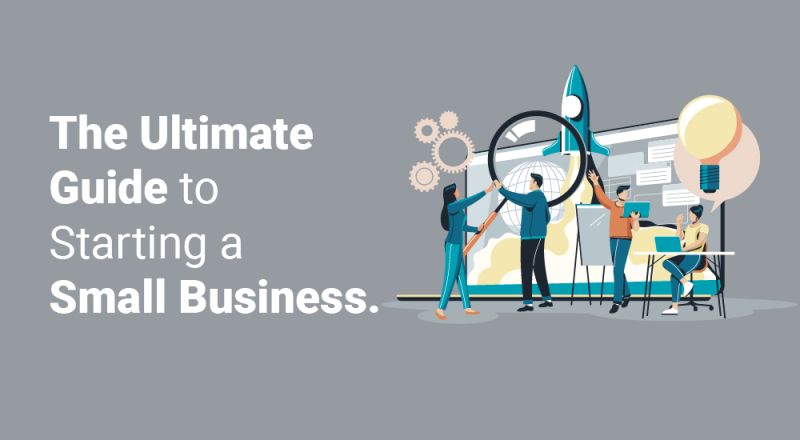
But a lot of people who have worked in a specific industry for a long time decide to go their own way and start their own companies. Starting your own business is a bold and exciting endeavor, but it can also be difficult and overwhelming. So, to help you get started here is the ultimate guide to starting a small business.
Are You Really Prepared to Start a Business?
A lot of people have fancied themselves not cut out for the average nine to five, and would love to try out something both mentally and physically rewarding, not neglecting the financial aspect. Being your own boss, having flexibility with your schedule and keeping more of the financial rewards that come with business ownership, are all good reasons to own your own company.
“It is always the start that requires the greatest effort.” – James Cash Penny
“Building Oracle is like doing math puzzles as a kid.” – Larry Ellison
But a lot of would-be entrepreneurs get to find out along the line that it is not all roses, and that their projections are way off the mark. According to the Small Business Association, two thirds of all startups survive at least 2 years and approximately 50% of these startups survive up to 5 years.
“Success is a poor teacher. We learn the most about ourselves when we fail, so don’t be afraid of failing. Failing is part of the process of success. You cannot have success without failure.” – Rich Dad
One of the reasons why businesses fail lie in the planning and execution of such venture. There are so many things you have to consider from coming up with an excellent idea to registering a company, all the way to business planning, fundraising and much more.
“The business empires built by successful entrepreneurs were erected on the foundation of past failures.” – Ajaero Tony Martins
a) Thomas Edison failed 10,000 times before he invented the incandescent bulb and he went on to build General Electric (GE); one of the most powerful companies in the world. This is what he has to say;
“I have not failed. I have just found 10,000 ways that won’t work.” – Thomas Edison
b) Henry Ford had two business failures and with the experience gathered from those business failures, he went on to build Ford Motor Company and became one of the richest men in history.
“Failure is just a resting place. It is an opportunity to begin again more intelligently.” – Henry Ford
C) Sir Philip Green had four business failures before he hit his first million at the age of 33.
d) Robert Kiyosaki had a major business failure when his Nylon and Velcro wallet company crashed; and with the experience from this failure, he went on to build the Rich Dad Company.
“Losers quit when they fail. Winners fail until they succeed.” – Robert Kiyosaki
“I can accept failure, everyone fails at something. But I cannot accept not trying.” – Michael Jordan
Making Your Dream a Reality
One of the best things about starting your own business is that you can do whatever you like. Whether your passion is fashion design, illustration, or fixing cars, you can start your own business. You have very likely been dreaming of doing this for years and are finally ready to take the plunge and are trying to do as much research as possible.
This is very sensible as, although there are a lot of fun and exciting parts to starting your own business, there are also lots of serious (and kind of boring) parts as well. A lot of the serious stuff comes down to paperwork and making your business dreams into something real and professional. The best way to do this is to work on making a business plan and doing as much research as possible.
Steps to Starting a Small Business from Scratch
1. Why Do You Want to Be an Entrepreneur?
“I built a conglomerate and emerged the richest black man in the world in 2008 but it didn’t happen overnight. It took me thirty years to get to where I am today. Youths of today aspire to be like me but they want to achieve it overnight. It’s not going to work. To build a successful business, you must start small and dream big. In the journey of entrepreneurship, tenacity of purpose is supreme.” – Aliko Dangote
Starting a business is a process that requires an enormous amount of thought and careful examination. First, you need to find out why you want to be a business owner. Are you genuinely interested in running a business or are you just trying to follow a fad?
Before you start a business, you should be absolutely clear about why you are doing it. That may sound obvious, but there are actually many reasons why someone should choose to turn their back on the security of a job and career for the uncertainty of starting a business. So the clearer you are about what exactly you are trying to achieve, the better chances you have of achieving it.
Next, take a good look at your strengths, weaknesses and skills. This will allow you to start thinking about what you can do and what you cannot do. It is important to start here even if you already have world’s best business idea, because you might not have the skills or personality traits to enable you to make it into a successful business.
“The height attained by great men is not by sudden flight. For while their companions lay asleep, these men were toiling in the night.” – Anonymous
You may be good at public speaking which can help when raising money, but bad at accounting which just means that you’ll need to find some kind of help with that area of the business. The crucial point is to understand yourself and your team, and if you are well suited to any business ideas, areas of business or specific types of business. It allows you to start coming up with ideas and narrowing down what businesses you could start.
Logic dictates that if you want a successful business then you should begin in an area that you already have a passion for. To start figuring out what businesses or areas of business you are passionate about, you need to start by thinking about the areas, activities, and things you are passionate about. That is, what interests you and what do you have strong opinions on, for example:
Someone who loves to hike might consider setting up a travel business.
Someone who loves Lego might think about a toy or construction business.
Someone who spent their whole life with a passion for music might start a company related to sound.
2. Read and Learn as Much as You Can
“I started and built a business from scratch. One thing I love about the entrepreneurial process is this; no matter my level of fame and success today, the thought of my early days in life, when I had nothing; will always keep me humble.” – Ajaero Tony Martins
Research is crucial when it comes to starting a business. So much can be learned and extrapolated from just a few hours of Googling, surfing the Internet or reading related business books. Do your homework thoroughly and you’ll be so much better off. In fact, it’s a necessary first step to determine the viability of your business idea.
It’s important to be honest with yourself. If it seems your idea has already been done, can you do it better or offer it cheaper than the competition? Ask yourself the hard questions and get feedback from associates and mentors. Anybody that neglects to do the ground work may likely find out too late that they have made an avoidable mistake.
3. Find a Mentor or Coach
When it comes to starting a business especially if you are a novice, one thing you should keep in mind is that you need help. By this help, we don’t mean financial. You can have a bag of money and still wreck your business. Right now, what you need more than anything else is the right kind of people to help you through the journey.
These people can be business mentors or even a business coach. Some entrepreneurs would decide to take on partners who would also play the role of a business guide or coach. If you start your company with co-founders, you should agree early on about the details of your business relationship.
Not doing so can potentially cause significant legal problems down the road. In a way, think of the founder agreement as a form of “pre-nuptial agreement.” Here are the key deal terms your written founder agreement needs to address:
How is the equity split among the founders?
Is the percentage of ownership subject to vesting based on continued participation in the business?
What are the roles and responsibilities of the founders?
If one founder leaves, does the company or the other founder have the right to buy back that founder’s shares? At what price?
How much time commitment to the business is expected of each founder?
What salaries (if any) are the founders entitled to? How can that be changed?
How are key decisions and day-to-day decisions of the business to be made? (by majority vote, unanimous vote, or are certain decisions solely in the hands of the CEO?)
Under what circumstances can a founder be removed as an employee of the business? (usually, this would be a Board decision)
What assets or cash does each founder contribute or invest into the business?
How will a sale of the business be decided?
What happens if one founder isn’t living up to expectations under the founder agreement? How will it be resolved?
What is the overall goal and vision for the business?
If one founder wants to leave the business, does the company have the right to buy back his or her shares? At what price?
4. Develop your Skills
Business skills are skills that help people understand consumer and organizational behavior and the ability to use this information to promote the success of the company. Business skills are often considered soft skills and may include team management, leadership and communication skills, sales and marketing skills, etc.
You need to develop a couple of these skills if you want to be successful with your business. This is because, as a startup, you may likely take up a lot of roles by yourself before you start making enough money to hire professionals. So you need to build yourself up in these skills before you think of starting your business.
5. Have a Clear Business idea
This is important for several reasons. One of the main reasons is it will help you secure funding. No one is going to fund a business that sort of has an idea that kind of might work. You need to find a gap in the market that your business will fill.
You also need to be able to prove that you have the skills, experience, and know-how to not only set up a business but also build your business and help it to succeed. You need to plan beyond setting up the business itself and be able to plan for future growth.
Coming up with a business idea can be difficult so don’t force it. You might want to work for yourself and be in control of your time and your own productivity, but this doesn’t mean that you should try and do just anything. Starting a business can mean becoming a freelancer in your field or starting to sell your crafts on Etsy. You don’t need to do anything outlandish or out there, just something that is viable and will attract a decent number of people.
Finding Your Niche
6. Define Target Audience
Finding your target audience is really important. It’s nice to think that your product or service will appeal to everyone but that just isn’t the case. So you need to work out exactly who you will be selling to, what they want, how they will benefit from your product or service, and how best to market to them.
This is called creating a customer persona. You essentially come up with the exact type of person who you think will be the most interested in your service or product. This will allow you to develop and market your product directly for the people who will want to buy it.
Developing a customer persona will also allow you to consider your service or product from the audience’s perspective. You will be able to get into the head of your customer and ensure you can understand what they would most want from you. You shouldn’t start a business for other people but it’s important to know who you will be buying from you.
7. Do Market Research
Market research is important for several reasons. The main reason is to know where your business will sit in the market, what service it will provide that is not already available, and how it will compare to competitors. It is very difficult to come up with an idea that no one else has had, so you will likely always be competing with someone else.
But this isn’t a bad thing. You can create something, for example, a clothing range, which so many people have done before. But it needs to be different. It needs to sit within a specific style and have what is known as a USP, a unique selling point.
A USP will allow you to concentrate your ideas and keep them in line. As already mentioned, it is easy to want to do everything but this is not a good idea. Knowing what you can offer is essential to starting your business but you also need to know what you offer in comparison to other businesses. So researching what else is out there and understanding how you will stand out but also fit in alongside other businesses is essential.
Just don’t get too hung up on what other people are offering. You don’t want to try to be so different from everyone else that you end up offering something that people don’t really want or need. Doing extensive and proactive market research can help you to find that balance.
8. Validate your idea
Once you have a few thoroughly researched business ideas, it’s time to test quickly and validate if your proposed business can work in the real world. Many entrepreneurs who skip this stage, end up wasting much time chasing ventures that would never work.
When testing a proposed business, you can assess the performance of any venture in different ways, so it is important to initially work out what you want to measure to gauge success or failure. Here are some suggested measures to get you started:
How much revenue could you generate/How many products can you sell?
How much customer interest can you generate?
How much press/notoriety can you generate?
If you have a services or a specific solution based business and your primary sales channel will be online, this is often the quickest way to test:
Set up a quick one-page website.
Make it seem and feel professional.
List your services/solutions.
Add a contact email.
Find the e-mails of ideal potential buyers and contact them about your service.
Then manage communications and see if anyone is interested, if not ask why and be persistent.
Set up a market stall and sell
If you are starting a product based business and your primary sales method will be face-to-face, a cost-effective way to test your business is to build initial versions of your product and book a table at your local market or festival. You can gauge via sales and customer feedback though this method.
9. Develop a Product Prototype
When starting out, your product or service has to be at least good if not great. And the only way to find out is if you have a prototype. You can build a prototype for people to use, touch and look at so they can get a feel of it. If a prototype is not possible or it’s a service business, then offer a highly descriptive presentation of the business plan complete with its unique benefits and how it’s different from the competition.
Having a “beta” test product works for many startups as they work the bugs out from user reactions. Don’t drag your feet on getting your product out to market, since early customer feedback is one of the best ways to help improve your product.
10. Evaluate and Assess Your Situation
When you are building up your ideas and business plan, keep asking yourself why you’re doing it. There isn’t really a right or wrong answer but it’s important to consider what exactly you’re getting into. Have you had years of experience in the field, noticed a gap in the market, and feel confident that your business idea can plug the gap and be successful?
Are you tired of your current job and just want to take a leap into the unknown? Or have you recently been made unemployed, had an idea for a while, and feel like it’s now or never? Some of these reasons are stronger than others. But it’s important to consider where you are in your current situation.
Starting and building up a business is a long process, so there’s no need to rush. If you’re trying to start something to get in on a trend before it dies, then this might not be the best idea as it doesn’t suggest there is any potential longevity to your business idea.
Once you have considered the reasons behind why you want to start your own business, consider how viable it will be. Speak with professionals, attend training courses, and get as much information as you possibly can. This will set you up for success and ensure you don’t become overwhelmed and fizzle out before the business gets off the ground.
It’s important to know when the best time to start a business is in terms of the economy, but you also need to consider your personal life. Starting a business can mean working incredibly long hours, especially if you will be doing it alongside a full-time or even part-time job. It can affect your social life and your family life, especially if you have a partner and/or children. So it’s important to be realistic about what you can do and achieve.
This doesn’t mean that you shouldn’t try to start a business just because it will be difficult. Only that you need to be considerate of the far-reaching impact of the amount of work it will take. If you decide that this is the best time to make the leap and that you’re ready, go back to the reason why you’re doing this in the first place and regularly remind yourself throughout the business production process.
11. Choose a Business Name
Coming up with the perfect business name can be hard, especially if you want a .com domain to go along with it. You can use a free business name generator to help you come up with a name. Most brands try to include their keyword in the brand name, such as Fashion Nova. However, some brands create a unique name, such as Oberlo.
The business name you choose should be catchy, memorable, easy to spell when heard, have available usernames and a domain, and be concise. Sometimes the best naming ideas come after bouncing names with a friend as a second opinion helps give you a different perspective. So feel free to get a second opinion if you feel stuck when choosing the right brand name.
Here are some basic tips on how to name your startup:
Avoid hard-to-spell names
Don’t pick a name that could be limiting as your business grows
Conduct a thorough Internet search on a proposed name
Get a “.com” domain name (as opposed to “.net” or another variant)
Conduct a thorough trademark search
Make sure you and your employees will be happy saying the name
Come up with five names you like and test market the name with prospective employees, partners, investors, and potential customers
12. Choose a Business Structure
You have many options when it comes to choosing a business structure. Discussing them with your accountant or financial adviser is really the only way to know what’s right for you. But just to give you a quick rundown of the types of business entities and their pros and cons we will briefly go through them:
Sole Proprietorship
Partnership
Limited Liability Company (LLC)
Corporation
You should know that there is no simple answer to which structure is best for your business, it depends on your business operation and needs. For example, if you:
Plan to grow your small business beyond yourself (one person) and then sell it, then a Private Limited Company would likely be the most suitable structure.
Plan to only operate as a one-person business for the near future, then a Sole proprietorship would probably be the best structure.
Plan to start a business that has a significant amount of senior management, capital and that deals in services, then a Limited Liability partnership would be the best choice.
13. Write a Business Plan
To have a successful business, to find funding, and to have a clear set of goals, you need a good business plan. Writing a business plan can be difficult, especially if you’re more on the creative side of things than the finances. This might be a reason to bring other people on board. Starting a business with someone else is a risky endeavor but it has a lot of benefits.
To write a business plan, you need to know what investors are looking for and what they will expect. You might have a great idea but if you can’t show evidence that it will do well, then you’re going to have trouble getting support.
A business plan needs to be sensible, well-thought-out, and professionally written. So don’t rush it and seek advice when you need to. If you believe in your idea and have done your research, then the business plan will likely come easily. You might find yourself having to do more research again to fix small areas and get new figures. But you will be able to write a great business plan with the right help and information.
A good business plan should have the following elements:
Executive summary
Contents page
Business model and products/services
Customer, market and competition
Marketing and sales
Finances and projections
Team
Business plan summary
This section should summarize your entire business plan through key points in bullet point format and provide contact details so a reader can easily get in touch with you. Create your initial document in Word, Google docs or Open Office, these tools are easy to use and you’ll end up with an easily editable file.
You can also use Excel to create and update a clear structure, this helps to give you a good overview of the plan. Make sure to use a theme that is consistent throughout the document regarding fonts, colours and design features. If you must give a copy to an external party, always export the file to PDF, and make sure to have professional graphics in place if desired.
14. Raise Capital
Before you can start generating any revenue or making purchases, you are going to need to open a business bank account to send, receive and securely store your businesses capital (money). It is essential to select a bank and business account carefully as it is very likely you will be with the chosen banking provider for the life of the business.
You also must decide what type of business account or accounts your set up. If you have the wrong type of account, it can significantly affect your cost of business banking. It will take you a bit of time to gather information on bank accounts and compare it, but it is worth doing as it can save you a lot of money, time and headaches in the future.
Once you are a few months or years into trading, it can be challenging to change banks and even to change your accounts, as you will likely be processing many payments and purchases through your bank and accounts at any one time.
15. Be Realistic
This might sound harsh but it is important to keep your expectations realistic. You should aim high and believe in what your business has to offer. But you also need to remember that starting a business is difficult and you might fail many times before you succeed.
The chances of you setting up a multi-million dollar business straight away are extremely unlikely. With that said, you also shouldn’t focus too much on how much money you will be making. It’s important to focus on finances, supporting your business, and whether or not you are making any money.
But you also don’t want to focus only on making money. Being able to make affordable products is important, but you also need to provide good quality products and services. So make sure to focus on the quality of the services or products that your business is providing, before considering how big your profit margins are.
Getting Your Business Out There
16. Digital Marketing
This will be a huge part of your marketing scheme. You need to consider every digital avenue you have available to reach the widest audience possible. Social media marketing is an incredibly valuable tool for getting messages, products, and services out into the world.
When you first get your business up and running, setting up your own social media accounts is one of the best ways to get people’s attention. You can set out your aesthetic, show your ideas, highlight your products, and share your message. You can show images of products on Instagram, film videos of you making and packing products on TikTok, and tweet out offers on Twitter.
Digital marketing is difficult and you could get a whole college degree in it if you wanted to. But you can also find courses online to help you. There are some that are free but it’s also a good idea to invest in some courses that can help you get started.
Digital marketing can also involve marketing via email and through your own website. Having a website for your business is essential. Even if you are incredibly small, not having a website is just not an option anymore. A lot of people, no matter their age, won’t trust a business if it doesn’t have a website.
So it’s important to have a professional-looking website with all of your information available. You don’t need anything too fancy but something that shows you are real, legitimate, and trustworthy is essential.
17. Reach Out to Local Newspapers and Radio Stations
Digital marketing might be one of the best ways to reach a large audience but it isn’t the only way. It also might not be the most important way if you have a very small, local business. If you are opening up a business that will only serve the local community, then you don’t need to go too hard on social media (although it will still help).
Reaching out to local newspapers and radio stations will help get the word out into your local community and directly to your customer base. When you’re deciding on your customer persona, it’s important to consider where they will most likely receive their news and advertising. If your customer persona has a Nokia 3310 and only reads the local paper, then marketing to them through TikTok is not the best idea.
Office Space vs Home-Based
18. Choose a Suitable Location
As you are setting up your business, you need to start thinking of the location you will be operating from. Apart from working from home, there a few different options for entrepreneurs looking for space to start and run their businesses.
Rent a co-working space
Co-working spaces allow you to flexibly rent office space or an individual desk at a relatively low cost compared to traditional serviced or private office options. They also offer an environment designed for start-ups with a great community of like-minded entrepreneurs.
Apply for a business accelerator
Accelerator programs provide seed investment, mentorship and office space for a limited time to start-ups and other small companies. If you are a technology business, there are many accelerators where you could apply for in many major cities in the UK.
Rent a business incubator office
Incubators are effectively low-cost office space that offer some level of community and network. Non-for-profit companies, charities or universities typically run them.
Rent from another local business
Many large to medium sized businesses that find they have excess space are often open if approached by a smaller company about renting unused space in their premises. It is a great source of extra income for the landlord business and often a flexible renting agreement for the tenant business.
Build The Work Environment
Whether you decide to build your company in an office, in a dedicated workspace, or at your kitchen table, you need to have a dedicated work environment. This is essential for productivity but also for rest. Most people need to have a specific workspace so they can feel ready to work and get into the right headspace. But you also need somewhere to get away from work.
When you start your business, it can get overwhelming and take over your life a little. You need to be able to separate yourself from the business and have a healthy work-life balance. Here are some of the main things to consider when setting up your work environment.
Computer/Laptop
This is essential, no matter what your business is or where it will be based. Almost everything you need for your business, from ordering materials to filling in paperwork, will now be online.
Credit Card Processor
This is not necessarily essential, especially if your business will be entirely online as you can set up a checkout page on your website. But it will be essential for a physical store and might even be useful for an online store if some of your customers prefer to order over the phone.
Landline or Cell Phone
Speaking of phones, having a dedicated work phone is important. Landlines might seem old-fashioned now, but a lot of people won’t trust a business that only has a cell phone number. Whichever type of phone you choose, make sure that it is separate from your personal phone. This is another way to ensure that your work life and personal life remain separate.
Headsets or Earbuds
This is another item to consider. You might find that working with a headset or earbuds is essential or you might find you never need them. But, if you have a phone and a contact number, then you’re going to be fielding all of the customer service and work calls when you first start up your business. You might eventually hire someone for this but at first, you will be the main (and only) point of contact.
Printer, Scanner, Copier
Although a lot of your business will be conducted online, and it’s important to try and go paperless to reduce your environmental impact, it can still be useful to have these items. Especially if you are an illustrator or have products that you will be printing yourself.
Software
No matter your business, having the correct software is essential. This can be the right software for setting up a safe and secure checkout page on your website or it can be software that helps you to keep on top of stock. “Software” is a word that can be daunting to most people without a computer science degree but if you do enough research, and hire someone who knows what they’re doing, you will be okay.
Internet Connection
No matter your business, an internet connection is as essential as heating and running water. This will be how your customers will be able to contact you, to buy from you, and to see your advertising. It is absolutely essential that you have a strong internet connection.It will also help when speaking with other professionals.
You might take a lot of meetings in person but you will also need to be able to take meetings via Zoom or Teams. If your internet connection keeps cutting out or is bad during these meetings, it can be awkward or make you appear unprofessional.
Shipping Materials
This is a really important aspect to consider. It might not seem like a big deal, but the packaging is the first thing your customers will see when they receive their order. If the packaging is poor or looks messy then it will give your customer the impression that the product could be poorly made as well.
Using eco-friendly and recyclable packaging is also essential. It’s important to ensure that your business is as environmentally friendly as possible. Your environmental impact will be monitored by many people and checked out by a lot of customers before they buy from you.
If your business is not eco-friendly then you can lose a lot of customers and be creating something that will only make the current environmental breakdown worse. So it’s important to not further negatively contribute.Setting up your workspace is also incredibly important and you need to set up your workspace with a few different things.
Furniture
Furniture is essential. Good quality comfortable furniture is important for both you and any employees you might have. This is especially true if you will be sitting down for long periods of time. Choosing a comfortable and supportive chair, desks of the correct size and height, and even footstools are important.
Stationery
You might find yourself doing a lot of your work on a computer but stationery is still important. This is especially true if you like to draw or write things down first before transferring them to your computer.Notebooks, pens, and highlighters are all useful for your business.
You might prefer working on a screen but this isn’t good for your eyes. So working by hand can be an important and healthy break. Eye strain is a problem for a lot of modern professionals and if you start working long hours when you start the business, this could become a problem.
Storage Space
Storage space is another important factor to consider when you are trying to separate your home from your work. Storage space allows you to keep your workspace neat and tidy which will allow you to work better.But you also need to be able to pack up your work items at the end of the day.
This is especially important if you don’t have space for an office and will be working at the kitchen table. It is easy to dedicate long periods of time to a business that relies on you but you also need to take a break to rest and come back again.
You might not need all of these items or you might need more. It will very likely be the small things that catch you out. The small things, such as pens or packaging labels, are essential but easy to forget when you’re trying to start up a whole business.
Making the Business Official
It is essential to do everything by the book. Setting up a business when you have no prior experience can be confusing as there are a lot of legal and financial things to consider that can be difficult, especially as you don’t want to accidentally do anything wrong. Speaking with your bank, financial advisors, other professionals, and bringing on board people who can help you with all aspects of your business is important.
Bank accounts and credit cards
You may want to set up free or low-cost bank accounts, as well as determine whether to provide credit cards to managers or sales reps.
These are all absolutely essential to starting your business and ensuring that you have all the important things considered. This will stop you from accidentally falling into any pitfalls or missing any essential paperwork or permits.
19. Hire Employees and Form your Management Team
Your business can be made or marred by the kind of employees and management team you hire. You are now going to face the task of hiring the best fit for your business.
Do you hate sales and cold calling? Great! There are people who love selling and wouldn’t want to do anything else.
Bored to death with accounting? There are a ton of small accounting firms out there that will take care of that for you.
What about marketing? You can hire someone in-house or out-source that too.
Your job is to keep on top of all the different aspects of the business to make sure they are all running smoothly and getting the results you need. If not, it’s your job to figure out the problem and implement a solution though hiring right.
20. Launch your Business With a Grand Opening Ceremony
Launching a business is an exciting time for an entrepreneur. During a grand opening, new businesses introduce their products and services to potential clients, vendors, suppliers, investors and the surrounding community. Grand opening events are designed to leave a memorable impression on guests.
To get a great outing on your great opening, you have to apply several strategies. Host a small, intimate cocktail reception to introduce and celebrate your new business. Publicize the opening of the business on websites and in publications that target your ideal clients.
Invite the community to come and celebrate your the opening of your business on a designated day or weekend. Contact and join the business associations in your area once your business is ready to take clients. Provide useful, engaging information on your site that encourages visitors to bookmark your page. Announce the grand opening of your business by advertising online and offline.
21. Start Marketing and Promoting your Business from day 1
Whether you are a retail store, a chemicals company or a modelling company having at least a basic website is a basic marketing tool in the 21st century, customers expect you to have a website and expect to be able to find it easily. Your website should:
Include and show your company/business details including address, phone number, name, and logo (if you have a limited company number it is also a legal requirement to list it here).
Provide a clear description of what your business is/does.
Provide details of your products, services, and
Provide a business e-mail or contact form that enables prospective customers/outside parties to reach you easily.
You can add many more things to your website, this is just the basic information you need to include.
Creating a website is not nearly as complicated as you might think it is. There are many different types of software, website builders and helpful information that allow you to build a simple website for your business. Once you have a website, you are going to need a professional e-mail address where prospective customers and external parties can reach you.
As mentioned above, establishing a professional appearance is essential to show that your business is serious and legitimate. You need to offer customer service, digital access, but also physical access.
These all, of course, depend on the type of business you will be running. For most modern businesses, physical access isn’t necessary. But opening up a physical shop or office can help to create a more legitimate appearance. This is especially true if you will be serving your local community.
Having a business that functions entirely online will work for some but not others. Having a physical presence is also important for access. Having a mailbox or a shopfront will help cement your business as a feature of your community. This will be incredibly important for many people, your employees and customers both.
Staying Professional
22. Run your Business
If the business is to become successful, you must become a great salesperson. You are going to have to learn how to “sell” your business—not only to customers but also to prospective investors and even to potential employees. It’s important to be positive, trustworthy, and to learn how to listen. You must practice your sales pitch, get feedback from a variety of people, and then refine your pitch.
Even if you are not naturally an extrovert, you need to show confidence, follow up, and ask for the sale. Again, you have to always feel the pulse of your business. Have your eyes in every department, especially in marketing and accounts. Equally take care of your clients so they keep coming back.
Summary
Starting your own business is an exciting idea but it is also overwhelming. Hopefully, this article has given you a better understanding of how to get your service or product out to the people who want and need it.
There are a lot of serious and confusing elements to starting a business, but there are also a lot of fun and exciting parts too. Trying to get your head around business plans, creating customer personas, and what kind of packing materials to use might take some time, but it will all be worth it when you succeed.
The most important thing to remember is that it will be difficult and you might not succeed straight away but hard work can pay off. That said, it’s also essential that you don’t let your business overrun your life. Beginning a business should be the start of something better for you and your family, not something more difficult.
So, overall, you need to work hard, do everything by the book, and ask for help when needed. But you also need to remember why you’re starting a business, why you love what you do, and how you will be improving the lives of your customers through your business.
Frequently Asked Questions
When Is The Right Time To Start A Small Business?
The right time to start a business is now! Yes, it is as soon as the need to start a business pop up in your heart.
What Paperwork Do You Need For A Small Business?
Here are some of the basic paperwork or document you would need for a small business;
Business Plan.
Partnership Agreement.
LLC Operating Agreement.
Buy/Sell Agreement.
Employment Agreement.
Employee Handbook.
Non-Disclosure Agreement.
Non-Compete Agreement.
Terms of Service/Privacy Policy
What Small Businesses Are In Demand?
Here are some of the small businesses that are in demand as of today;
Social Media Consulting.
Senior Care Services.
Smart Product Development.
Organic Beauty Products.
Healthy Fast Food.
Healthcare Consulting.
Crowdfunding Consulting.
Wheelchair Repair.
Mutlicultural Marketing Expert
Ghostwriting
Green Consulting
Disaster Consulting
Translation Services
Car Repair Concierge
What Is Needed To Start A Business?
Here are some of the basic things needed to start a business;
Start-up capital
Operational base or office space
Business Plan
Marketing Plan
Business license and permits
Insurance policy covers
What Type Of Business Should You Start?
A business that is into the production of hand sanitizers and nose mask. I choose to start this business because hand sanitizers and nose masks are in pretty high demand all across the world and this is due to the current pandemic – the corona virus.
Can You Run A Business Without Registering?
In as much as you can run some type of business without registering the business, it is not advisable to do it. If you do, you will be doing it illegally and of course, you will be restricting yourself from maximizing the business because there will be a limit to how big you can grow the business.
How Can You Start Your Own Business With No Money?
You can actually start your own business with no money by partnering with an investor that has the money. That perhaps is one of the easiest ways you can start a business without money. So also, if you have a fantastic and workable business idea is to;
Ask your friends and family for extra funds.
Apply for a small business loan when you need extra cash.
Look to small business grants and local funding opportunities.
What Is The Easiest Business To Start With No Money?
In-home child care.
In-home dog care.
Pet services.
Dog training.
Freelance writing.
Freelance editing.
Resume building.
What Is An Easy Business To Start At Home?
Some popular ones are starting an online store, selling homemade goods, selling online courses, freelance writing services, becoming a virtual assistant, starting a drop shipping store, offering hourly services (marketing, designing, etc.,), selling custom printed products, starting a print on demand business and more.
What Are The Most Successful Small Businesses To Start?
Personal wellness.
Courses in other hobbies.
Bookkeeping and accounting.
Graphic design.
Social media management.
Marketing copywriter.
Virtual assistant services.
How Much Does It Cost To Start A Small Business In Florida?
The basic total cost of forming or registering an LLC in Florida is $125, which includes the fees for filing the Articles of Organization and the registered agent designation.
Can You Run A Business From Home In Florida?
Yes, you got that right. If you run your business out of a home office — even if it’s just you, a desk and a computer — you’re required to have a home business license in Collier County, Florida.
What Is A Business Statement Of Purpose For An LLC Or Corporation?
An LLC purpose statement describes the reason for forming the Limited Liability Company. While your overall vision can be based on an abstract goal, your statement can be specific to your industry or general enough to allow your company to conduct any business activities legally permitted in the state.
Do You Need To Register Your Business Name?
Sure, and the truth is that if you are thinking about starting a business but you are not yet sure what legal form you want, and you have a business name, register it. If you’re forming a sole proprietorship, you should definitely register your business name with the state because sole proprietorships aren’t registered in any other way.
As A Business Owner, Can You Have Multiple LLCs?
Absolutely! In the United States, it is possible and permissible to operate multiple businesses under one LLC. Many entrepreneurs who opt to do this use what is called a “Fictitious Name Statement” or a “DBA” (also known as a “Doing Business As”) to operate an additional business under a different name.
When Can You Classify A Worker As An Independent Contractor?
The general rule is that an individual is an independent contractor if the payer has the right to control or direct only the result of the work and not what will be done and how it will be done. The earnings of a person who is working as an independent contractor are subject to Self-Employment Tax.
Can You Start A Business With $10k?
Absolutely, there are several businesses that you can start with $10,000 and even less.
Where In New York Can You Register Your Business As A Corporation?
www.opal.ny.gov. Go to the “Online Applications” tab, then under “Taxation and Finance, Department of” select the “Certificate of Authority of Collect Sales Tax” to fill out the Form DTF-17. You can also obtain a copy of the form by calling the NYS Tax Department at (800) 698-2909.
What Are The Risks Associated With Being An Independent Contractor?
5 Risks of Hiring Independent Contractors are;
Misclassifying Workers.
Getting Audited.
Mismanaging Independent Contractors.
Failing to Require Proper Insurance.
Co-employment.
Is It Better To Be Employee Or Contractor?
An employee may be able to obtain better benefits than an independent contractor. An employee will probably not have many costs beyond commuting, business clothes and other costs of the profession. Independent contractors, however, often have office expenses and staffing costs.
What Are Examples Of Independent Contractors?
An auto mechanic who has a station license, a resale license, buys the parts necessary for the repairs, sets his or her own prices, collects from the customer, sets his or her own hours and days of work, and owns or rents the shop from a third party is an example of an independent contractor.
Can An Independent Contractor Work For Only One Company?
Independent contractors usually offer their services to the general public, not just to one person or company. Government auditors will be impressed if you market your services to the public.
What Are 3 Things You Must Do Before Starting A Business?
Conduct thorough market research and feasibility studies
Write a workable Business Plan
Choose a Name for the Business and Register the business even if it is DBA
Does My LLC Need A Purpose Statement?
Most states do not require you to be specific about the purpose of your LLC. Instead, a statement such as “The purpose of the Limited Liability Company is to engage in any lawful activity for which a Limited Liability Company may be organized in this state” is usually sufficient.
What Are The IRS Rules For Independent Contractors?
The general rule is that an individual is an independent contractor if the payer has the right to control or direct only the result of the work and not what will be done and how it will be done. The earnings of a person who is working as an independent contractor are subject to Self-Employment Tax.
What Happens If I Don’t Register My Business Name?
If you don’t register your brands, logos and names as trademarks there are no guarantees that you have the right to use them. By not protecting your business with a registered trademark, another trader can start using a similar name to yours in your industry, and you may have no power to stop them.
What Is The Difference Between A Business Name And A Trading Name?
A ‘trading name’ refers to an unregistered name that businesses could use before the introduction of the National Business Names Register on 28 May 2012. A trading name is not a registered business name. If you wish to continue using a trading name, you need to register it as a business name.
What Type Of Shop Is Most Profitable?
Here are some type of shops that are most profitable;
Jewelry Shop
Sport And Yoga Apparel Store.
Organic Food Store.
Cosmetics And Make Up Shop.
Beauty & Body Care Products Store.
Shoe Shop.
Stationery Shop.
What Is A Business Credit Score And Why Does It Matter?
A business credit score is the measure of a business’s creditworthiness, which is made up from a number of factors to understand the financial position of a business and its level of financial risk. The score ranges from 0 to 100, with 0 representing a high risk and 100 representing a low risk.
It matters because business credit reports can be just as important in securing business financing as a strong personal credit score and guarantee. Maintaining good business credit reduces the cost of borrowing money and avails your business to more favorable payment terms with creditors and vendors alike.
How Do I Find Out My Business Credit Score?
Anyone can go to one of the reporting agencies and look up your business’s score — though they may have to pay to do so. Several business credit reporting agencies track business credit scores. Three of the major ones are Dun & Bradstreet, Equifax Business and Experian Business.
How Can You Reduce Your Overall Fixed Costs?
You can reduce your overall fixed costs by relocating your office to an area with cheaper rent or negotiate lower lease payments with your landlord. Sub-lease a portion of your space to another tenant who will pay rent. Reduce the number of salaried employees on staff. Shop around for lower insurance premiums.
What Are The 5 Types Of Business?
The IRS recognizes five types of businesses: sole proprietorship, partnership, corporation, S corporation and limited liability company or LLC.
What Are The Most Profitable Business by Sector?
Accounting = 18.4 percent
Lessors of Real Estate = 17.9 percent
Legal Services = 17.4 percent
Management of Companies = 16 percent
Activities Related to Real Estate = 14.9 percent
Office of Dentists = 14.8 percent
Offices of Real Estate Agents = 14.3 percent
Non-Metalic Mineral and Mining = 13.2 percent
What Are The Best Tools Needed For A Small Business You Have And Know How To Use, Or Willing To Learn?
Task Management Tools.
Email and Social Marketing.
Social Media Scheduling Tools.
Scheduling Meetings.
Obtaining e-Signatures.
Finding and Retaining Business Clients.
Document Collaboration.
What Is The Sales Volume At Which A Service Will Become Profitable?
Assuming your sales exceed your variable costs, each additional unit of sales volume increases your gross profits and your net income. If you can lower your costs without impacting revenue and maintain the same sales volume, your profits will go up.
What Is A Federal ID Number For A Business?
A business tax ID number, also called an employer identification number (EIN) or federal tax ID, is a unique nine-digit number that identifies your business with the IRS.
How Do I Get A Federal EIN Number?
To apply for an employer identification number, you should obtain Form SS-4 PDF and its Instructions PDF. You can apply for an EIN on-line, by mail, or by fax. You may also apply by telephone if your organization was formed outside the U.S. or U.S. territories.
How Do I Get A Free Federal Tax ID Number?
Taxpayers can obtain an EIN immediately by calling the Business & Specialty Tax Line at (800) 829-4933 between 7:00 a.m. – 7:00 p.m. local time, Monday through Friday. An assistor takes the information, assigns the EIN, and provides the number to an authorized individual over the telephone.
How Do You Determine Which Product Is More Profitable?
Subtract the cost to produce the product from the revenues of the product. In the example, the products profitability is $1,000 minus $700, which equals $300. If you want to look at this at a per product sold, then you divide the product profitability by the number of products produced.
What Is A Good Profit Margin?
A good margin will vary considerably by industry, but as a general rule of thumb, a 10 percent net profit margin is considered average, a 20 percent margin is considered high (or “good”), and a 5 percent margin is low.
The Federation of Small Businesses (FSB) has found that 84% of small businesses have been paid late for a product or service, while Siemens Financial Services reports that late payments cause UK SMEs to miss out on £250bn of liquid cash flow that they need in order to grow their business.
There are 5.7m SMEs in the UK, making up more than 99% of all businesses and 47% of all private sector turnover, so late payments are harming the UK economy overall and SME growth is being undermined. The Siemens report said 23% of SMEs found late payments had put them at risk of closure.
Meanwhile, figures from Bacs Payment Schemes, suggest the total amount owed to SMEs last year was £14bn, with more than a third of UK SMEs stating they’d been forced to wait much later than agreed terms before receiving payment.
What is the impact of late payments?
In the Bacs survey, 20% of SMEs said that being owed between £20,000 and £50,000 would be enough to drive them into bankruptcy.
“We have clients who’ve been unable to pitch for new business as they’ve been unable to purchase components or pay staff,” said Rachel Craft, marketing manager at financial consultancy Regency Factors.
And being paid late means SMEs are forced to pay their own suppliers late.
“Late payments are usually due to a payment chain,” says Jana Dowling, founder of social enterprise the 888 Collective. “We work with people who are reliant on larger companies to pay them. Without them being paid on time, ours can’t come through.”
Why are payments late?
SMEs suffer from late payments disproportionately to larger companies because they’re towards the end of the supply chain. Siemens found SMEs with an annual turnover of less than £1m wait 72 days on average for payment, which is 50% longer than large businesses, which have an average waiting time of 31 days.
The biggest reason for late payments is the tactic of larger companies, which often demand 90-day payment terms from their smaller suppliers.
“Some late payments are due to system errors, supply chain issues or a company crisis,” says Stephen Paynter, finance director at online accounting software firm Crunch Accounting. “Regardless, the money is owed, and should be paid within the agreed terms.”
However, Paynter points out SMEs have the same rights as larger firms when it comes to receiving what they’re owed.
“They can issue the same penalties for overdue invoices in line with their contracts or the protection provided under the Late Payment of Commercial Debts (Interest) Act 1998,” he says.
How to tackle late payments
Following clear guidelines for invoicing and collecting payments helps. Make your credit control function a way of taking back control of your cash flow by applying the right techniques to get paid quicker.
Undertake a rigorous credit check on new customers to limit future risks before then agreeing payment terms. “Be firm from the outset about payment terms and undertake due diligence before agreeing to the job,” advises Craft.
“Honesty is best practice. Your customers value you and have engaged you to provide your service. You’ll be surprised how many people will look after you when you’re honest with them”
Jana Dowling, founder, the 888 Collective
Set out invoices clearly and accurately. An error provides creditors with a reason not to pay and extends the payment collection process. Invoices should include your terms of business, due date, how to pay and details of the service, including order numbers, invoice number, date, addresses and amounts, including VAT if applicable.
Raise and send invoices promptly. Phone a few days later to check it’s been received and accurate and confirm the contact who signs it off for payment because they’ll be the one to resolve any problems.
A week before the invoice is due, contact the customer to confirm payment is on the next payment run. If there are problems, find out what these are and try to resolve them.
“It’s always awkward chasing for payment, and for SMEs it wastes time, so use payment reminder systems,” suggests Paynter.
If a customer is persistently late paying, you could put them on ‘credit stop’, denying them products or services until they’ve paid. But bear in mind this risks jeopardising sensitive business relationships – they might be waiting on late payments, too.
Dowling says: “Honesty is best practice. Your customers value you and have engaged you to provide your service. You’ll be surprised how many people will look after you when you’re honest with them.”
Other potential solutions
Running a sales ledger and credit control function that incorporates best practice with experienced staff is an option, but if you’re a very small business, outsourcing to a specialist frees up your time to build the business.
Invoice discounting is another possibility. This involves using your unpaid accounts receivable as collateral for funds advanced by a finance company before invoices are paid. Typically, you receive around 80% of the value in advance and the rest after the invoice has been paid. It can unlock funding for a growing company, but there are obviously fees incurred.
Factoring is another fee-based option. It’s a type of debtor finance in which a business can sell its accounts receivable balance to a third party at a discount, leaving the third party to get payments in.
Alternatively, you could offer a small discount or incentive for payment of invoices within seven days.
“Late payers could be willing to pay you faster if it’s a requirement for service,” said Alan Laing, MD at accounting and payment systems provider Sage UK & Ireland. “Automating the process through e-invoicing makes it easier for customers to pay and eliminate obstacles to getting paid on time.
What benefits does incorporating best practice provide?
“I always assume payments will be late,” says Dowling. “SMEs should build a late payment system into their cash flow. Then late payments have less impact on growth.”
By running your sales ledger and credit control departments effectively, you can reduce problems caused by late payments.
Delegating credit control, even for a small business with low overheads, can help, says Lindsey Fish, founder and CEO at events management business Mums Enterprise. “I hire a VA [virtual assistant] to help manage credit control duties. They can act quicker and be firmer when chasing,” she says.
Tackling late payments: a checklist
Conduct a full credit check on new customers to enable you to make sensible decisions on credit agreements.
Set out clear terms and conditions in sales contracts to clarify how your payment terms operate.
Set a credit limit that’s right for your business, not necessarily the maximum it suggests on a credit report. The credit limit can start low and rise once the customer has shown themselves to be reliable.
Outsource or employ the right staff for invoicing, even on a part-time basis if you are a low-turnover SME.
Pre-empt problems – check invoices are sent to the right person to be approved for payment before they become due. When it comes to chasing payments, your system needs to run like clockwork.
Consider stopping credit – chase late payers diligently and watch out for part-payments as this could indicate financial difficulties.
Successful entrepreneurs often say that every penny went back into their business during the first few years – but on what? We ask SME owners and experts to share their thoughts.
Sally Fielding, founder of holiday lettings company Sally’s Cottages.
Ed Challinor, CEO and co-founder of cosmetic dental practice Smileworks Liverpool, knows exactly how much it costs for a shiny new Audi R8. He also knows what it costs to buy a specialist scanner that identifies nerves and blood vessels and helps to reduce failures in implants and restorative work. Each costs around £100,000, and while Challinor might have liked to invest in a luxurious German car, he chose the scanner.
“Your small business is not your cash cow,” he says. “If you want to grow, then all of your available profit should be reinvested into marketing, sales, customer acquisition, redesigning your processes and bringing in new income streams.”
Smileworks is doing well, having gone from a single couch offering facial aesthetics at the end of 2013 to nine treatment rooms and a staff of 21 today. Challinor says that, some months, revenues can top £170,000, with monthly net profits ranging from £25,000 – £90,000, and yet he insists that he and his co-founder, MJ Rowland-Warmann, take salaries of less than £2,000 a month.
Like many a successful entrepreneur before them – including American billionaire Warren Buffett, who reinvested profits from a pinball hire business into buying more machines when he was just 17 – the Smileworks founders are dedicated to growing their business and say that investments totalling £200,000 have led to a hike in margins from around 5% to 60% during busy months. Proof, it could be argued, that an owner would be mad not to pump money back into a business when it’s working.
Successful scaleable model
“If you can recruit customers and keep them, then you have a successful business model,” says Parry Jones, chief operating officer of growth experts The Specialist Works. “You know you have a successful model that you can scale.”
Every business’s initial challenge, he says, is attracting its first few customers – but once you’ve got some momentum, attracting the next set of customers is usually easier. “However, in order to scale, you have to reinvest your profits,” he says.
It’s a concept not lost on Rune Sovndahl, co-founder and CEO of domestic service providers Fantastic Services, who says that he and his co-founder made a pact when they started the company in 2009 to always reinvest 80% of their profit on growth. It seems to be paying off, as the business now turns over more than £32m and has expanded to 500 employees.
Parry Jones, COO, The Specialist Works
Bryony Thomas, founder of consultancy Watertight Marketing, likens reinvesting in your business to “delayed gratification” and says that she has chosen to reinvest all of her profits – and even an inheritance – into her company to create something scaleable. “If I let the money I could earn today (as a marketing consultant) distract me from bigger money tomorrow, I would never go beyond my current earning potential,” she says.
Big businesses reinvest their revenues, too, especially in the early years. “Look at Silicon Valley,” says Jones. “It’s almost as if a lot of the companies are purposely trying to avoid making a profit because everything is going back into growth.”
Crossroads led to reinvestment
At a slightly less stratospheric level, Sally Fielding, founder of holiday lettings company Sally’s Cottages, found herself at a crossroads about five years into her business journey when she and her husband (and co-director) Robert were each making around £15,000 a year. They had reached the point where they needed to decide whether to continue with this “fairly easy” life or to grow the business – but doing so would require a £20,000 investment on a computer system. “We decided to go for it and everything we had went into that computer system,” says Fielding. “It was a massive deal for us because we didn’t know if it would work out.”
“Your small business is not your cash cow. If you want to grow, then all of your available profit should be reinvested”
Ed Challinor, CEO and co-founder, Smileworks Liverpool
Being able to offer a live-booking system back in 2008 put the young company ahead of the curve, and it flourished as a result. Back then it had 30 cottages on its books; today it has more than 450.
Fielding’s desire to keep reinvesting in her company hasn’t faltered. “We could pay ourselves a big dividend, but I’d rather keep it in the business,” she says, explaining that the growth created by their computer system in 2008 enabled them to hire their first employee, which in turn meant that Fielding could find more cottages. Growth from that funded a second employee, freeing up Fielding to concentrate on marketing. And so it continued: today the business has a team of 23, and has just spent a hefty £250,000 on replacing the once state-of-the-art computer system that was so instrumental to its success.
For small business owners who still aren’t sure where their profits would be best spent, Fielding says there is one very obvious area to begin: “Invest in people,” she says. “I would put those first profits into hiring staff, because when you do that, you suddenly have time to expand your mind.” And, she says, you will start seeing other areas of your business that you can focus on which will lead to even more growth.
Five (almost) fail-safe areas to reinvest in
Parry Jones, COO of The Specialist Works, shares his thoughts:
Customer acquisition: “If you can recruit customers, profitably, you have a scaleable business.”
Customer retention: “Existing customers are your lifeblood, and maximising lifetime value is key to your long-term success.”
Launch a customer-get-customer programme: “There is no better way to grow your business than when customers do it for you.”
Data and insight: “Understand exactly what is driving your business, scale what works, stop what doesn’t.”
Talent: “Don’t skimp on staff. The best talent pay for themselves many times over.”