LinkedIn has long been the business social media platform of choice. And with business networking and growth at the forefront of the platform’s mind, they’ve got something a little exciting up their shirt sleeve: The business platform has launched their very own digital magazine to give you their LinkedIn best tips. As many businesses begin the process of opening up again post-lockdown, these new insights from LinkedIn will be welcome reading as we all start to move our brands forward again.
What can you expect from the new LinkedIn magazine?
If you want some hints and tips for how to use LinkedIn to your brand’s advantage, the new Ready for Business 2021 magazine is where it’s at. In LinkedIn’s own words:
“Ready for Business 2021 explores everything that’s involved in using digital marketing to drive growth and get your strategy moving. There’s detailed insight on identifying your highest-value audiences and engaging them when they’re at their most receptive. We dig deep into the growing importance of trust and thought leadership content in a post-pandemic world, highlight the changing nature of B2B buyer journeys, and share stories and strategies for how your marketing can inspire, entertain – and engage the ready for business mindset at scale.”
The magazine can either be downloaded or read online, and with an initial flick through of our 24 fingers, it’s packed full of hints and tips for how to do business on LinkedIn. With everything from how we should change our marketing strategies for a post-pandemic world, through to how to create great video ads, there’s something for everyone, and each and every brand can adopt some of the tips from the magazine. The tips include, but are certainly not limited to:
How to gain your follower’s trust by building your brand’s character. This could include being willing to take a stand on things that are important to them and enlisting employees as advocates.
How to develop B2B content that hits the mark, i.e. through carving your niche and becoming a go-to source.
Weighing up the risks and opportunities in rebranding.
Plus much more besides, and plenty of different topics covered so that everyone from newbies to social media through to those brands who are slightly more experienced LinkedIn marketeers can learn something new.https://giphy.com/embed/smA6gFq3A5HjTF9HHd
Why your business needs a presence on LinkedIn now more than ever
With much of the world going digital during this past year, your business needs a presence online. And even if you hate social media, or if Instagram and TikTok aren’t for you, LinkedIn could be the place where you find your tribe.
And the new business growth magazine that the platform is putting out there is proof of this: LinkedIn is very much a business-first platform. It’s where you can network online with peers, colleagues and clients effortlessly, so long as you’re putting the right content out there. The platform’s commitment to putting out a business growth magazine is further proof that it’s serious about helping to move business forward and help them to gain traction on their platform, and you can use the tips in the magazine to do exactly that.https://giphy.com/embed/jbKbdoKJOFusHTjl80
Still not sure how to gain a presence on LinkedIn? We’ve got you
If you’ve read LinkedIn’s Ready for Business 2021 magazine and you’re still all fingers and thumbs about what you should and shouldn’t be doing on the platform, do you want to know the other place where your business should be? That’s right, here at 24 fingers HQ. We can turn our hands to giving you a presence on LinkedIn – or on any of the other social media platforms, for that matter – so that you can enjoy some of that business growth we’ve been talking about. Get in contact if you’d like to know how our hands can help to grow your business in the world of social media.
If social media was a soap, we think it would be Dallas: impossibly wealthy warring clans constantly trying to get the upper hand on each other (though maybe without all the big hair and shoulderpads). That’s certainly the case with Facebook, which has unveiled some of its new tools for the future, after Apple’s latest move on data privacy.
In case you haven’t been watching, (we’ve all been a bit distracted by Gareth Southgate’s lads – come ON England) Apple is working on a little something called App Tracking Transparency, which makes all app data tracking an opt-in choice for consumers.
Facebook doesn’t like it, but rather than cat-fighting in a fountain or stepping out of the shower and saying it’s all a dream, it’s decided to go with the flow and get creative.
Dan Levy, VP Ads & Business Products said in a blog post that Facebook is trialling an option in News Feeds that allows users to tap to browse content from businesses on topics such as beauty, fitness, or clothing, as well as “explore content from related businesses”.
The platform is also looking to improve where adverts are placed, based on the content users are watching – so if you’re hooked on a travel video, you’ll see ads for hotels.
More importantly for small businesses, Facebook is working on a new badge specifically for us micro heroes that will be visible under the main ad field. It aims to capitalise on consumer demand to support smaller, local brands. Amen to that, we say.
Levy said there are also changes afoot for Facebook Marketplace, as shop and product listings are set to be expanded using the topic/business discovery feeds, and that Shops listings will be extended to Marketplace.
Alongside all that, Facebook Pay tools will be enhanced to make the buying process as seamless as possible.
It might not be as dastardly as JR, but you can’t take your eyes off Facebook for long, as it can sometimes make big changes walloping brands that have come to depend on a particular level of referral traffic or business from its tools.
And when it happens, we’ll be the first to let you know.
We’re 24 fingers, a digital marketing agency and a proud member of the 42 Club, Brentwood Chamber of Commerce, Excel Business Networking Group, the Trusted Business Community, the Organisation for Responsible Businesses and the Rotary Club of Brentwood à Becket. We help companies who are all fingers and thumbs with their social media grow their business and brand. Book your free strategy call here.
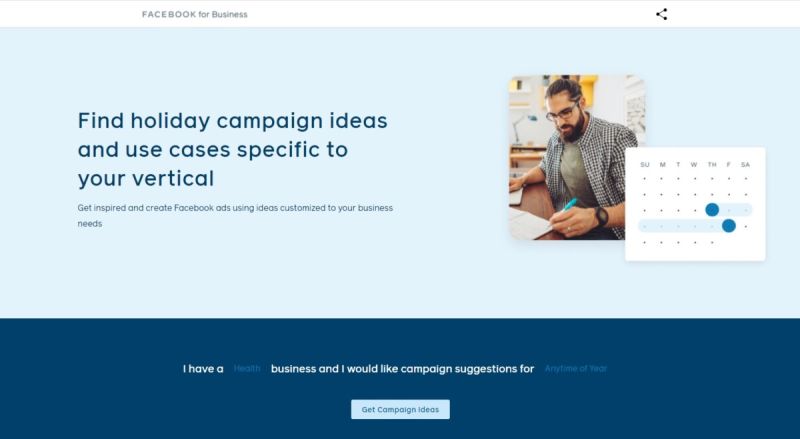
Facebook, ever on the lookout for ways to help entrepreneurs of all sizes get a leg up, has come up with a nifty solution for anyone whose marketing tank of inspiration has run dry: the Campaign Ideas Generator.
It might sound a bit Star Trek, but trust us, you will definitely want to boldly go down this black hole.
The boffins at the social media platform said the Generator “provides campaign ideas, pre-made assets and resources that are specific to your small business needs”.
In the Queen’s English, that means access to a host of templates, depending on the business you’re in. All you have to do is click on the corresponding sector – though not everyone is represented – and click on the ‘get campaign ideas’ button.
That brings up three tabs: Campaign Ideas, serving up a slew of ad format ideas, including images and layouts, Data and Insights, which showcases the filters you can use to target your campaign, while Resources offers extra goodies such as case studies.
There’s also what Facebook calls an Organic Post Pack, that includes a variety of post templates for your Facebook page, just in case you’re still in need of a bit more inspo.
Some business owners might look at this feature as a bit Borg – everyone’s assimilated and using the same stuff – but we think it’s actually very nifty, especially when it comes to making sure your brand is coordinated and consistent.
It also gives busy entrepreneurs a bit of breathing space, allowing them to put together an ad campaign that looks good and will reap rewards, without taking up too much of their valuable time and resources. We’re with Jean-Luc Picard and say: make it so.
If you’re feeling a bit “she can’t take any more cap’n!” when it comes to your social media marketing, give us a call and we’ll get you moving at warp speed.
We’re 24 fingers, a digital marketing agency and a proud member of the 42 Club, Brentwood Chamber of Commerce, Excel Business Networking Group, the Trusted Business Community, the Organisation for Responsible Businesses and the Rotary Club of Brentwood à Becket. We help companies who are all fingers and thumbs with their social media grow their business and brand. Book your free strategy call here.
From a certain point of view, social media looks easy peasy: chuck out the odd quote from someone famous here for Facebook, throw together a quick Instagram video on your smartphone and boooom – Robert’s your father’s brother.
Well yes, and then again no… We at 24 fingers towers know there’s a lot more going on than what people scroll through on their feeds. Business posts are a small part of a much bigger overall strategy, crafted pieces of content that serve an important purpose, and analysing whether they’re working is a mammoth task in itself. That’s why we’re going to look at social media audits, why you should have them regularly and what they can do for you.
We heard the sharp intake of breath at the word ‘audit’ but don’t worry, this will be your kind of scrutiny, because its sole aim is to improve your business and boost your bottom line. So, let’s start at the beginning and ask a few important questions.
What is a social media audit?https://giphy.com/embed/26gR0YFZxWbnUPtMA
Put simply, it’s a review of the metrics generated by your business’ social media posts that examines growth, highlights potential opportunities and what you can do to enhance your social media presence.
It helps you identify the bits of your social media campaigns that are working and those that aren’t doing quite so well, as well as spotlighting who you’re reaching, when and where, giving you a deeper understanding of engagement levels and how many sales you’re generating from your content.
Does a social media audit really matter?https://giphy.com/embed/B5RycQcvQSDVcS9fuC
If your business is going great guns, then you might think “probably not” and move swiftly on but we say “woah there Nelly”. Knowing what your top-performing posts are means you’ll get a better insight into what your audience actually likes and prompts them to turn a click into a purchase.
Do they prefer written content or are they gobbling up videos? Are they scrolling during the day (sneakily, and at work like the rest of humankind) or do they hop on in the evening when the shoes are kicked off and the cork’s out of the wine?
Tweaking your strategy, even just a little, after a social media audit could see a huge difference in sales and revenues, and that can only be a good thing. Likewise, if your brand isn’t performing as well as you’d like, you can pinpoint exactly what isn’t working, stop wasting your energy and try something new.
How will a social media audit help?https://giphy.com/embed/TTgdzuFXGvEKCNO6JRC
Good question. First of all, as we’ve just said, it will help you understand your audiences better but it will also inform you where and when to find them. As anyone who has ever been up in the wee small hours, furiously putting together a business marketing plan knows, anything that helps pinpoint your ideal customer is worth its weight in gold.
Second, social media audits will flag up any brand inconsistency, which can be a relatively easy fix but will reap huge rewards if everyone on every platform where you have a presence can recognise you quickly and easily.
That leads us neatly to the third advantage: your brand will be known as credible, reliable and organised (even if you don’t always feel the same). The value from that is, to coin a phrase, priceless.
Finally, a social media audit can help you set defined yet achievable business goals, whether it’s to grow your audience on a particular platform (having discovered that’s where a lot of your customers are lurking), increase sales figures or boost growth by a particular percentage.
When should you have a social media audit?https://giphy.com/embed/l0HlHms47geescn28
It depends. Some companies have them quarterly, while others prefer monthly. What you really ought to be asking is who should carry out your social media audit, because that’s potentially a lot of data to wade through and understand. Luckily, that’s where we come in.
We can crunch the numbers any time you want, whether it’s once a week or once a year, and generate insights into your business that will help shape your next move. We will analyse trends, identify opportunities, tell you where things are going well and offer advice on what to do for campaigns that haven’t quite hit the mark.
Want to get started? Our 24 fingers are flexed and ready to go… Get the ball rolling here.
We’re 24 fingers, a digital marketing agency and a proud member of the 42 Club, Brentwood Chamber of Commerce, Excel Business Networking Group, the Trusted Business Community, the Organisation for Responsible Businesses and the Rotary Club of Brentwood à Becket. We help companies who are all fingers and thumbs with their social media grow their business and brand. Book your free strategy call here
If you have ever said “I’d love to start a business, but I can’t because I’m working full-time” ask yourself, are you using your job as an excuse not to go for it?
As a Business Mentor, who has a specialism in helping people transition from employee to entrepreneur, I can tell you:
You’re not alone in wanting to make the transition
You can start the business you want while you are working full-time
Start a Business When Working Full-Time? The Statistics Speak for Themselves
Most employees in the UK have thought about starting a business at some point or another (me included!). A recent survey claims that 64% of the UK workforce is itching to strike out on their own.
If you add to that research by the Henley Business School , it shows that 25% of all adults in the UK are side hustlers.
Side Hustling is the New Normal
The idea of self-employment is scary.
OK, so you’re following your passion, but what happens if things don’t work out?
Happily, there’s no need to say goodbye to full-time employment just yet!
Striking out on your own doesn’t have to mean turning your back on the (relative) security of a full-time job. There are ways to test out that brilliant business idea and grow your entrepreneurial skills, all whilst keeping up with the 9-5.
It’s called a side hustle. It’s starting a business while you’re working full-time.
And here’s how you can do it….
Manage Your Expectations
If you start a business when you’re working full-time don’t expect it to be a breeze.
First, if you think you haven’t got a lot of free time as an employee, think about how much less time you will have an an employee and an entrepreneur. By accepting the fact that it WILL be challenging and time-consuming from the start, you’ll be better prepared for the highs and lows to come.
Second, if you’re counting on your side hustle bringing in shed loads of money from day one – enough to allow you to wave goodbye to your full-time job within weeks or months – please be aware that it probably won’t.
Use the Time to Plan, Make Mistakes then Plan Again
Starting a business you’re working full-time takes careful and detailed planning.
Planning your time will be paramount. You will have far less time than a full-time entrepreneur to do all the things that will need to happen to turn your idea into a business – and then deliver those products or services to your customers.
You will also need to plan your spending. Starting a business can be done without masses of expenditure, but it can’t be done for free. So you will need to plan carefully how much money are you going to spend on start-up costs, like website design and marketing?
What about planning for the type of customers you want to buy your products or services? Who are your customers going to be, and why will they buy from you? How are you going to deliver your products or services to them?
You don’t have to write a lengthy or complicated business plan, but you do need to answer important questions like these. They will help you gain a full understanding about how your business will work, and how you could eventually transition from employee to entrepreneur.
Once you’ve written a detailed plan, you’ll then need to schedule key tasks, and track your progress regularly.
Want some help with simple plan for your business?
The One Page Business Plan: From Surviving to Thriving in 12 Easy Steps
Not every business owner needs a business plan. But every business owner does need a plan for their business. This is the only one you will ever need.
What’s involved in a big, shiny, ambitious business launch?
Lots of:
Time
Effort
Money
People
If you’re starting a business while you are working full time, you are doing two things: creating something that will enable you to move into running your own business full time AND taking the time to test your ideas without as much risk. So, it’s absolutely fine to start with something very simple and work your way up to something bigger, better and bolder over time.
It’s fine to dream, but when you’re launching a business while working a day job, you probably shouldn’t go too big.
At least, not for now…..
Do What You Do Best and Outsource the Rest
You don’t have to do everything yourself.
In fact, for the sake of time, sanity’s and a successful business I absolutely recommend that you don’t.
There is no rule that says that as a one-person, solopreneur, side hustle business that you have to be expert in everything about business. It’s also a really bad idea to try to be that idea of the ‘perfect’ business owner who knows, understands and can do everything themselves.
That person does not exist and if anyone tells you they do – and that you can do it all on your own – well, to be blunt, they’re a liar.
The best way to get your business quickly off the ground is to invest in other people’s time and professional expertise, whether you hire a social media expert to work on your posts or use an accountant to plan your finances.
Not only will this allow you to focus properly on your business (rather than in it), but using experts means tasks will be completed to a high standard… definitely higher than you (as an enthusiastic amateur) would have achieved yourself!
So, When Is the Right Time to Leave Your Full-Time Job?
If things start going to plan with your new business, it’ll be easy to let your current career slide.
You may have a healthy customer list, you could have found an investor, maybe you’ve got the equipment and you have developed a fantastic set of new skills that will make your venture a success… you’re doing so well that you’re convinced you’ll be the next Forbes success story!
I’m not saying you’re wrong.
But before you take that last step off the side of the cliff and tell the boss goodbye forever:
Take some self-reflection time so you can be sure that, as far as possible, self-employment is the right long-term move for you
Triple-check that you can afford to leave work
Do your best to hold out for any redundancy or ‘goodbye’ money that might be up for grabs
Ready to Take the Plunge and Start Your Business When You are Working Full-Time?
I can help you start your brand-new business, providing an experienced brain to pick and an ear to listen along the way! If you fancy a chat about how I can help you, the way I have helped hundreds of others just like you, book yourself a complimentary Breakthrough Session.
Or, why not download my Prepare to Be Your Own Boss toolkit?
Prepare to Be Your Own Boss: How to Start a Business the RIGHT Way
Starting your own business is ridiculously simple – but starting is only the beginning. Starting is easy. Making it work? Now that’s a whole different story.
The gift of time, flexibility, and balance are some of the benefits people have enjoyed during the last year.
In contrast, childcare, communication, and IT were the biggest challenges as we adapted to a world of work that looked very different.
The Engaging People Company wanted to find out what it was like for people working during a pandemic – what was good, and less good, and what could be taken forward into a post-Covid world.
As well as hearing about benefits and challenges, there were some great examples of employee engagement shared too. Around communications, appreciation, social engagement, and wellbeing. For example, one employer offered unexpected incentives like free takeaways.
Looking ahead, people want continued flexibility, from their organisation, along with technical tools and engagement and communications. From managers, things such as mental health support, communications and trust are important.
Some people decided to change their career aspirations as a result of the pandemic – for reasons such as pursuing a new purpose or spending more time with family.
Director Michelle Gant said: “The survey offered some great ideas but it’s a toe dip in the water.
“What matters is that employers ask their people: find out what matters to them, what they need, then listen, and respond accordingly. And keep asking. Because people’s views change – especially as society starts opening up more. Keep listening. Keep responding. Employee engagement, it’s not a one-off thing. It’s an ongoing journey.
It’s all too easy for SMEs to forget about the importance of a solid procurement process, but improving supplier performance and easing admin-heavy tasks can go a long way towards cutting costs.
SMEs have seen substantial hikes in labour, utilities, rent and fuel costs over the last 12 months, putting pressure on their cash flow and distracting senior decision-makers from focusing on growth strategies, including developing new products or marketing.
Cutting these costs will clearly improve the health of their cash balances and boost margins. One area, which can be overlooked in an SME, is making efficiencies in procurement – controlling spend and improving supplier performance and management in a range of purchases from raw materials to energy use and even stationery.
Protect profits
“Now is a testing time for business as global supply chains are buffered by more protectionism and tariffs,” says Malcolm Harrison, chief executive of the Chartered Institute of Procurement & Supply. “Small- and medium-sized businesses may be more vulnerable than some to the winds of change so will need to protect their enterprises and get the most out of their spend whilst protecting their precious bottom line.”
There are a number of procurement processes SMEs can take to make these necessary savings both in direct spend – such as a construction firm buying steel for a project – or indirect spend which refers to items such as IT equipment, office furniture, facilities management and marketing.
Harrison suggests the first step is to perform a supply chain audit to limit a firm’s exposure to currency fluctuations or other unexpected events, which could impact on the smooth delivery of goods and services. “If you have a complete picture of your suppliers then you can identify any critical supply situations, such as sole suppliers for certain products, and take action,” he says.
“Using multiple sourcing strategies is important. Having more than one supplier for crucial products can protect you from disruption and make you react quicker to surprise increases in demand. Though SMEs may feel they can ill afford to do such research, they can ill afford a supply interruption that could bring down their whole operation.”
Transparency
He encourages SMEs to also have greater transparency around spend. “If everyone in a small team has the opportunity to buy, how will you know how much the business has spent? You need to have an appropriate recording and sign-off procedure so a senior manager signs for all critical purchases and you can report on spend on a regular basis,” he says.
“Getting the best deal from suppliers is also difficult if your purchase is relatively small. Common items such as stationery and IT equipment could be a lot cheaper if you buy as a consortium of SMEs. Partnering up with local businesses (while protecting any confidential data in your own business) could give competitive edge.”
“Small- and medium-sized businesses may be more vulnerable than some to the winds of change so will need to protect their enterprises and get the most out of their spend whilst protecting their precious bottom line”
Malcolm Harrison, chief executive, Chartered Institute of Procurement & Supply
SMEs can also look for third-party partners. Ian Bolger, vice president of procurement consultancy Efficio, says it is increasingly working with smaller firms. “Companies are worried about exporting and rising importing costs. They are seeing their cost bases increase and realise that procurement can be a way of mitigating that,” he says.
“We go in and carry out a two- to three-week audit. We then help SMEs with the market research of alternative suppliers, including from new, low-cost territories, and improving the understanding and visibility over their spend. We can negotiate new and better terms with existing suppliers by benchmarking the market rates.”
Outsourcing
Procuright is also seeing more demand from SMEs outsourcing the procurement function. “SMEs often suffer from a lack of time or experience when securing the best deals from suppliers,” says managing director Gemma Howard-Sandy. “Suppliers are notorious for not always comparing apples with apples when it comes to presenting their products and services, which inevitably causes problems when trying to compare costs and terms.
“We find the main areas of category spend within indirect procurement that have become increasingly popular for outsourcing include, energy, carbon and energy management and reduction, insurance, IT and telecoms solutions, office and business supplies, logistics and deliveries, waste disposal and water services.”
She claims it provides many benefits for SMEs. “Having stronger procurement processes can reduce and control costs such as maverick spending, free up internal resources and increase efficiency for time-consuming functions,” she states.
E-procurement
The use of software – including so-called e-procurement – is another option. It can ensure buyers purchase from approved suppliers, set permissions to ensure spend compliance, compare suppliers in e-auctions and can provide more real-time visibility and data on supplier performance.
Wax Digital runs software called web3, which it says automates the procurement process. “We digitise existing processes that are manual and paper-based,” explains Daniel Ball, director. “We believe it brings consistency, efficiency and control.”
Ball believes procurement should become a necessary department and function in an SME when it reaches a £50m turnover or has 100 supplier contracts.
Ian Bolger, however, says it is not that clear-cut. “Even in a business of 1,000 people you might have one or two focused on procurement. But they will be reactive rather than proactively looking at spend,” he says.
“I recently told one boss of a £100m turnover firm, who had two procurement staff managing £80m worth of spend, that a 5% cost reduction in purchasing costs would boost his profits by four times. He was sales and forward-strategy focused and hadn’t realised how important procurement could be.”
Direct purchasing
It is certainly of importance at Creative Nature Superfoods, which sources ingredients from overseas, including New Zealand. “We don’t work with consultants as we want to cut costs as much as possible. We buy direct from farmers and growers around the world and also buy through ingredients wholesalers based in the UK and Europe,” says Matthew Ford, operations manager.
“When starting out, it’s best to use a wholesaler as they buy in large quantities from source, so can offer much better pricing than you would get if going direct. The benefits as you grow of buying direct from the farmers and growers are improved relationships, better knowledge of how the product is grown and how the farmers are treated, and more control over supply chain.”
A focus on indirect spend can also make a huge difference. Michelle Wright, chief executive of Cause4, recently undertook a cost management exercise. “It took over a year to complete, reviewing everything from stationery and utilities,” she explains. “I thought we were incredibly cost-conscious, but we obviously hadn’t been as we reduced costs against turnover by 7%. Our stationery bill fell by £1,000 a year.”
The review included getting three rather than one quote for utility contracts, diarising when service contracts were coming to an end to avoid higher tariffs and getting recommendations from other SMEs for buying cheaper stationery products.
“When you say cost review at an SME people get frightened as they think it means job losses. But it can mean the opposite, reducing costs and freeing up cash for investment,” she says.
Five benefits to strong procurement processes
Reduced costs
Better spend visibility
Deeper analysis of suppliers and ability to source new, more innovative partners
Improved payment terms
Reduced supplier risk
We have a thriving and diverse community of thousands of entrepreneurs from multiple sectors, backgrounds and skill sets helping you to connect with the right people at the right time. No matter whether you’re looking to upskill, get feedback, engage with new people or simply observe, there’s something for everyone.
‘Want to learn more? Register for NatWest Business Builder to view all of their business development tools. Click HERE‘
It’s all too easy for SMEs to forget about the importance of a solid procurement process, but improving supplier performance and easing admin-heavy tasks can go a long way towards cutting costs.
SMEs have seen substantial hikes in labour, utilities, rent and fuel costs over the last 12 months, putting pressure on their cash flow and distracting senior decision-makers from focusing on growth strategies, including developing new products or marketing.
Cutting these costs will clearly improve the health of their cash balances and boost margins. One area, which can be overlooked in an SME, is making efficiencies in procurement – controlling spend and improving supplier performance and management in a range of purchases from raw materials to energy use and even stationery.
Protect profits
“Now is a testing time for business as global supply chains are buffered by more protectionism and tariffs,” says Malcolm Harrison, chief executive of the Chartered Institute of Procurement & Supply. “Small- and medium-sized businesses may be more vulnerable than some to the winds of change so will need to protect their enterprises and get the most out of their spend whilst protecting their precious bottom line.”
There are a number of procurement processes SMEs can take to make these necessary savings both in direct spend – such as a construction firm buying steel for a project – or indirect spend which refers to items such as IT equipment, office furniture, facilities management and marketing.
Harrison suggests the first step is to perform a supply chain audit to limit a firm’s exposure to currency fluctuations or other unexpected events, which could impact on the smooth delivery of goods and services. “If you have a complete picture of your suppliers then you can identify any critical supply situations, such as sole suppliers for certain products, and take action,” he says.
“Using multiple sourcing strategies is important. Having more than one supplier for crucial products can protect you from disruption and make you react quicker to surprise increases in demand. Though SMEs may feel they can ill afford to do such research, they can ill afford a supply interruption that could bring down their whole operation.”
Transparency
He encourages SMEs to also have greater transparency around spend. “If everyone in a small team has the opportunity to buy, how will you know how much the business has spent? You need to have an appropriate recording and sign-off procedure so a senior manager signs for all critical purchases and you can report on spend on a regular basis,” he says.
“Getting the best deal from suppliers is also difficult if your purchase is relatively small. Common items such as stationery and IT equipment could be a lot cheaper if you buy as a consortium of SMEs. Partnering up with local businesses (while protecting any confidential data in your own business) could give competitive edge.”
“Small- and medium-sized businesses may be more vulnerable than some to the winds of change so will need to protect their enterprises and get the most out of their spend whilst protecting their precious bottom line”
Malcolm Harrison, chief executive, Chartered Institute of Procurement & Supply
SMEs can also look for third-party partners. Ian Bolger, vice president of procurement consultancy Efficio, says it is increasingly working with smaller firms. “Companies are worried about exporting and rising importing costs. They are seeing their cost bases increase and realise that procurement can be a way of mitigating that,” he says.
“We go in and carry out a two- to three-week audit. We then help SMEs with the market research of alternative suppliers, including from new, low-cost territories, and improving the understanding and visibility over their spend. We can negotiate new and better terms with existing suppliers by benchmarking the market rates.”
Outsourcing
Procuright is also seeing more demand from SMEs outsourcing the procurement function. “SMEs often suffer from a lack of time or experience when securing the best deals from suppliers,” says managing director Gemma Howard-Sandy. “Suppliers are notorious for not always comparing apples with apples when it comes to presenting their products and services, which inevitably causes problems when trying to compare costs and terms.
“We find the main areas of category spend within indirect procurement that have become increasingly popular for outsourcing include, energy, carbon and energy management and reduction, insurance, IT and telecoms solutions, office and business supplies, logistics and deliveries, waste disposal and water services.”
She claims it provides many benefits for SMEs. “Having stronger procurement processes can reduce and control costs such as maverick spending, free up internal resources and increase efficiency for time-consuming functions,” she states.
E-procurement
The use of software – including so-called e-procurement – is another option. It can ensure buyers purchase from approved suppliers, set permissions to ensure spend compliance, compare suppliers in e-auctions and can provide more real-time visibility and data on supplier performance.
Wax Digital runs software called web3, which it says automates the procurement process. “We digitise existing processes that are manual and paper-based,” explains Daniel Ball, director. “We believe it brings consistency, efficiency and control.”
Ball believes procurement should become a necessary department and function in an SME when it reaches a £50m turnover or has 100 supplier contracts.
Ian Bolger, however, says it is not that clear-cut. “Even in a business of 1,000 people you might have one or two focused on procurement. But they will be reactive rather than proactively looking at spend,” he says.
“I recently told one boss of a £100m turnover firm, who had two procurement staff managing £80m worth of spend, that a 5% cost reduction in purchasing costs would boost his profits by four times. He was sales and forward-strategy focused and hadn’t realised how important procurement could be.”
Direct purchasing
It is certainly of importance at Creative Nature Superfoods, which sources ingredients from overseas, including New Zealand. “We don’t work with consultants as we want to cut costs as much as possible. We buy direct from farmers and growers around the world and also buy through ingredients wholesalers based in the UK and Europe,” says Matthew Ford, operations manager.
“When starting out, it’s best to use a wholesaler as they buy in large quantities from source, so can offer much better pricing than you would get if going direct. The benefits as you grow of buying direct from the farmers and growers are improved relationships, better knowledge of how the product is grown and how the farmers are treated, and more control over supply chain.”
A focus on indirect spend can also make a huge difference. Michelle Wright, chief executive of Cause4, recently undertook a cost management exercise. “It took over a year to complete, reviewing everything from stationery and utilities,” she explains. “I thought we were incredibly cost-conscious, but we obviously hadn’t been as we reduced costs against turnover by 7%. Our stationery bill fell by £1,000 a year.”
The review included getting three rather than one quote for utility contracts, diarising when service contracts were coming to an end to avoid higher tariffs and getting recommendations from other SMEs for buying cheaper stationery products.
“When you say cost review at an SME people get frightened as they think it means job losses. But it can mean the opposite, reducing costs and freeing up cash for investment,” she says.
Five benefits to strong procurement processes
Reduced costs
Better spend visibility
Deeper analysis of suppliers and ability to source new, more innovative partners
We have a thriving and diverse community of thousands of entrepreneurs from multiple sectors, backgrounds and skill sets helping you to connect with the right people at the right time. No matter whether you’re looking to upskill, get feedback, engage with new people or simply observe, there’s something for everyone.
‘Want to learn more? Register for NatWest Business Builder to view all of their business development tools. Click HERE‘
The Sounding Board is a group of entrepreneurs, professional advisors and generally nice people who love the challenge of running businesses and are happy to volunteer their time to try and help. We want to share that knowledge and experience we have of running organisations in order help others with theirs… and raise some money for charity along the way.
What do we do?
Each quarter we run an informal programme of 6 x 1-2 hours meetings, where 2 relevant Sounding Board members meet with you to provide; guidance, advice, insight, experience, support & generally act as a sounding board, to help you achieve your goals.
After being accepted we match you up with 2 x Sounding Board members with relevant experience and skills to meet with you over the 12-week period.
Why do we do it?
Our experience to date leads us to think that we can help almost every business that is willing to be open about their goals, challenges and invest some time in talking them through and listening.
We enjoy helping, want to give a little back to both business and good causes.
Who is it for?
All businesses great and small who aspire to improve.
Businesses that are struggling with:
Growth (too much as well as not enough)
Strategic direction and planning
Shareholder planning (planning for exit, succession planning, …)
Stress or a specific crisis
…… or any business issue/problem/thinking you want the share. These are driven by you.
Who is it not for?
People who are not willing to commit and invest the time.
Please do take this point seriously. We invest our time and energy free of charge into this process and there are a limited number of spaces.
Accepting a space and then not participating (without a good reason) will make you a bad person.
How do you get accepted?
Just email Angela with a brief outline of who you are, your business, approximate scale of the business and a brief outline of some of the challenges you are facing.
How much does it cost?
Not a lot!
It will cost you time – we aim for a minimum of 6 meetings of circa 2 hours over the 12-week period but often provide more.
We ask for people (their businesses) to commit to paying at least £1000 to our supported charity at the end of the 12 weeks if you feel we have added value.
We say commit because, if at the end of the 12-week period, you feel you have not received at least £1000 of value, then we will not hold you to it.
We also do not want the £1000 commitment to be a barrier or another thing adding to the financial worries of your company. If you are struggling, we are happy with an “IOU” to donate when you are enjoying happier times.
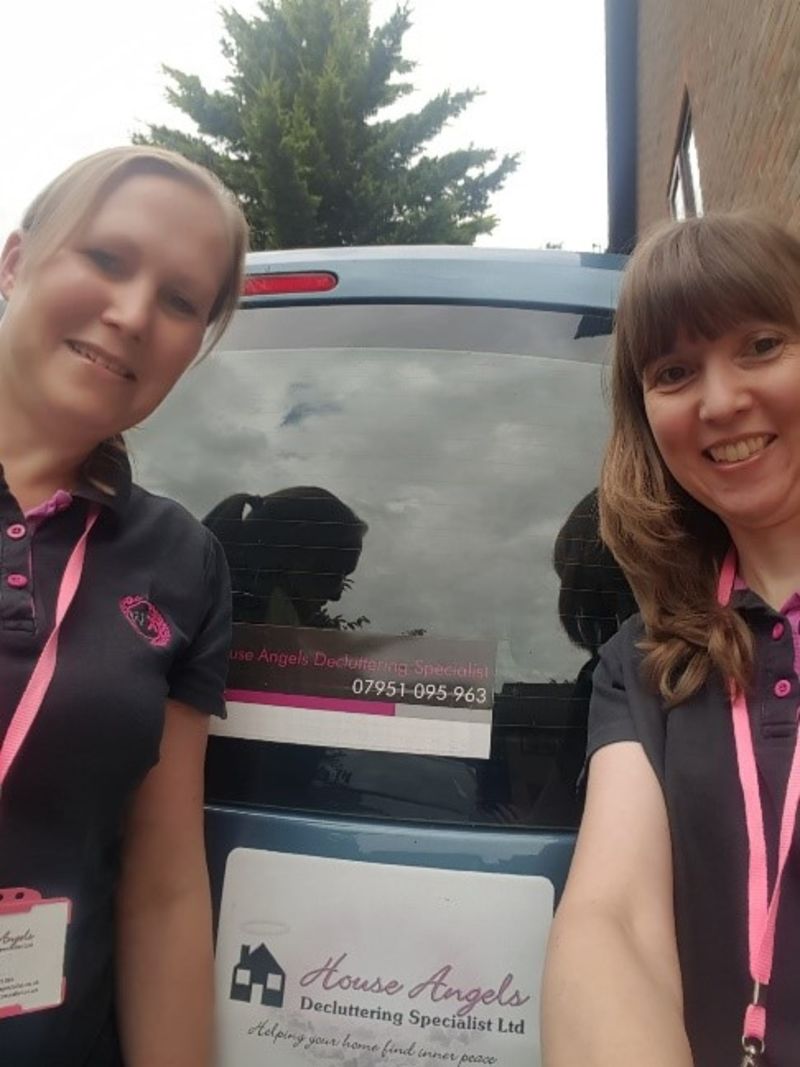
House Angels provide hands on, highly practical support for Norfolk people who are struggling with clutter or disorganisation around their homes. Many of their clients have had falls due to clutter becoming a trip hazard or other issues relating to their physical or mental health.
House Angels can make living conditions safer, improve the quality of people’s lives, enable a cleaning team to go in, prevent a person from being evicted from their home or clear space for maintenance work to be carried out. They aim to look beyond the clutter to the person behind to find out more about them and understand the changes that are needed.
The idea for House Angels was formed out of experiences within their own family. Initially intended as a service to help people who were living in cluttered and disorganised conditions, as their father had been before he was admitted to hospital. As the idea evolved, they also thought about how their grandmother’s house had needed reorganisation and adaptions before she could return from hospital because her mobility had deteriorated. They had support around them to help make the changes that were needed but knew not everyone was so lucky.
They enrolled on a business start-up course and gradually House Angels was born; finally launching in 2019. There were mistakes along the way and it’s been hard work, especially during the pandemic when they couldn’t see a way through. But, as is often said, they learned as much from mistakes as success! The pandemic has definitely taught them to be flexible, have confidence in what they do and not to give up.
A real positive for them has been joining the Community Catalysts project in Norfolk. It opened up many doors, put them in touch with social care and other small enterprises in the area and helped them to focus on where they want the business to go and adapt the services that they offer today.
It’s been a long journey but they now feel they have a business that they can be really proud of and they’re getting lovely feedback from their clients and their families. One client’s reaction really summed this up. They had completed a 3 hour declutter and clean-up of his kitchen and bathroom. When he came to inspect their handiwork, he welled up and said “You have made me feel human again”. Another client, that they had worked with over many weeks, decluttering and clearing his late mother’s possessions commented “Every visit brings light into the house, lifting my spirits too!” Decluttering may seem to some like a luxury service but for House Angels client’s it can be life changing. They give their clients back a tidy house but also a home they can enjoy living in again.
In this module we’re going to explore the viability of your business model, specifically looking at the cost structure. When looked at in conjunction with your revenue streams, it will give you an overall understanding of the profitability of your business.
In this module, you’ll explore:
Different types of cost structures
The key costs within your business
Fixed and variable costs
How to use costs to your advantage
Start by downloading and saving the workbook to your computer, to use throughout the module, capturing any key takeaways and completing the exercises at the end of each chapter.
What is a cost structure?
In this first chapter, we’ll start by looking at what a cost structure is, different approaches to cost and why it’s such a crucial element of building a viable and scalable business. Use your workbook to help you identify the costs within your business – and don’t forget to keep a note of any assumptions that you make so you can continue to test and validate these going forward.
Understanding your costs
Now that you’ve started to identify key costs within your business, one fundamental priority for every business owner is to then understand which costs are fixed and which costs are variable. In this chapter, we’re going to understand what constitutes a fixed cost or a variable cost and apply this to the costs you identified in the previous chapter.
How to use costs to your advantage
In the final chapter of this module, we’re going to look at how you can use costs to your advantage, first understanding the concept of breaking even and how economies of scale and scope could ultimately help increase the profitability of your business. We will also hear from some entrepreneurs about the cost challenges within their businesses and how they’ve worked to reduce these further.
We have a thriving and diverse community of thousands of entrepreneurs from multiple sectors, backgrounds and skill sets helping you to connect with the right people at the right time. No matter whether you’re looking to upskill, get feedback, engage with new people or simply observe, there’s something for everyone.
‘Want to learn more? Register for NatWest Business Builder to view all of their business development tools. Click HERE‘
In this module we’re going to explore the viability of your business model, specifically looking at the cost structure. When looked at in conjunction with your revenue streams, it will give you an overall understanding of the profitability of your business.
In this module, you’ll explore:
Different types of cost structures
The key costs within your business
Fixed and variable costs
How to use costs to your advantage
Start by downloading and saving the workbook to your computer, to use throughout the module, capturing any key takeaways and completing the exercises at the end of each chapter.
What is a cost structure?
In this first chapter, we’ll start by looking at what a cost structure is, different approaches to cost and why it’s such a crucial element of building a viable and scalable business. Use your workbook to help you identify the costs within your business – and don’t forget to keep a note of any assumptions that you make so you can continue to test and validate these going forward.
Understanding your costs
Now that you’ve started to identify key costs within your business, one fundamental priority for every business owner is to then understand which costs are fixed and which costs are variable. In this chapter, we’re going to understand what constitutes a fixed cost or a variable cost and apply this to the costs you identified in the previous chapter.
How to use costs to your advantage
In the final chapter of this module, we’re going to look at how you can use costs to your advantage, first understanding the concept of breaking even and how economies of scale and scope could ultimately help increase the profitability of your business. We will also hear from some entrepreneurs about the cost challenges within their businesses and how they’ve worked to reduce these further.
We have a thriving and diverse community of thousands of entrepreneurs from multiple sectors, backgrounds and skill sets helping you to connect with the right people at the right time. No matter whether you’re looking to upskill, get feedback, engage with new people or simply observe, there’s something for everyone.
‘Want to learn more? Register for NatWest Business Builder to view all of their business development tools. Click HERE‘