Read

Seven ways to make your customers feel valued

NatWest Business Builder: Customer Discovery

When done well, customer service can help build a strong reputation and loyal customer base. Experts share their top tips on getting it right.

More than seven out of every 10 (71%) UK SMEs believe they deliver strong customer service, a survey by Close Brothers has found. Only 5% saw their customer service as poor, while the rest (24%) saw themselves as neither strong or poor.

While having confidence in your customer service is a good thing, a true marker of whether you are excelling is how valued customers feel. Ultimately, a customer who is valued is more likely to return and even spread the word, helping you to attract new customers and generate more business leads.

Here are a handful of practical ways to provide your customers with a service that makes them feel valued.

1. Speak to customers in their voice

“There’s no better way to show you understand your customers than through your tone of voice, branding and marketing,” says Lesley Bambridge, founder of marketing consultancy We Mean Business. Bambridge has experience working with household names such as Aquafresh, Lucozade and Ferrero Rocher.

Even the best customer service can be undermined by the wrong tone of voice. The words used or how they’re expressed can say a lot about how customers perceive your attitude.

“You need to make yourself a brand that they can rely on and relate to, so don’t speak to them as if you’re owed the business,” Bambridge says.

2. Reward them

Customer loyalty programmes have long been regarded as an effective retention tactic, and not just post-purchase.

Handbag brand Mia Tui gifts new customers 500 points upon signing up, which is worth £5 off their first purchase. They then receive five points for every £1 spent thereafter.

“A scheme like this helps customers to feel like they’re part of a club,” says Mia Tui’s director and founder, Charlotte Jamme.

3. Personalise the purchasing experience

A customer’s journey shouldn’t end once they’ve checked out.

“You should personalise wherever possible and make the purchasing journey specific to them,” says Bambridge. “Consider following up with offers and bespoke deals, based on their previous purchases.”

Of course, you need to ensure you’re being GDPR-compliant and that your customers have opted in to receive future correspondence and marketing emails in the first place.

Frozen Indian food supplier Nikasu Foods UK personalises its customers’ experience by encouraging them to share recipe ideas post-purchase, which are then reshared by the company online.

4. Thank your customers

Any business hopes that its customers will keep coming back for more, but, for companies just starting out, loyal customers can be hard to acquire.

““You need to make yourself a brand that they can rely on and relate to, so don’t speak to customers as if you’re owed the business”

Lesley Bambridge, founder, We Mean Business

“One thing that I’ve done since we started, and it seems to go down really well, is to include a handwritten note with each order, thanking them,” says Ruth Oldfield, co-founder of Bolton-based Coffee & Kin, which sells compostable coffee pods, coffee beans and tea, with her sister and their partners. It doesn’t matter how many times they’ve ordered before.

“I truly believe doing this helps customers feel more connected to our family,” she says.

5. Welcome feedback

No matter how strong you believe the customer service you’re delivering to be, there is likely to be room for improvement. And welcoming feedback is key to this.

“We acknowledge and respond to all feedback we receive [from our customers], whether it’s good or bad,” says Galyna Nitsetska, founder of Empress Mimi, a lingerie subscription box.

Nitsetska’s commitment to valuing her customers is partly down to the difficulties she faced fostering loyalty and engagement for her previous business – an e-commerce website selling luxury workwear for women. Many of the purchases made through the site were one-offs, she says.

6. Be open and honest

If you have the capacity and the resources, it’s worth considering replying to any feedback in person, rather than sending a generic response.

Too many SMEs try to replicate the approach of big corporates, which can often be scripted and lack empathy, rather than thinking about how they can deliver more emotive customer experiences, says Nitsetska. You need to be open and honest with your customers, which means admitting when things have gone wrong. Keeping your apologies fresh and sincere can help win them over and encourage them to stick around.

“Being able to scale is important, but if you’re at the beginning stages [of building a business], having a loyal customer base is far more crucial, until you get to a place where scaling and atomisation becomes unavoidable,” she says.

7. Don’t take yourself too seriously

While it’s important to deal with any issues promptly and professionally, your customer service shouldn’t be seen as a robotic process. It also helps to have a sense of humour now and again, says Bambridge.

“Life’s pretty unfunny at times, so if you can do anything to lighten or brighten a customer’s day, just do it,” she says. “It’ll build huge brand affinity and make you one of the ones that stand out.”

Further Reading

  • Management strategies: staying solvent in the early years
  • Top tips for would-be entrepreneurs

We have a thriving and diverse community of thousands of entrepreneurs from multiple sectors, backgrounds and skill sets helping you to connect with the right people at the right time. No matter whether you’re looking to upskill, get feedback, engage with new people or simply observe, there’s something for everyone.

‘Want to learn more? Register for NatWest Business Builder to view all of their business development tools. Click HERE

How to create (glorious) content for a D2C brand

BuxtonThreeTwo

When building a brand, it’s far too easy to assume that you know what your audience wants. But the truth is, unless you actually have the insight to know what they want, your content won’t cut through and lead to the quality engagement and conversion that you’re after. Because what works for you, doesn’t always work for your audience.

So, how do you create content that counts?

ADAPT TO THE MOMENT

As a B2B manufacturer, supplying fresh pizza dough to the hospitality sector, Millennium Foods realised that in order to survive the Covid pandemic, they needed to create new revenue streams and move with the times. 

They came to us to create a Direct to Consumer (D2C) brand that placed their products directly in consumer’s homes – not just as a reactive solution to the Pandemic, but as a strategy that could achieve long-term growth.

We worked with Millennium Foods with the aim to make waves in the ‘at home’ meal kit market. Using our insight driven approach, we analysed the market and ideal customer to build a targeted solution that put the experience and customer at the heart of the brand.

From the word go, we knew that Dough & Glory would start life as a purely digital brand – and that this would require some seriously engaging content. With everyone at home, we had to stop thumbs scrolling and make an impact on social media platforms.

MAKE IT MEANINGFUL

At BuxtonThreeTwo, our (not so) secret weapon is looking before we leap. Before planning content, we created in-depth audience personas, gaining insights into Dough & Glory’s prospective customer base so we could tailor the brand experience and make content that responded directly to real needs, rather than acting on presumption.

As with any project, rather than creating edgy visuals that only pleased our own creative desires, we tested the water before diving in and took time to consider what Dough & Glory’s audience would react to before tackling the creative.

BUILD BRANDS AROUND PEOPLE, NOT PRODUCTS

Once we understood what mattered, we worked up a brand promise and values, ensuring that Dough & Glory’s brand experience would speak loud and clear.

Traditionally, brands have always been product-centric. But with Dough & Glory, we built the brand around people, looking past the pizza to make sure that content was on point and served audiences’ needs before the brand shouted about itself.

The added layer of complexity with this project was the environment we were creating it in. With national lockdowns in place, we had to be strategic in how we could tell the story of the experience and give it a human feel when we were not allowed to bring families into the studio or go to their homes. To do this we proposed a staged approach: firstly focusing on the cooking experience of the product with content, and secondly, when restrictions relax, we will start to incorporate the emotional experience shared with friends and family. 

BE INSIGHTFULLY CREATIVE

We actioned Dough & Glory’s website with user experience in mind. Through a series of ‘how to’ videos, we clearly showed how easy the pizzas are to make and gave digital viewers a glimpse of the experience and food they could enjoy in real life by ordering the product.

We curated a photography library which would be flexible in it’s application, from PR to social platforms. For social that would resonate, we focussed on the experience of cooking with the products, and the glory that comes from taking the first bite of something delicious you’ve made yourself. 

Through our insights, we know that this audience has been looking for ways to feel connected throughout the last year, so we made sure visuals contained branded t-shirts, aprons and serving boards, to foster a sense of community and help them feel part of something bigger.

We are now progressing stage 2, at a time where consumers can see an end in sight, we want to excite consumers about the good times ahead when we can share the experience with parents, friends and housemates.

GET A SLICE OF THE ACTION

Our creatively-led but insight driven approach is paying off. Since launching in February 2021, the Dough & Glory team have been building a steady following and generating revenue through their D2C channels. They’ve enjoyed national press coverage and are in talks over listings, boosted by the fact that – thanks to an insight-led approach – they’re filling a niche and making a real difference to a growing community.

Get in touch with us

+44 7762 344 155

Buildbrands@buxtonthreetwo.com

Does symbolism devalue verbal communication, or transcend language?

BuxtonThreeTwo

For millions of years, humans have communicated through symbols. The earliest recorded forms of written language are cave paintings, the cuneiform script and hieroglyphics — each taking form in symbols and drawings

Over time, we have come to develop more sophisticated communication methods. Today, there are over 7000 verbal languages and 3000 writing systems across the globe. But with more channels of communication to choose from than ever before, is it actually getting harder for us to connect?

In 1867, Bass Brewery trademarked the first ever logo. As society moved away from the familiarity of the corner shop, and manufacturers began to compete for business, more companies began trademarking logos in an attempt to build a direct connection with their customers. By 1910, logos were very much mainstream. Regardless of your dialect, a familiar logo represented a product you could trust. Packaging no longer needed to convey product promises, the presence of a logo you recognised was enough for you to trust. Logos began transcending language.

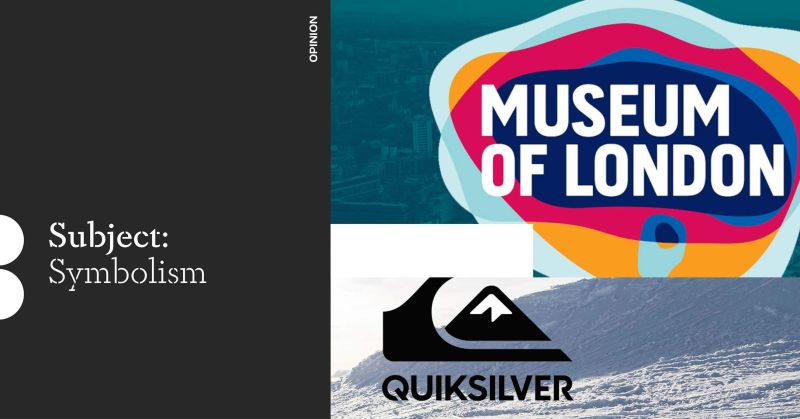
Forward 100 years and logos aren’t just a tool to spark familiarity, but are also now used to convey subliminal messages. Quicksilver’s logo is an interpretation of Hokusai’s ‘Great Wave off Kanagawa’, which is said to represent the irresistible force of nature — apt for a surf brand who are encouraging their customers to be outdoors. The coloured shapes on the Museum of London’s logo represent the changing borders of London throughout history. The logo for the London Symphony Orchestra is not just representative of its initials, it also forms the shape of a conductor.

Each of these logos tell a story — one that doesn’t need to be translated to be understood. But are we regressing? By communicating through symbols and imagery, are we doing a disservice to the development of language?

Have we developed our understanding of communication so greatly that we no longer need language to connect, or have we taken a step 2.5 million years back?

Get in touch with us

+44 7762 344 155

Buildbrands@buxtonthreetwo.com

Instagram Remix: Insta gives its Reels a new twist

24 Fingers

Just when you think you’ve got to grips with the latest video-sharing technology on the web, they go all Etch-a-Sketch on us and give everything a good shake, this month’s being the launch of Instagram Remix. The social media platforms have been falling over themselves to copy each others’ services, from Linkedin finally realising video is A Good Thing, to TikTok’s nifty Duet feature. It’s the latter that prompted Instagram to give its Reels tool, which is barely out of short trousers, an overhaul leading to – drum roll please – the Remix video editing feature. https://platform.twitter.com/embed/Tweet.html?creatorScreenName=24_fingers&dnt=false&embedId=twitter-widget-0&features=eyJ0ZndfZXhwZXJpbWVudHNfY29va2llX2V4cGlyYXRpb24iOnsiYnVja2V0IjoxMjA5NjAwLCJ2ZXJzaW9uIjpudWxsfSwidGZ3X2hvcml6b25fdHdlZXRfZW1iZWRfOTU1NSI6eyJidWNrZXQiOiJodGUiLCJ2ZXJzaW9uIjpudWxsfX0%3D&frame=false&hideCard=false&hideThread=false&id=1377304845204422661&lang=en&origin=https%3A%2F%2F24fingers.co.uk%2Finstagram-remix%2F&sessionId=6a11471eb25c16143a6113e57109a5414dc3689f&siteScreenName=24_fingers&theme=light&widgetsVersion=1ead0c7%3A1617660954974&width=550px

It gives Instagram users the chance to create and post their reaction to a Reel, and while it might have a lot of comedic value, it’s also got great potential for business. 

Picture the scene: a small or medium-sized company posts its reaction to content from a bigger company, which then goes viral, bringing customers to their door and putting their brand on everyone’s lips. Talk about lights, camera, action… 

You can Remix any Reel, as long as the original poster has enabled access. The great thing is, the feature can be turned on and off, either by using the Privacy Settings, which would affect all Reels, or after you share each individual video.

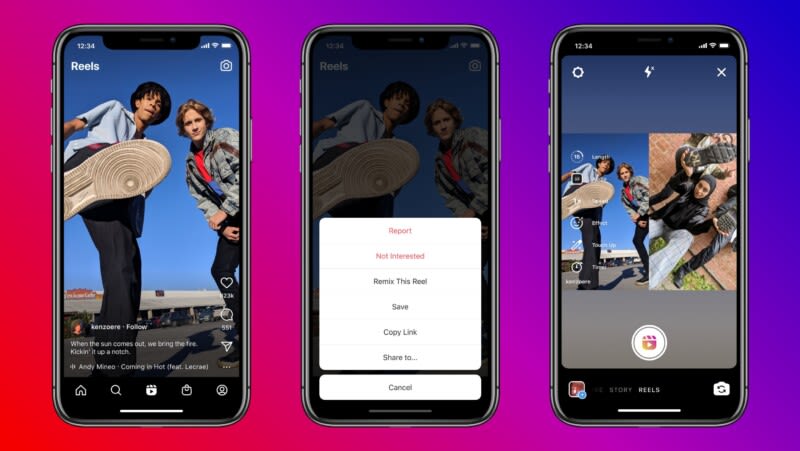
To Remix a Reel, choose the video you want to react to and tap the three dots. “Remix This Reel” should appear if the original Instagram poster has enabled the feature. 

Record or upload your new Reel, which should appear on the right side of the screen. Now’s the time to merrily edit and get creative, adding stickers, a voiceover or change the soundtrack. When you’re happy with your content, write a caption and choose your video settings, then share – easy peasy. 

We reckon Remix Reels could give TikTok’s Duets a run for its money, but we’ll keep you posted. In the meantime, it’s time for our close-up… 

We’re 24 fingers, a digital marketing agency and a proud member of the 42 Club, Brentwood Chamber of Commerce, Excel Business Networking Group, the Trusted Business Community, the Organisation for Responsible Businesses and the Rotary Club of Brentwood à Becket. We help companies who are all fingers and thumbs with their social media grow their business and brand. Book your free strategy call here.

You can view the original blog and other 24 Fingers blogs here

Eight business habits to break

NatWest Business Builder: The Importance of Mindset

Even the savviest of businesses can face stumbling blocks along the way – here’s how to get over them.

From being resistant to change to taking employees for granted, we look at some of the most common business habits you need to break.

1. Not planning for growth

According to Dr Lucy Gill-Simmen, lecturer in marketing at Royal Holloway, University of London: “The old cliché is true that if you’re failing to plan then you’re planning to fail. No small business can afford to do without creating a proper, clear business plan – then when the company is up and running, an equally clear marketing plan.” Have a strategic approach to growth – set targets that are achievable and realistic, have a time frame to reach those targets, and put in place three- and five-year plans (or whatever best suits your business). The details will vary from company to company – but the mistake many SMEs make is to have no clear plan at all.

2. Not focusing on cash flow

A key cause of start-up failure is the cash running out at a critical moment – research suggests it’s the second-biggest reason why a business fails, after lack of demand for the product. To stave off cash worries, develop a head for figures; cash-flow projections and forecasting should become second nature. If they’re not, don’t risk losing the business because of a cash crisis – have someone on the team who’s good with figures, or entrust your finances to a trusted external accountant right from the start.

3. Not making the customer central to the business

As a successful SME, it’s a mistake to think your core business is selling a product or service. What you’re actually doing is meeting a customer expectation. Focusing exclusively on the thing you sell means you can quickly lose customers. “Map the customer journey and ensure you have plans in place to support every step of that,” says Chris Daly, chief executive at the Chartered Institute of Marketing. “That journey starts much earlier than many people realise and extends far beyond pressing the ‘buy’ button or delivering the product.” One bad habit many SMEs routinely fall into is focusing on finding new customers rather than retaining existing ones. “It costs far more to get a new customer than it does to generate repeat business,” Daly says.

4. Not delegating

As a start-up, you may well be a one-person band to begin with, only taking on employees as you grow. But your success as an individual can lead to an unwillingness to let go and delegate effectively. “As an entrepreneur, you’re an independent person by nature,” says Francis Toye, CEO at Unilink Group, a leading UK secure software provider for the criminal justice market. “But this means you can be something of a control freak. For a business to grow, you have to enable others to do things.” And, Toye adds, you have to be genuine about this. “It’s not simply about giving other people tasks, it’s about explaining the issue, then giving people ownership of certain areas. It involves giving them real situations and the responsibility to resolve them – if you hang on to the responsibility, you’re not really delegating.”

5. Doing what you’ve always done

When companies mature, the temptation can be to stick to what you know best. But failing to innovate is another key reason for business failure. The photography pioneer Kodak brought itself to the verge of bankruptcy by refusing to move into digital photography, while more agile competitors saw the near-universal shift in consumer preference for digital over film. A culture of innovation can be hard to foster, but remember that not all innovation has to be the previously unheard-of ‘big idea’. Innovation can be small but beautiful – for instance, tweaks to an existing successful product or small add-ons in customer satisfaction.

“As an entrepreneur, you’re an independent person by nature. But this means you can be something of a control freak. For a business to grow, you have to enable others to do things”

Francis Toye, CEO, Unilink Group

6. Competing on price

You can always cut your prices – but it’s very hard to put them up. Once you’ve put a price in place, you fix a perceived value for your product or service that can be difficult to change in the minds of your customers. Instead, find ways of creating value that aren’t dependent on price. Think of something unique that you offer and emphasise that. Do you have a bespoke element to your product? If so, price accordingly. Or offer good service and after-sales service, or create an experience. Ultimately, believing that you have to be ultra-competitive and as cheap as Tesco or Amazon is a recipe for business failure.

7. Not valuing your employees

Another business cliché is that your employees are your best asset. Again, it’s only a cliché because it’s true. Make the most of your staff – an employee who’s willing to go on training courses, for example, is likely to become a successful, productive and profitable member of the team. If you stifle these ambitions for cost reasons, the good employee will go elsewhere. Bear this in mind when you’re recruiting. “Look for passion,” says Alessandra Sollberger, CEO and founder at health supplements company Evermore. “When recruiting, you’ll spot the people who will be good to take things on and spread magic dust in the business.”

8. Not keeping up with regulations

Red tape is the bane of any SME’s working life, but it’s worth keeping up to date with new regulations that affect you for two reasons. First, they can be an opportunity – for instance, the General Data Protection Regulation (GDPR) is, according to Chris Daly, “an opportunity to clean and clarify your data in such a way you can personalise the strength of the relationship between the customer and the business”. Second, the penalties and the potential damage to your brand from not being legislatively compliant can be severe. Take the recent example of gaming firm William Hill Group, currently facing a package of fines of at least £6.2m as a result of failing to meet its anti-money laundering and social responsibility regulations. It’s a risk you don’t want to take.

Further Reading

  • Five laws of disruptive business thinking
  • How to create the right mood
  • SME Tools: how to be productive

Join the Business Builder Facebook Community here

‘Want to learn more? Register for NatWest Business Builder to view all of their business development tools. Click HERE’ 

How can company values help people be their best selves at work?

Self-Improvement in the workplacePure Recruitment

An organisation’s company values can play a significant role in creating a workplace culture which enables employees to bring their best selves to work and therefore be more engaged, motivated and productive.

Using her own experience as a co-founder of Pure, a values-led organisation, Chief Operating Officer Gill Buchanan has shared some of her top tips on embedding values into a business and the reasons why this makes a positive difference.

Gill said: “In our day-to-day work as professional recruitment specialists for the eastern region, we are increasingly seeing just how much importance candidates place on finding an organisation which genuinely cares and which has a set of values they can really relate to. Companies with clearly communicated values are often the most successful when it comes to competing for top talent and having high levels of employee engagement.

Supporting vision and purpose

A company’s vision and purpose can be used as the inspiration and guidance to set company values. This will help to ensure that they are authentic and can successfully form the basis for the organisation’s culture. For example, when we established Pure, our vision was to create a company which was different to others within the recruitment industry. We wanted our business to focus on developing long-term client and candidate relationships rather than being driven by numbers and KPIs. Having a clear idea of what we wanted to achieve helped us to choose our values. We wanted them to represent everything we believed was important about the way we wanted to work and achieve success. Our six values are: Pure Quality, Pure Teamwork, Pure Supports, Pure Delivers, Pure Rewards and Pure Innovates.

Bringing people together

Employees who feel a sense of belonging are far more likely to be engaged and motivated to go the extra mile for themselves, their colleagues and the business as a whole. Shared values can bring people together whatever their background, interest, age or level of expertise. They enable businesses to celebrate and encourage diversity while still uniting people in day to day behaviours, standards and attitudes. We recognise that our business is a people business. We want to bring our people together and look after them as they are our ambassadors and the ones engaging with our candidates and clients. Our values have helped us to create a culture where great work is rewarded, teamwork is celebrated and everyone is supported to deliver high quality.

Company culture foundations

People spend a lot of time at work, so it is understandable that they will want to be in an environment which is a positive place to be. An organisation’s values can help to achieve this as they set the foundations for a company’s culture and the attitudes and behaviours to develop and maintain it. For example, we have a people-first culture and our Pure Supports company value helps us to achieve this. As well as supporting each other, and our candidates and clients, we want our employees to have the support they need to do their job well. It helps us to shape everything from the equipment and training we provide to the initiatives we put in place to support the mental and physical wellbeing of our team.

Embedding values into day to day business

For company values to make a real difference they need to be brought to life and embedded in day-to-day working practices. This means more than just displaying them as part of the office branding, although that is still a very positive thing to do! They also need to become foundational to the business and genuinely underpin everything. Values can be embedded by making them a part of every aspect of your business from recruitment and onboarding through to referencing them in staff reviews, reward and recognition schemes and L&D plans. They also need to be reinforced and authentically displayed by the leadership team to ensure they flow from the top down.

As part of the leadership team at Pure, our values have given us the basis of establishing a consistency of how we want to do things. Because we all really believe in the values, we can live them while still being our true selves, we don’t have to robotically try and demonstrate them. They have also become a key part of the language we use when talking about our business, from updating our teams internally through to our external communications.

We believe that being able to share our values with our clients and candidates helps to give them a real understanding of what it is like to work with us. The same goes for potential new recruits. Our values help us to explain more about how we have created a culture which differentiates us from other recruitment firms. To help share this with prospective employees, and new recruits, we have put together a Pure book to explain more about our company in a fun, easy and tangible way. After a few months of being part of our team, we also ask new employees to deliver a presentation which includes sharing examples of when they have seen our values being demonstrated day to day. This really helps people to understand why they are so important to us and how they benefit everybody.”

Music and Health – Benefits, Mental Health and Dementia

The healing power of music

Listening to music can be a different experience for everyone, but we can all agree that music has its own power, whether it makes you feel nostalgic, helps you focus or boosts your mood. It is something that enables people to connect with others as well as having a positive effect on your mind, body and soul. However, working in the music industry as an artist could also be damaging to a person’s mental health if they do not seek the support that they need.

 POSITIVE EFFECTS ON YOUR HEALTH

Listening to music releases dopamine which is responsible for the feeling of pleasure. When experiencing tension and then resolution in music, for example a drop in a dance track, it is universally satisfying because different brain circuits are involved in both the anticipatory and achievement process. Dopamine also helps with motivation and studies have shown that listening to music whilst working can increase efficiency. However, this depends on whether you had a choice in the music that you are listening to because if the music is out of your control it can cause stress and the positive effects will not occur because dopamine is released only when music is pleasurable in relation to your mood or personal taste.

Music is also known to increase helpful antibodies such as Immunoglobulin A which aids cells to attack bacteria or germs which are invading the body, meaning that listening to music can increase a person’s immune system. Additionally, it has been proven that listening to music strengthens your heart and lowers blood pressure depending on the type of music that you are listening to. Pop, Rap, Country and Reggae have the same effect on the body as they all get the blood pumping which makes you less calm and happier. Metal is believed to help cope with feelings of depression and stress. Classical music releases stress hormones and causes a dopamine rush.

MUSIC AND MENTAL HEALTH

Music therapy has been proven by Levy (2017) to ‘reduce anxiety and physical effects of stress, improve healing, helps to manage Parkinson’s and Alzheimer’s, reduces depression and other symptoms in the elderly, decreased symptoms of psychological disorders including schizophrenia and finally it improves self-expression and communication.’ Music therapy is thought to help manage mental health problems in the ways listed above as well as help minimise the trauma and disruption associated with hospitalisation.

However, 73% of artists in the music industry suffer with mental illnesses according to Record Union. Although listening to music can relieve issues relating to stress, anxiety and depression, it has been said that working in the music industry as an artist can actually increase these negative emotions in relation to their creation of music. This can be caused by fear of failure, financial issues and also being lonely. Help Musicians UK have launched a 24/7 mental health support service for anyone in the music industry that may need some support or advice. Companies like these are here to support musicians at any time and are working on ways to prevent mental illnesses from becoming so common amongst young independent musicians.

MUSIC AND DEMENTIA

The national Music For Dementia 2020 campaign has recently been announced which will help to encourage patients to find the right services. Its aim is to make music available to everyone who is living with dementia. Music helps to unlock memories and improve the quality of life for a patient. It allows them to communicate beyond words and bond with others which is something music can do for anyone. As previously mentioned, music can make anyone feel nostalgic and dementia patients respond best to songs that they grew up listening to as it can trigger emotions and personal memories which can help ease the behavioural and psychological symptoms of dementia.

The Benefits of Virtual Team Building

Huxley Events

Teams need to feel together more than ever

In these strange and difficult times, team building and team development can seem low down a managers list.

The reality is actually quite different – now more than ever teams need to feel together.

Being apart does not mean you cannot be together, and with working practices changing in so many ways it is really important for leaders and managers to work creatively and sensitively to support their teams.

Remote work can be lonely, disengaged and unproductive; or the complete opposite.

So when people can’t be together what is the alternative?

Virtual Team Building Activities

The Benefits of Virtual Team Building

The benefits of virtual team building include:

  • Improved team collaboration.
  • Better internal communication.
  • Increased job satisfaction.
  • Measurable increase in retention.
  • Happy remote workers.
  • Productive remote teams.
  • Build team culture.
  • Improve your company’s reputation.
  • Give your people something to tell their significant others about
  • Improved relationships between managers and direct reports & more

Team Building Tip:

Every manager cares about the bonds between team members. They should constantly keep everyone involved in the team processes, motivating individuals to be more than just co workers.

Experienced team leaders know how it is important to support each other in a positive, playful manner. And they know that informal team building activities are an appropriate way to improve team spirit and make employees more solid. No matter you work in a software company, e-commerce store or involved in mass media, – team building will enhance your team and business.

The connections within distributed teams are not so easy to establish and maintain. You can encourage them to connect via email. However, to bring them closer, you should think about fun activities.

What is Virtual Team Building?

Virtual team building is the practice that includes organising online games and activities that give remote employees an opportunity to socialise and communicate with co-workers who rarely meet in person, or who they used to see but with changing working practices it is a lot less frequent.

People who work remotely do not have the same opportunities as employees in offices have, they can not interact outside of the scope of work. And now we are going to describe one of the most evident problems of distributed teams.

Any remote worker is typically focused on their own tasks and responsibilities. They are often very individually driven.

Distributed employees rarely get the chance to fully interact with their co workers as if they would in a “regular” office. The lack of organic relationships may lead to remote meetings feeling routine, dry and transactional as they just stick to the agenda. Nobody will know what else to talk about other than work since they never get to chat in the morning.

Unfortunately, very often virtual teams make companies lose successful communication that is so crucial to employee satisfaction and retention. People lose that opportunity to casually bump into each other near the coffee machine and talk about things unrelated to work such as their hobbies, current sports events, home life, or even politics.

You may say that these interactions and small talks mean nothing but they actually impact team performance and motivation a great deal.

Our favourite virtual team building activities include;

 VIRTUALLY KILLED CRIME SCENE TEAM BUILDING ACTIVITY

  • HEALTHY HEART & WORLD COOKERY TEAM BUILDING ACTIVITY
  • THE GOLD RUSH USA ADVENTURE VIRTUAL TEAM BUILDING ACTIVITY
  • ESCAPE THE ROOM VIRTUAL TEAM BUILDING ACTIVITY

When team members feel closer, their morale improves, productivity rises and happiness goes up.

Huxley Events

‘What Can I Do?’: Empowering Ourselves

The Engaging People Company

This year has brought many challenges. Including a new one I hadn’t envisaged.

The technology terrors.

Back in the very early spring, setting up meetings could bring with it previously unentertained anxieties. No sooner would I pop a virtual appointment in my calendar than my mind, like the DeLorean in the Back to the Future movies, would race forward to a few days hence. What if my Wi-Fi drops out? What if my laptop freezes? What if my microphone stops working? What if ditto my camera? What if I can’t get the grips with the settings? What if-

And when not thundering into some future parallel universe, my mind would cast back to times gone by, experiences when the technology had failed. And these unwelcome memories brought very literal reminders of the feelings of worry that they had provoked at the time.

Like a rocking horse, I oscillated unhappily between the ‘what ifs’ of an unknown and increasingly concerning future scenario and past reminisces of previous technological mishaps. And with each new thought, I could feel my anxiety increase until my worry had formed itself into a low, unhappy hum, prodding me annoyingly.

STOP.

What can I do?

I can set up my laptop closer to the Wi-Fi

I can go do a ‘test run.’

I can spend half an hour familiarising myself with the settings.

And that was it. Anything else that might crop up was out of my control. So if my laptop suddenly froze, or the internet dropped out, or if a power cut rudely and abruptly shut everything down, I would deal with it in the moment.

Such a simple, every day and minor challenge. But an example of how by realising we always have a choice, that there is always something we can do – as well as stuff about which we can do nothing – we can mitigate and manage worry and stress: and unnecessary worry and stress at that.

In any situation we have power. The key is realising where our power lies.

What can I control? What can I influence? That’s what we focus on. There is always, always something that we can do – even when we feel like something is happening to us rather than with us.

And what can I do nothing about? This is the stuff that we have to let go. Especially as these are the things on which we exert so much of our mental energy, ultimately bringing worries and stress and anxieties. It’s so often the ‘what if’ aspect of our lives, such as in my case. I had no way of knowing what would happen, I’m not a psychic, so getting lost on that turbulent train of thought was futile. And ultimately, unpleasant.

Because as well as realising where our power lies, focusing on what we can control and influence, is freeing. If I cannot do anything about it, then why I am giving it such head space?

The pandemic which we find ourselves in is a prime example where we can find and focus on the things within our control and influence. What can I control? Washing my hands. Wearing a mask. Keeping my distance. What can I influence? Others behaviours’ through my own.

But I am not an epidemiologist (there’s a word I couldn’t say never mind spell a year ago). I’m not a scientist. I’m not a politician. The pandemic offers many tempting opportunities for ‘what if…’ thinking but is this helpful? Or is it just creating further anxieties in an already challenging time?

Of course, that’s all very well said and done: it’s a pandemic after all. But it can be an invaluable tool. And, when we find ourselves on that slippery ‘what if’ path, we can remind ourselves that the only moment we need to focus on is this one. Right now.

*Oh, and those technology terrors are long since banished. I’m happy to report that I’m more than au fait with a good Zoom quiz these days.

This article was shared with permission from The Engaging People Company

Can we help? We’d love to hear from you. Please do get in touch:

Phone: 07834 578872

Email: michelle@engaging-people.co.uk

Twitter: @engagepeopleco

Staying Energised and Productive Whilst Working Flexibly

Energise Me

It’s been widely reported and commented on that during lockdown and working from home many people have had their productivity affected. Whilst we can technically get more done as we don’t have constant work interruptions and a zero commute, it’s not been that easy for many. 

As we now move into a period for the medium to long-term term where more of us have the freedom to work from home more, which many of you will want to take advantage of and many employers will encourage, let’s look at how we can make sure we stay energised and productive. Over the next few weeks, I’ll unpack all the key aspects of how to optimise your energy whilst working more flexibly.  

Today, let’s look at the issues. What are the pros and cons of working more flexibility?

Pros

Greater flexibility

No Commute

Better for the environment

Potential for better work / life balance

Reduced childcare costsSaving money on commute

Ability to create more killer routines that work for you

Ability to live further away from work

Opportunity to use extra time to exercise, hobbies etc.

You can prepare a proper lunch

Potential to be happier

Cons

Lack of direction 

Lack of informal contact with colleagues leading to less creativity

Hard to stay motivated

Risk of losing work life balance  

Children / distractions

Can get monotonous 

Loss of home space to work

Less commuting can mean less exercise

Lack of Structure

Risk of making more bad food choices

Zoom Fatigue (It’s now a thing)

More flexibility about workstation (for instance working in the garden on a sunny day)

Poor desk setup can cause musculoskeletal issues

Potential to sleep longer as no commute

Lack of clear on / off periods can lead to poor sleep (permanently switched on)

Less contact with colleagues could lead to less conflict 

Harder to resolve conflicts

 More likely to work in “Silos”

Isolation / Loneliness

Loss of commute leading to loss of unwind time

No one to spot when you are having a bad day and offer you tea and sympathy 

Harder to get clear instructions from your manager on work required and to see you’ve done a good job

wonder if when you started reading this post, you hadn’t thought of many of the above?

As I said above, over the coming weeks, I’ll talk about how to overcome the above cons so you can be the top performer, whilst still reaping the benefits.

Before I go though, I just want to talk about hydration. It’s so easy when we are in a different routine to let your hydration go. The impact of physical and mental impairment is significant. You’ll feel tired, you’ll make mistakes, you’ll get grumpy, you’ll forget things.

So think about your hydration strategy. You should be getting a minimum of 6-8 cups of water a day. If you’re not already, how could you incorporate staying hydrated into your flexible working routine? I would suggest at the very minimum, an investment in some water bottles, so you can have water with you whether it’s a home day, a work day or a travel day. 

If you focus on implementing this one habit this week, by the time you read my next blog, you’ll be more resourceful and ready to act on next week’s blog when we cover off some the above cons around lack of structure to your day.

Ian Hacon

PS, do let us know if you think we’ve missed any of the pros and cons.  

Energise Me

Hethel Innovation Case Study: Emma Zangs

Identifying New Opportunities in Business

What do pitching for investment, handling important meetings, and speaking at events all have in common? They require confidence. An underappreciated tool in a businessperson’s arsenal, confidence has the ability to instantly transform, to create, to develop. Hethel Innovation recently worked with Emma Zangs to develop her business, providing coaching, mentoring and information services to allow us all to activate our inner, most-confident, selves.

Emma originally worked with the Hethel Innovation Business Development to teach them techniques that they could use to deliver training, handle important meetings, and talk at events more confidently. The sessions, which were full of energy, presented the team with a variety of great tools that allowed the team to improve how they retained information, remember lines, and process body language. (My favourite technique was the forest!)

Following the sessions, Emma Zangs worked through the Activate: Lean Startup process. Designed for early stage businesses, Emma was able to learn more about the value she was creating for her customers, how she could streamline her operations, and how she can grow the business in the future.

Throughout Activate, Emma was able to identify new opportunities for the business, as well as discover ways to free up her time on non-value adding activities and provide a greater level of service to her customers. The completion of tools, including a Customer Journey, Operations Map and Business Model Canvas, allowed Emma to develop a ‘Tutorials Page’ that would display information, guides and tools for customers looking for an instant confidence boost.

Desk-based research carried out by the Hethel Innovation team also provided Emma with information on a number of new customers that aligned with her target customers. Combined with the Customer Journey tool, Emma will be able to approach the prospective clients more effectively.

Following Activate, a Vision Orbit was created to allow Emma to realise how she could grow the business over the coming years. The tool highlighted Emma’s ambition to take on new members of the workforce, enter new markets and develop new services. Continued catchups will allow Emma to share her progress and allow the Hethel Innovation team to brainstorm solutions to any opportunities and challenges that come her way.

Emma said of her experience working with Hethel Innovation:

‘The Activate: Lean Startup Process allowed me to stop, reflect and analyse what worked and did not work in my business. The regularity and the flow of the process were helpful to navigate the uncertain times of making decisions during a pandemic. I now can refer to the resources when needed in the future, but what makes Hethel innovation programme so unique is the time and dedication they take to truly listen and help the business they are working with. In such isolating times, I feel supported by the team as their door is always open.’

Emma Zangs

To learn more about Emma Zangs and the amazing work she delivers to allow others to realise their full potential, visit Emmazangs.com

We think you may also find this interesting: Hethel Innovation Case Study: Dread Decks

Five flaws that could be your biggest strength in business

NatWest Business Builder: Self Awareness

© Getty Images
© Getty Images

It takes a certain set of qualities to be a great entrepreneur, but not all of them are what you might expect. Here, we speak to SME owners about the personal ‘flaws’ that have aided their success.

Characteristics that some people might see as flaws could actually serve you and your business well, providing you know how to use them properly. Below are five prime examples of business-friendly flaws and a little insight from those who’ve used them to their advantage.

1. Stubbornness

Stubbornness is a trait most people try to avoid in their personal relationships, but as a business owner it could help to keep you on the right track.

Keith McNiven is the founder of London-based personal training company Right Path Fitness and has no problem admitting his flaw. “I find it hard to accept when I’m wrong and when I make a plan, I want to see it through no matter what,” he says. “Being stubborn isn’t something I’d put at the top of my social profiles, but it has definitely helped me to develop my business.”

In particular, McNiven’s one-track determination led him to take bigger risks when he started out. “Not content with starting a new business, I also decided that I’d move to London and set it up there,” he says. “It was really hard at first because I knew virtually no one and had left all of my useful fitness contacts back in the north, but my stubbornness saw me through. I was absolutely determined that I was going to make the business work and see through my original plan – and in the end I did.”

2. Introversion

You’d be forgiven for assuming that to be successful in business, you need to be confident and outgoing. After all, self-promotion means putting yourself out there and talking to people. But according to entrepreneur Barry Moore, being introverted needn’t be a barrier as long as you play to your own strengths.

Moore’s Guildford-based holiday agency Party Hard Travel recently announced triple-digit growth for the third year in a row, and he’s confident that his own quiet nature has contributed to the company’s success so far.

“When I was younger, I used to hate being introverted,” he says. “My social skills always seemed behind everyone else’s. I was normally the kid in the corner who wouldn’t say a word to anyone. I used to think it was a huge flaw.

“But looking back at it, the experience I had to go through was amazing because it enabled me to accept being different to the crowd. Rather than being a social person it allowed me to develop other skills.

“I read and study a huge amount, and that’s something the extrovert people I know really struggle with. I’d rather sit behind a computer and play around with numbers than be out and about speaking to people. I really enjoy those behind-the-scenes jobs that a lot of people don’t enjoy doing. This enables us to improve Party Hard Travel and continue to grow and expand.”

3. Obsession

In most areas of life, being obsessed could be considered a negative thing, but in business it often translates as determination – a trait that’s synonymous with success.

That’s certainly the case at West Sussex-based IT firm Ingenica Solutions. “I have been described as a perfectionist, obsessive, determined and competitive and while I would sometimes argue about those descriptions, I have been guilty of them all in the process of starting a business,” says the company’s founder and chief operating officer, Nicola Hall.

“Being stubborn isn’t something I’d put at the top of my social profiles, but it has definitely helped me to develop my business”

Keith McNiven, founder, Right Path Fitness

“But I feel those traits are part of why Ingenica Solutions has been successful; I have been obsessed with the business and utterly determined to make it a success – we’ve just had to make sure that’s all tempered with a bit of fun and humour.”

4. Impatience

No entrepreneur wants to wait for their company vision to become reality, but it can take years of hard work to even get close. One business owner who’s found a positive use for his own impatience is Richard Hayes, CEO and co-founder of online broker Mojo Mortgages.

“In some instances, my impatience has had a detrimental effect on my business,” he says, “but it has also driven me to innovate more quickly, because it just wasn’t feasible to wait for the scale of innovation that I wanted when I started and still want now.”

Hayes found a match for his impatience in a product development team that he says has been crucial to the company’s success. “I realised I could turn my flaw to my advantage after I was introduced to product development,” he explains.

“After realising the opportunity that developing our technology would bring, I knew immediately that working with a product development team would suit my impatience, in that I could effectively deliver through them.”

Asked what advice he’d give other flawed entrepreneurs, Hayes says: “It’s important to ensure that your flaws – in my case impatience – never have a negative impact on customer experience.”

5. Cautiousness

Impatience might be conducive to success for some, but a cautious nature serves Sarah Watkinson-Yull – founder and creative director of London-based retailer Yull Shoes – well, especially when it comes to money.

“I am overly cautious with credit,” she says. “I turn down orders from companies I am uneasy about as not being paid, or even being paid late, can have a huge impact on cash flow. I would rather not have the order in the first place.”

Watkinson-Yull’s cautiousness has helped her build a successful brand in an unquestionably busy sector, and it’s not the young entrepreneur’s only useful flaw: “I nag a lot,” she says. “My pet hate is when I ask someone to do something and it doesn’t get done, but me being constantly on top of everything and everyone means nothing gets forgotten.”

Further Reading

  • Management strategies: the six questions you need to ask your staff
  • Leadership lessons: how to be a good boss
  • Management strategies: why mentoring matters

We have a thriving and diverse community of thousands of entrepreneurs from multiple sectors, backgrounds and skill sets helping you to connect with the right people at the right time. No matter whether you’re looking to upskill, get feedback, engage with new people or simply observe, there’s something for everyone.

‘Want to learn more? Register for NatWest Business Builder to view all of their business development tools. Click HERE