Jane Hannah is back to join us from Healthier, Happier, You to discuss the three M’s: movement, mindset and motivation whilst discussing how being out in nature and walking have been pivotal for her mental health.
Jane has a wealth of knowledge in mindset and will be talking to us about her journey through her mental health after being furloughed from her full-time job last year and creating a new mindful business.
Oliver from Treekly will also be joining us to discuss the new app launch and how by just walking 5,000 steps five times a week we can be protecting out planet and minimising our carbon footprint.
In this week’s episode, I am joined by Monika Radclyffe, Head of Business Incubation & Growth for the University of Bristol & SETsquared Bristol Centre Director.
Monika came on to the podcast to share all the reasons why she does the job she does every single day!
Monika has worked closely with entrepreneurs across the globe for the last 5yrs and came on to shed some insight into what drives & inspires these entrepreneurs to bring positive change to the world.
She has also been heavily involved with addressing diversity issues across the tech sector and has launched multiple initiatives to help increase the percentage of women founders.
Like others who have been on the podcast, Monika has experienced many challenges in her life, both in business & personally, touching on some of these stories throughout the podcast.
In these stories, Monika shared valuable pieces of advice which have helped her in these moments, sharing her most valuable piece of advice; never stop learning.
The Purpose of this Podcast is to help individuals who have really struggled to find their way through this pandemic. We draw on our personal stories and accounts to help people understand and realise that they are not alone and that we are all in this together.
If you would like to find out more about Monika and the work she does, check her out below:
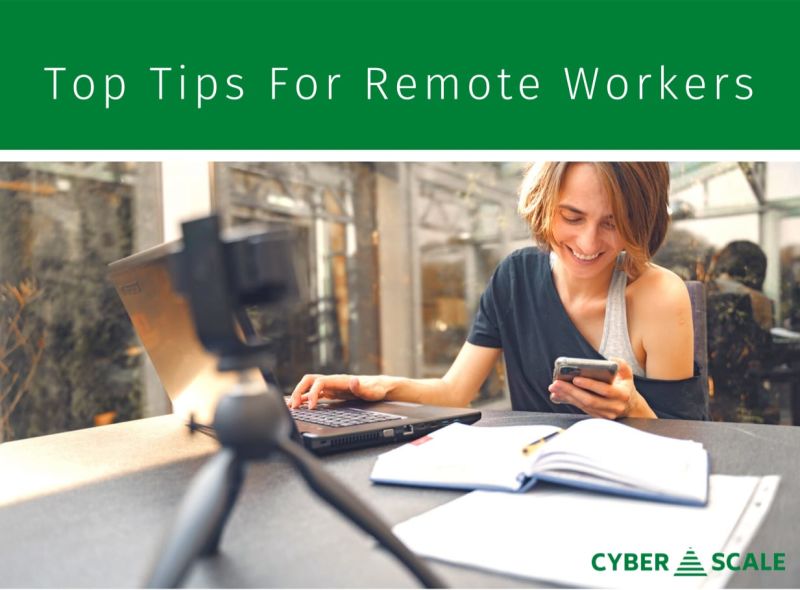
If like many, part of your ‘new normal’ is spending more time working away from the office then you are likely being asked to take more responsibility for keeping your company’s devices and data secure when working remotely. So what can you do to make sure you keep working securely? Here are some top tips and best practices to help you play your part in keeping you, your colleagues and your company protected.
Your Leadership team and IT department can do so much with technical solutions, but you can play a huge part too;
Be aware of your surroundings
If you’re working in a public area or even in a shared house, you can never be sure who is watching or listening-use a screen filter to stop “shoulder surfers” and use a headset when on calls. Even when working from home you need to be aware-if using a webcam, what can be seen on your desk or around you?
Be aware of your desktop
Sharing your desktop is a great way to present or collaborate via video conference calls-but take steps to ensure you don’t accidentally share too much! Aside from potentially being rather awkward, this could be a huge security risk. Close applications you’re not using and try to share specific applications rather than your entire desktop where possible to make sure nothing sensitive is exposed.
Keep Business and Personal separate
If you have a corporate laptop then use it solely for work-similarly keep your personal devices personal. If you don’t have a dedicated work device try and differentiate your use-use a VPN if directed to do so to keep business communications private and disconnect when using your device for home use. If you have a shared device take extra care-don’t store any work documents on the device if you can help it, use separate password-protected accounts for your work and make sure you lock the screen, or log out when not in use.
If you can, keep your Business and Personal devices on different WIFI networks by setting up a separate SSID just for your work kit to prevent access to work resources from personal devices.
Choose your networks carefully
Be cautious when connecting your business devices-laptops or smart phones -to any WIFI networks. Whether a home or public network, there’s no way of knowing what other users connected to the same network might be accessing on their devices, or how protected their devices are. Malware on someone else’s device could easily spread to your work device on the same network so choose carefully, but always assume it’s insecure and take appropriate steps to protect your device regardless. Public networks are commonly compromised to enable intercepting network data –make sure you are using your company VPN if on a public network.
Be aware of company policies
Your company should have made available to you all relevant security policies, and these may be different now as they are when working from the office. It’s up to you to make sure you understand and comply with all policies-there may be repercussions if you don’t so if you can’t comply with any written policies for whatever reason, speak to your manager and let them know.
Secure your home network
You should make sure your home WIFI network is encrypted, and also check the password used to access your internet router-if you haven’t changed it then chances are it could be a default or weak password leaving it wide open to attack. A breach could expose all your devices and all communications in and out of the internet, and a default or weak password is like leaving the key in a locked door.
If you are unsure if or how you should change the password speak to your company IT contact or your Internet Service Provider directly who should be able to assist.
Install and update anti-virus software
Anti-virus software is important to have on all of your devices regardless of what you use them for, but if you are using your own device for work then it’s critical. Prevent malware from compromising your own and your employer’s systems by installing Anti-virus software and keeping it up to date.
Beware Covid-19 related scams
You are probably constantly inundated with phishing emails and other scams, even if you don’t realise it, but cyber criminals are exploiting the current situation with Covid-19 to make their scams seem more realistic. If you get emails with any suspicious links or attachments related to Covid-19, don’t open them or click any links-contact your IT resource to check it out if you’re not sure.
Make sure your programs and systems are up to date
Programs and operating systems are updated regularly to fix bugs and make them more secure. Make sure your operating system is running the latest version-enable automatic updates to make sure your systems are as safe as possible-and don’t forget your Internet router, this also needs updating with the latest firmware to help keep it secure.
Small, medium or micro-businesses with less than 250 employees
Self-employed individuals
Norfolk postcodes
Certain Sectors
Visitor Economy – Tourism/Leisure/Hospitality
Visitor Economy – Culture/Entertainment
Independent retailers
Food & Drink businesses
Agricultural business / Agritech
Digital Technology businesses
Businesses that can demonstrate that their work supports those above
The only requirement is that training must be used to enhance productivity, efficiency or effectiveness, and be proven to assist with employee retention.
This is a fantastic opportunity to get our people skilled and our businesses up and running – we would love to hear from you
For more information or a chat about eligibility, how to apply or what we can offer, please contact us… we are always happy to help
Turning Factor are taking a leading role in shaping the future of the local business community. Turning Factor, Strategic Partners of the Norfolk Chambers, demonstrate their position as exceptional leaders with a commitment to supporting growth for the Norfolk business community. See more about Patron & Partners here >
The mere mention of the word ‘discrimination’ in the workplace is enough to strike fear into the hearts of UK employers. Once the fright takes hold, usually fuelled by high profile case law judgements and seemingly mega pay-outs (discrimination payments are uncapped), the task to make sure that all your HR Policies are tightened and up to scratch lands in someone’s (generally your HR Team) lap.
However, when it comes to an employee successfully winning a claim of indirect discrimination, then the very act of standardising your people policies where everyone is treated equally, could well back fire.
However, when it comes to indirect discrimination it is not always so obvious, sometimes resulting in employers inadvertently discriminating through “blanket” policies or work practices.
So, what is the difference between direct and indirect discrimination?
Indirect discrimination is usually less obvious than direct discrimination and is normally unintended.
Generally, it occurs when a rule or plan of some sort is put into place which applies to everyone, and is not in itself discriminatory but it could put those with a certain protected characteristic at a disadvantage.
The law states that indirect discrimination can occur when a ‘provision, criterion or practice’ (PCP) involves all these four things:
The ‘PCP’ is applied equally to a group of people, only some of whom share the protected characteristic.
It has (or will have) the effect of putting those who share the protected characteristic at a particular disadvantage when compared to others who do not have the characteristic.
It puts, or would put, the person at that disadvantage.
The employer is unable to objectively justify it.
Discriminatory policies can be formal or informal, and include one-off decision, long-term plans and rules that have been decided but are yet to be implemented.
The important point to note is that if a policy applies to everyone in the same way, it is neutral, but it if applies to everyone and has a worse effect on some than others, it is indirectly discriminatory. Which if we’re honest, makes it a bit of a minefield when attempting to introduce or update our policies.
How to avoid claims of indirect discrimination
As an employer you may justify your policy or procedure by showing that it is ‘objectively justified’. There must be a real business need, for example, health and safety. However, this is often not enough. You must also be able to show that the PCP is a proportionate means of achieving this legitimate aim. In other words, you must show that you have thought about the effects of your practices or measures and considered that this was the least discriminatory way to do things.
Historically, the onus has been on the employee to prove that indirect discrimination is happening or has happened, and proving indirect discrimination has always been difficult for claimants. The employer always has the defence of justification and it was thought that if the organisation can show there is a good reason for its policy, it is not indirect discrimination. This is known as objective justification.
However, in the cases of Essop v Home Office and Naeem v Secretary of State for Justice, the Supreme Court held that an employee doesn’t have to explain why a PCP disadvantages a particular group in order to show indirect discrimination.
In many instances, it will be obvious why one group is disadvantaged, but when there is no obvious explanation why an employer’s PCP disadvantages a particular group as was demonstrated in these two joined cases, the Supreme Court clarified the precise legal test to be used and particularly whether a claimant needs to establish the reason why the treatment they received discriminated against them.
In their judgement, the Supreme Court ruled that unlike direct discrimination, indirect discrimination does not expressly require a causal link between the less favourable treatment and the protected characteristic. Instead, it requires a causal link between the PCP and the particular disadvantage suffered by the group and the individual.
Hidden barriers
The reason for this is that, in dealing with hidden barriers which are not easy to anticipate or to spot, indirect discrimination aims to achieve a level playing field, where people sharing a particular protected characteristic are not subjected to requirements which many of them cannot meet but which cannot be shown to be justified.
It is always open to an employer to show that their PCP is justified. The issue of whether a policy or practice can be objectively justified will often be the most important consideration when implementing change or defending a later claim.
“Excellent, professional service.”
“It has been one of the best decisions made by the company to start working with MAD-HR this year.” Read the full review
Wise employers
As the Supreme Court observed, “a wise employer will monitor how his policies and practices impact upon various groups and, if he finds that they have a disparate impact, will try and see what can be modified to remove that impact whilst achieving the desired result”.
The practical effect for employers following the Supreme Court’s ruling is that employment tribunals are able to move more swiftly to the issue of justification, which should be at the forefront of employers’ minds when creating or reviewing workplace policies and rules.
Therefore, employers should take note and always ensure they have thought through why particular policies are being applied. Consideration should be given to any impact they may have on particular groups and look for any statistical discrepancies which could potentially be used to support a claim for indirect discrimination.
However, while equality of policy in the workplace is important, perhaps consider adopting a more flexible and individualised approach to staff to ensure that no-one is adversely affected by a certain policy or rule, through measures such as discrimination impact assessments. This might just minimise the chances of indirect discrimination occurring in your workplace.
If you would like to discuss how we can Make ADifference to your business through our provision of HR services, please get in touch on 01473 360160 or visit our contact page here.
You can view this original article and other content at Mad-hr.co.uk
The UK jobs market for specialist positions remained extremely competitive and fast-moving throughout 2019. Research from the British Chamber of Commerce revealed that in the first quarter of the year, over half of UK businesses (53%) had intended to recruit but nearly three-quarters (73%) then struggled to find the right people. It shared similar findings in quarter three, with three quarters of UK businesses still reporting difficulties finding the talent and skills they needed.
At the moment, this candidate-driven market looks set to continue into 2020. So what are the strongest weapons employers can use to boost their armoury and win the war for talent?
A competitive offering
One of the immediate things people may think of is salary. If you pay the most, will you come out as the winners? Our findings and day-to-day experience show this isn’t necessarily the case. Employers do need to be prepared to offer a fair and competitive salary, and they can use our Compare my Salary tool to benchmark what they are offering against similar roles in the eastern region. However, a happy and fulfilling place to work relies on much more than just how much people are paid. This is good news for smaller employers, charities and not-for-profit organisations in particular. There are still many ways in which they can compete against the finances of larger businesses. For example, benefit packages show an investment in people and can demonstrate the company’s values and culture. From a financial perspective, they can save employees significant amounts of money and provide financial security and reassurance in times of distress, such as if they were to become too ill to work. Wellbeing benefits have the combined advantage of helping people to stay fit and healthy while also offering real support if ever needed, like fast access to medical services or counselling. Plus lifestyle benefits including agile working, opportunities to reduce commuting times or additional annual leave, can all help people to balance their work and home life. All of these can be significant points of difference when high-calibre employees are choosing between two possible job offers.
Quick and positive recruitment experiences
Good people are being snapped up extremely quickly, so it tends to be businesses which can act fast that come out on top. Does this mean they are putting themselves at risk of bad hiring decisions by rushing? When advising our clients on the need for speed we still reinforce the fact that there should be a robust process in place. What we are emphasising is the necessity to prioritise interviews and decision making, and to remove any unnecessary complications. Otherwise there is a real risk that a preferred candidate will already have accepted another job. Plus, more so than ever in a candidate short market, recruitment becomes a two way process. The best people will have the confidence to walk away from an organisation if they are not impressed. Employers may not have control over how many other interviews a good candidate is going for, but they do have the chance to check that they are delivering the best possible experience at every stage and are not missing any opportunities to highlight why people should want to work for their organisation.
Employer brand and strong recruitment marketing
We see every day how businesses that haven’t genuinely invested in their employer brand find it harder to attract the best people. This is reinforced by a recent LinkedIn survey which revealed that 75% of applicants now consider an employer’s brand before even applying for a job. Through our Best Employers Initiative and sponsorship of Best Employer awards, it has been fantastic to see so many organisations in our region genuinely investing in creating a strong employer brand. It is clear that business leaders are recognising the importance of this when it comes to competing for, and retaining, high-calibre employees. Those who are passionate about developing their organisation’s workplace environment, engagement levels and overall employer brand can register to join us at the launch event of Best Employers Eastern Region 2020. This will once again be a great opportunity to come together with like-minded business leaders and to share expert advice and best practice examples. Once businesses have a strong employer brand in place, they can go on to adopt a marketing approach to recruitment. Every touchpoint a prospective employee may engage with is a chance to actively promote the positives of working for your company and to share more about your culture and employee value proposition.
An open mind
With candidates in high demand, it can sometimes be almost impossible to find someone who ticks every single box. Does that mean employers should put recruitment on hold and keep waiting for the ‘perfect’ candidate? We are working with clients to review what really is essential criteria and what is just desirable. After all, what makes a really good, talented employee? In most cases it is about the right attitude. If you can find someone who is the right fit for your organisation, who shares your values, is engaged with your organisation’s purpose and who will thrive in your workplace culture, you are likely to have found a high-calibre recruit. Additional skills and experience can be learnt on the job, roles can be adapted and different working patterns can be offered to suit someone’s situation. Employers who are open minded to the idea of making a role work for the right person or investing in training and developing people to meet all the criteria have the opportunity to create their own top talent. In return, they are more likely to be rewarded with engaged, loyal employees who want to stay and progress with the business. Considering that retaining high calibre employees is currently just as much of a challenge as recruiting them, the long-term benefits should not be underestimated.
Seek expert support
When businesses are trying to hire specialist positions in a tough recruitment market, our consultants can really add value and make a difference. Our specialist sector knowledge is the primary reason why companies choose to work with us. As expert consultants in their different disciplines, our team invests time in developing and maintaining a strong network of contacts. This dedicated focus connects us to the best people and enables us to source high-quality and ‘hard to find’ candidates.
An organisation’s company values can play a significant role in creating a workplace culture which enables employees to bring their best selves to work and therefore be more engaged, motivated and productive.
Using her own experience as a co-founder of Pure, a values-led organisation, Chief Operating Officer Gill Buchanan has shared some of her top tips on embedding values into a business and the reasons why this makes a positive difference.
Gill said: “In our day-to-day work as professional recruitment specialists for the eastern region, we are increasingly seeing just how much importance candidates place on finding an organisation which genuinely cares and which has a set of values they can really relate to. Companies with clearly communicated values are often the most successful when it comes to competing for top talent and having high levels of employee engagement.
Supporting vision and purpose
A company’s vision and purpose can be used as the inspiration and guidance to set company values. This will help to ensure that they are authentic and can successfully form the basis for the organisation’s culture. For example, when we established Pure, our vision was to create a company which was different to others within the recruitment industry. We wanted our business to focus on developing long-term client and candidate relationships rather than being driven by numbers and KPIs. Having a clear idea of what we wanted to achieve helped us to choose our values. We wanted them to represent everything we believed was important about the way we wanted to work and achieve success. Our six values are: Pure Quality, Pure Teamwork, Pure Supports, Pure Delivers, Pure Rewards and Pure Innovates.
Bringing people together
Employees who feel a sense of belonging are far more likely to be engaged and motivated to go the extra mile for themselves, their colleagues and the business as a whole. Shared values can bring people together whatever their background, interest, age or level of expertise. They enable businesses to celebrate and encourage diversity while still uniting people in day to day behaviours, standards and attitudes. We recognise that our business is a people business. We want to bring our people together and look after them as they are our ambassadors and the ones engaging with our candidates and clients. Our values have helped us to create a culture where great work is rewarded, teamwork is celebrated and everyone is supported to deliver high quality.
Company culture foundations
People spend a lot of time at work, so it is understandable that they will want to be in an environment which is a positive place to be. An organisation’s values can help to achieve this as they set the foundations for a company’s culture and the attitudes and behaviours to develop and maintain it. For example, we have a people-first culture and our Pure Supports company value helps us to achieve this. As well as supporting each other, and our candidates and clients, we want our employees to have the support they need to do their job well. It helps us to shape everything from the equipment and training we provide to the initiatives we put in place to support the mental and physical wellbeing of our team.
Embedding values into day to day business
For company values to make a real difference they need to be brought to life and embedded in day-to-day working practices. This means more than just displaying them as part of the office branding, although that is still a very positive thing to do! They also need to become foundational to the business and genuinely underpin everything. Values can be embedded by making them a part of every aspect of your business from recruitment and onboarding through to referencing them in staff reviews, reward and recognition schemes and L&D plans. They also need to be reinforced and authentically displayed by the leadership team to ensure they flow from the top down.
As part of the leadership team at Pure, our values have given us the basis of establishing a consistency of how we want to do things. Because we all really believe in the values, we can live them while still being our true selves, we don’t have to robotically try and demonstrate them. They have also become a key part of the language we use when talking about our business, from updating our teams internally through to our external communications.
We believe that being able to share our values with our clients and candidates helps to give them a real understanding of what it is like to work with us. The same goes for potential new recruits. Our values help us to explain more about how we have created a culture which differentiates us from other recruitment firms. To help share this with prospective employees, and new recruits, we have put together a Pure book to explain more about our company in a fun, easy and tangible way. After a few months of being part of our team, we also ask new employees to deliver a presentation which includes sharing examples of when they have seen our values being demonstrated day to day. This really helps people to understand why they are so important to us and how they benefit everybody.”
Through Pure’s day-to-day recruitment work supporting clients and candidates, the team sees first-hand how employers and HR personnel are adapting and evolving their recruitment approach to suit the current candidate-driven market. Here Gill Buchanan, COO at the professional recruitment specialists, looks at some of the emerging trends and recruitment actions which are becoming a top priority as employers look to compete and stand out.
Employer brand
A LinkedIn survey revealed 75% of applicants now consider an employer’s brand before even applying for a job, which is why we are seeing more organisations genuinely investing in creating a strong employer brand based on the company’s vision, values and culture. A commitment to creating an attractive employee value proposition will help businesses to attract, retain and engage the best people. And a strong employer brand now goes beyond just a competitive salary, and even learning and development, career progression and well thought out perks and benefits. There is a growing trend for candidates to also base their decisions on ethical and lifestyle factors including how socially responsible a business is and its workplace environment and culture.
Competitor research
As businesses recognise the significant impact employer brand can have on the ability to recruit the best people, more employers are taking the time to research their industry and local recruitment market to understand how they can compete and stand out. Our expert consultants are regularly asked for advice based on our wealth of experience within our specialist sectors and our knowledge of the Eastern region. Employers are keen to be better equipped to be able to share with candidates what they can offer them in return for their knowledge, experience and expertise, compared to a competitor who may also have made them a job offer.
Flexibility
While offering flexible working opportunities is ultimately part of an employer brand, it is becoming such a competing factor that it warrants a section of its own. People realise that they can still be ambitious without having to be in an office for over 12 hours a day and are looking for roles which can give them the time and flexibility to do things outside of work. Employers are also recognising that they are risking missing out on, or losing top talent from the organisation, if they can’t provide business-suitable flexibility for employees such as return to work parents or those with caring responsibilities.
Recruitment marketing
Having researched the market and created an attractive employer brand, more precedent is being put on actively marketing this to both current and future employees. Businesses are promoting themselves as employers people want to work for by communicating their employer brand across multiple channels and in a variety of different, engaging ways. A simple newspaper advert or online advert is unlikely to be enough to stand out, recruitment materials are proactively showcasing company culture and employee value proposition and are backed up with engaging content on dedicated website careers sections, social media activity, employee-related news, blogs and case studies and videos about working for the company.
Employee referrals
Another LinkedIn survey revealed that candidates are three times more likely to trust a company’s employees when looking for credible information on what it is like to work there. Employees have always been an organisation’s biggest advocate and more businesses are harnessing this by implementing employee referral schemes, engaging them to provide positive online reviews, featuring real-life employee case studies in print and videos, and enabling employees to act as inspiring role models through work with local schools, colleges and universities.
Strategic recruitment
Rather than potentially competing for talented candidates unnecessarily, businesses are taking a more strategic approach and only going out to market to buy new talent when there is a clear need for immediate, long-term skills and experience. Instead many businesses are planning ahead and using skills audits to identify what they need to meet the company’s goals and looking to build their own talent and expertise from within, or to recruit people they can see potential in and committing to training them to become the full package. Alternatively, they are looking to borrow expertise on a temporary basis, capitalising on the growing gig economy which has opened up the pool of talent available to businesses for short-term projects.
Recruitment speed
Businesses are increasingly conscious that it is often the first organisation to the finish line who will win the race to employ top talent. They are reviewing their recruitment processes to make them as agile, while still effective, as possible and are prioritising time to meet with high-quality candidates rather than risking losing out to a business which has moved faster.
Candidate experience
Organisations are also increasingly reviewing the candidate experience they provide at every stage of the recruitment journey, from initial clear information through to the interview and the communication of final decisions. A company’s preferred candidate is more likely to accept their job offer, over that of a competitor, if they have had a positive experience throughout. Plus any high calibre candidates who were not successful will still view the organisation positively, be more likely to apply again and to recommend the business to others; maintaining the company’s reputation and its ability to attract top talent.
A good recruitment consultant will have their finger on the pulse of the industry they specialise in, and the local market, and will be able to provide valuable insight into any shifting trends. Here at Pure, our expert consultants don’t just support clients in finding the right person for the role they also provide expert market insight, employer branding advice, talent planning support and help to create a positive candidate experience.
Through Pure’s day-to-day recruitment work supporting clients and candidates, the team sees first-hand how employers and HR personnel are adapting and evolving their recruitment approach to suit the current candidate-driven market. Here Gill Buchanan, COO at the professional recruitment specialists, looks at some of the emerging trends and recruitment actions which are becoming a top priority as employers look to compete and stand out.
Employer brand
A LinkedIn survey revealed 75% of applicants now consider an employer’s brand before even applying for a job, which is why we are seeing more organisations genuinely investing in creating a strong employer brand based on the company’s vision, values and culture. A commitment to creating an attractive employee value proposition will help businesses to attract, retain and engage the best people. And a strong employer brand now goes beyond just a competitive salary, and even learning and development, career progression and well thought out perks and benefits. There is a growing trend for candidates to also base their decisions on ethical and lifestyle factors including how socially responsible a business is and its workplace environment and culture.
Competitor research
As businesses recognise the significant impact employer brand can have on the ability to recruit the best people, more employers are taking the time to research their industry and local recruitment market to understand how they can compete and stand out. Our expert consultants are regularly asked for advice based on our wealth of experience within our specialist sectors and our knowledge of the Eastern region. Employers are keen to be better equipped to be able to share with candidates what they can offer them in return for their knowledge, experience and expertise, compared to a competitor who may also have made them a job offer.
Flexibility
While offering flexible working opportunities is ultimately part of an employer brand, it is becoming such a competing factor that it warrants a section of its own. People realise that they can still be ambitious without having to be in an office for over 12 hours a day and are looking for roles which can give them the time and flexibility to do things outside of work. Employers are also recognising that they are risking missing out on, or losing top talent from the organisation, if they can’t provide business-suitable flexibility for employees such as return to work parents or those with caring responsibilities.
Recruitment marketing
Having researched the market and created an attractive employer brand, more precedent is being put on actively marketing this to both current and future employees. Businesses are promoting themselves as employers people want to work for by communicating their employer brand across multiple channels and in a variety of different, engaging ways. A simple newspaper advert or online advert is unlikely to be enough to stand out, recruitment materials are proactively showcasing company culture and employee value proposition and are backed up with engaging content on dedicated website careers sections, social media activity, employee-related news, blogs and case studies and videos about working for the company.
Employee referrals
Another LinkedIn survey revealed that candidates are three times more likely to trust a company’s employees when looking for credible information on what it is like to work there. Employees have always been an organisation’s biggest advocate and more businesses are harnessing this by implementing employee referral schemes, engaging them to provide positive online reviews, featuring real-life employee case studies in print and videos, and enabling employees to act as inspiring role models through work with local schools, colleges and universities.
Strategic recruitment
Rather than potentially competing for talented candidates unnecessarily, businesses are taking a more strategic approach and only going out to market to buy new talent when there is a clear need for immediate, long-term skills and experience. Instead many businesses are planning ahead and using skills audits to identify what they need to meet the company’s goals and looking to build their own talent and expertise from within, or to recruit people they can see potential in and committing to training them to become the full package. Alternatively, they are looking to borrow expertise on a temporary basis, capitalising on the growing gig economy which has opened up the pool of talent available to businesses for short-term projects.
Recruitment speed
Businesses are increasingly conscious that it is often the first organisation to the finish line who will win the race to employ top talent. They are reviewing their recruitment processes to make them as agile, while still effective, as possible and are prioritising time to meet with high-quality candidates rather than risking losing out to a business which has moved faster.
Candidate experience
Organisations are also increasingly reviewing the candidate experience they provide at every stage of the recruitment journey, from initial clear information through to the interview and the communication of final decisions. A company’s preferred candidate is more likely to accept their job offer, over that of a competitor, if they have had a positive experience throughout. Plus any high calibre candidates who were not successful will still view the organisation positively, be more likely to apply again and to recommend the business to others; maintaining the company’s reputation and its ability to attract top talent.
A good recruitment consultant will have their finger on the pulse of the industry they specialise in, and the local market, and will be able to provide valuable insight into any shifting trends. Here at Pure, our expert consultants don’t just support clients in finding the right person for the role they also provide expert market insight, employer branding advice, talent planning support and help to create a positive candidate experience.
Teams need to feel together more than everHuxley Events
In these strange and difficult times, team building and team development can seem low down a managers list.
The reality is actually quite different – now more than ever teams need to feel together.
Being apart does not mean you cannot be together, and with working practices changing in so many ways it is really important for leaders and managers to work creatively and sensitively to support their teams.
Remote work can be lonely, disengaged and unproductive; or the complete opposite.
So when people can’t be together what is the alternative?
Give your people something to tell their significant others about
Improved relationships between managers and direct reports & more
Team Building Tip:
Every manager cares about the bonds between team members. They should constantly keep everyone involved in the team processes, motivating individuals to be more than just co workers.
Experienced team leaders know how it is important to support each other in a positive, playful manner. And they know that informal team building activities are an appropriate way to improve team spirit and make employees more solid. No matter you work in a software company, e-commerce store or involved in mass media, – team building will enhance your team and business.
The connections within distributed teams are not so easy to establish and maintain. You can encourage them to connect via email. However, to bring them closer, you should think about fun activities.
What is Virtual Team Building?
Virtual team building is the practice that includes organising online games and activities that give remote employees an opportunity to socialise and communicate with co-workers who rarely meet in person, or who they used to see but with changing working practices it is a lot less frequent.
People who work remotely do not have the same opportunities as employees in offices have, they can not interact outside of the scope of work. And now we are going to describe one of the most evident problems of distributed teams.
Any remote worker is typically focused on their own tasks and responsibilities. They are often very individually driven.
Distributed employees rarely get the chance to fully interact with their co workers as if they would in a “regular” office. The lack of organic relationships may lead to remote meetings feeling routine, dry and transactional as they just stick to the agenda. Nobody will know what else to talk about other than work since they never get to chat in the morning.
Unfortunately, very often virtual teams make companies lose successful communication that is so crucial to employee satisfaction and retention. People lose that opportunity to casually bump into each other near the coffee machine and talk about things unrelated to work such as their hobbies, current sports events, home life, or even politics.
You may say that these interactions and small talks mean nothing but they actually impact team performance and motivation a great deal.
This week, NAAME Project Manager, James was lucky enough to catch-up with Daemmon Reeve, Group CEO at Treatt & Chloe Ludkin, Executive PA to Group CEO. Treatt recently delivered an outstanding presentation at West Suffolk Manufacturing Group, offering an insight into their response and resilience to the pandemic as well as the companies expansion plans. Here’s what they had to say:
Treatt Background
Treatt plc manufacture and supply a diverse and sustainable portfolio of natural extracts and ingredients for the global beverage, flavour, and fragrance industries. The business factory and facilities is based at Bury Saint edmunds.
Workplace Wellbeing
A healthy workforce is important to Treatt, and we acknowledge our duty of care in supporting our staff with their wellbeing. This year, we have developed a Wellbeing Committee and provided training to a team of Treatt employees who have become our Wellbeing Champions with the aim of providing a signposting service to our workforce. The Wellbeing team have carried out a range of activities throughout the year including talks from external speakers on Positive Thinking, Sleep Clinics and Nutritional Advice. For Mental Health Awareness Week in May, we offered further sessions for the benefit of our employees during the lockdown period. The programme was all delivered remotely in response to COVID-19 lockdown, offering us new opportunities in terms of the scalability and accessibility.
Throughout the pandemic, the safety and wellbeing of our global workforce has been our number one priority, both physically and mentally. To support this, we have conducted risk assessments across site which are frequently updated, we have always ensured 2m distancing and we have implemented one-way systems throughout the organisation. Team bubbles have been created to significantly reduce cross contamination risks, as well as create a robust process for managing potential virus cases. We have also offered free face coverings, increased our cleaning regime, and ensured constant provision of hand sanitiser. To protect our employee’s mental wellbeing, we have incorporated small acts of kindness such as grocery supplies, fruit and hot food deliveries to our on-site employees and home delivered cakes to our home-based employees. Best practice has been shared with our colleagues in the US, and vice versa, even though COVID-19 secure guidance moved at different speeds during the pandemic in each respective country.
New Ways of Working
New methods of working have enabled us to carry out virtual webinars for customers, hold weekly wellbeing check-in’s available to all staff, introduce virtual social activities such as bingo and quiz nights and stimulate global engagement through our wellbeing initiatives by means of video. Daemmon Reeve, Group CEO, has also held numerous informal virtual coffee catchups with staff across the group, enabling informal Q&A sessions with the CEO.
Treatt chose not to participate in the furlough scheme as we didn’t feel this was ethically right, and not intended for a business like ours. We have had periods of time where certain staff members have not been required to work during the pandemic, these staff were redeployed to other areas or remained at home and paid in full. Our Health and Safety Manager was released during the pandemic to support the NHS, due to his nursing background and we have also supported local care homes by producing hand sanitiser within our Manufacturing operation.
Treatt continue to partner with local organisations and schools to enhance the educational opportunities to the future working generation. An example of this includes two members of staff fulfilling the role of Enterprise Network Advisors, partnered to support a local High School in Bury St Edmunds which is pivotal in preparing children for the working world.
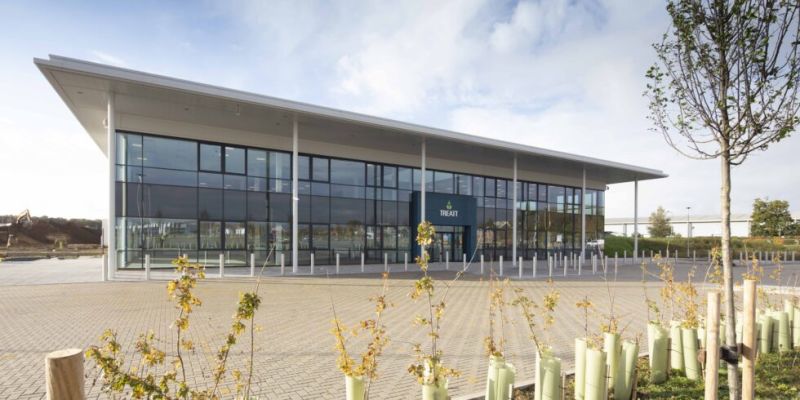
We are currently undergoing a substantial investment in the firm, with the development of a new global headquarters on Suffolk Business Park. This development renews our commitment to the town of Bury St Edmunds and the local community where we employ over 200 people. Our new headquarters is built and designed to increase the efficiency of our UK operations, whilst providing a significantly enhanced working environment where the Treatt community will flourish.
With special thanks to Chloe Ludkin & Daemmon Reeve for sharing their lastest insights with us. A great example of truly looking after your employees in a time of need, and fantastic to hear about their expansions plans and investment into the local economy.
Got a diversification story you would like to share with our members? Please get in touch with James: james.williamson@newanglia.co.uk